

VoiceVector AI Voice Cloning Software for Realistic Speech Synthesis
VoiceVector is an AI voice cloning platform that creates realistic synthetic voices from minimal audio samples, enabling natural text-to-speech conversion for various applications.
- Best for
- Content Creation
- Key capability
- High-Quality Voice Cloning
Save VoiceVector, follow its updates and vote on it — everything stays in your account.
Sign in or create a free account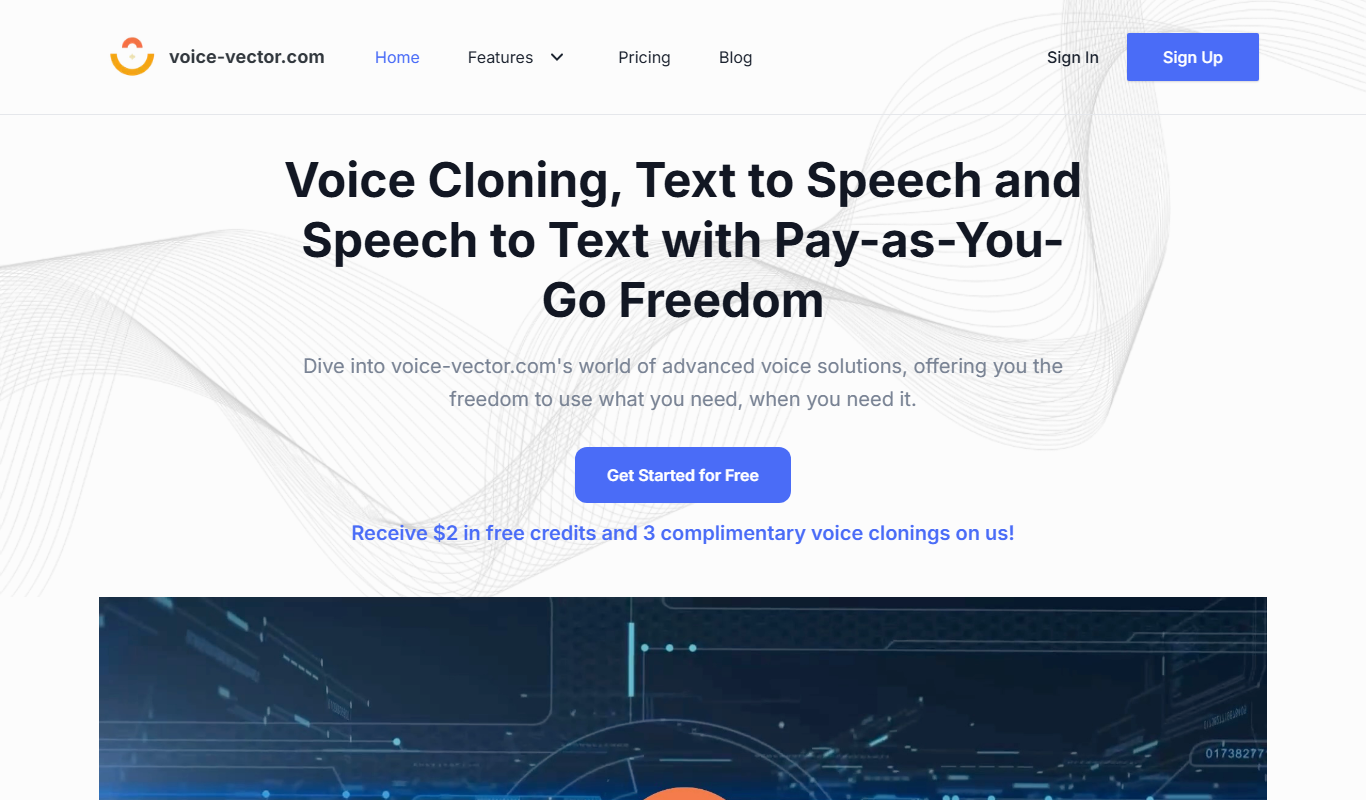

What is VoiceVector?
VoiceVector (voice-vector.com) offers voice cloning, text to speech and speech to text on a pay-as-you-go basis, with optional monthly subscriptions. A short recording of 1 to 2 minutes trains a model of a voice that can then be used for text to speech.
Key features of VoiceVector
VoiceVector offers voice cloning with minimal training data, multi-style voice synthesis, real-time text-to-speech conversion, and an easy-to-use web interface. It supports voice customization and fine-tuning to match desired tone and emotion.
High-Quality Voice Cloning
Produces natural and expressive synthetic voices that closely resemble the original speaker.
Minimal Data Requirement
Requires a voice recording of 1 to 2 minutes to create a voice model.
Multi-Style Synthesis
Supports different speaking styles and emotions for versatile voice output.
Web-Based Platform
Accessible through a browser without the need for complex installations.
Speech to Text
Transcribes speech in 100+ languages and variants, with srt or txt file download.
Pros and cons of VoiceVector
Pros
- Produces highly realistic voice clones with minimal data
- User-friendly web interface with real-time synthesis
- Supports emotional and style variations in speech
- Pay-as-you-go pricing that starts with $2 in free credits and 3 free voice clonings
Cons
- Limited language support focused on English
- No dedicated desktop or mobile apps
- Advanced features reserved for higher-tier plans
Key use cases for VoiceVector
Content Creation
Generate realistic voiceovers for videos, podcasts, and audiobooks without hiring voice actors.
Personalized Voice Applications
Create custom AI voices for virtual assistants, chatbots, and interactive voice response systems.
Accessibility
Provide natural-sounding speech for users with disabilities or reading difficulties.
Entertainment
Produce character voices for games, animations, and other multimedia projects.
Language Learning
Use AI voices to help learners hear accurate pronunciation and intonation.
How VoiceVector works
- 1
Upload Voice Sample
Provide a short audio recording of the voice you want to clone.
- 2
AI Voice Training
The platform processes the sample to create a digital voice model.
- 3
Text Input
Enter the text you want to convert into speech using the cloned voice.
- 4
Generate Speech
Receive realistic audio output that mimics the original voice.
Who is using VoiceVector
VoiceVector pricing
Pay as you go
$0.005 per minute for speech to text, $0.26 per 1K characters for text to speech, $3.99 per voice cloning
No subscription; starts with $2 in free credits and 3 free voice clonings; minimum top-up $5 and credits do not expire.
Speech to Text subscription
$21.99/month
200 hours of audio to transcribe per month, with srt or txt file download.
Voice Cloning and Text to Speech subscription
$24.99/month
20 voice clonings per month and 120,000 text to speech characters.
Plans and prices are as published by the vendor and can change. Check the official site before you buy. Open the pricing page (opens in a new tab)
Frequently asked questions about VoiceVector
VoiceVector requires only a few minutes of clear audio recording to create a high-quality voice clone.
Yes, cloned voices can be used for commercial purposes, provided you have the legal rights to use the voice, especially if it is not your own.
VoiceVector implements strict data privacy measures to ensure your voice recordings are protected.
Yes. Text to speech offers 100+ provided voices for 20 languages, and speech to text supports 100+ languages and variants.
It depends on your specific needs and how you plan to use the tool. The official website and documentation are the best sources for the latest details.
Pricing depends on the plan and included features. For the most accurate and up-to-date details, check the official pricing page.
This tool is designed to help users accomplish its core tasks more efficiently. It is typically used by individuals or teams looking to improve productivity and workflow.
Conclusion
A recording of one to two minutes is all the voice cloning service needs to train a model of a voice. Your own cloned voices can then be used for text to speech, next to 100+ provided voices for 20 languages. The third service transcribes speech in 100+ languages and variants, with results downloaded as srt or txt files.
Billing is pay-as-you-go: credits are loaded in advance, charged per character, minute or cloning, and do not expire. New accounts start with free credits and three free voice clonings. For heavier use, two monthly subscriptions cover speech to text or voice cloning with text to speech, and subscription credits are used before pay-as-you-go credits. Cloned voices may be used commercially, but the user needs the legal rights to any voice that is not their own. A cloned voice left unused in text to speech for over two months is deleted.
Sources
Sign in to review this tool.
Sign In to ReviewNo reviews yet
Be the first to share how this tool worked for you.
Ask about pricing, limits, or how it compares — or answer someone else.
Sign In to AskNo questions yet
Have a question about using or paying for this tool? Be the first to ask.
Featured on TiorAI



More AI Music & Audio Tools tools
Other tools in the same category, for when this one is not quite the fit.

Soundify
Soundify is a free AI generator that creates sound effects from text descriptions, with 5 free generations a day for signed-in users.

AI Song Generator
AI Song Generator is a web tool that creates original songs and lyrics from your genre, mood and topic, with a limited free plan and paid subscriptions.

A.V. Mapping
A.V. Mapping is an AI platform that analyzes your video or photo, recommends licensed music and sound effects from musicians, and handles the music license in one place.

ampedstudio.com
Amped Studio is an online DAW with AI music tools to create beats, record vocals, mix tracks and produce songs in your browser without installation.
Beatoven.ai
Beatoven.ai is an AI-driven platform that generates custom royalty-free music tracks tailored to your project's mood and style, ideal for content creators and marketers.
Endel
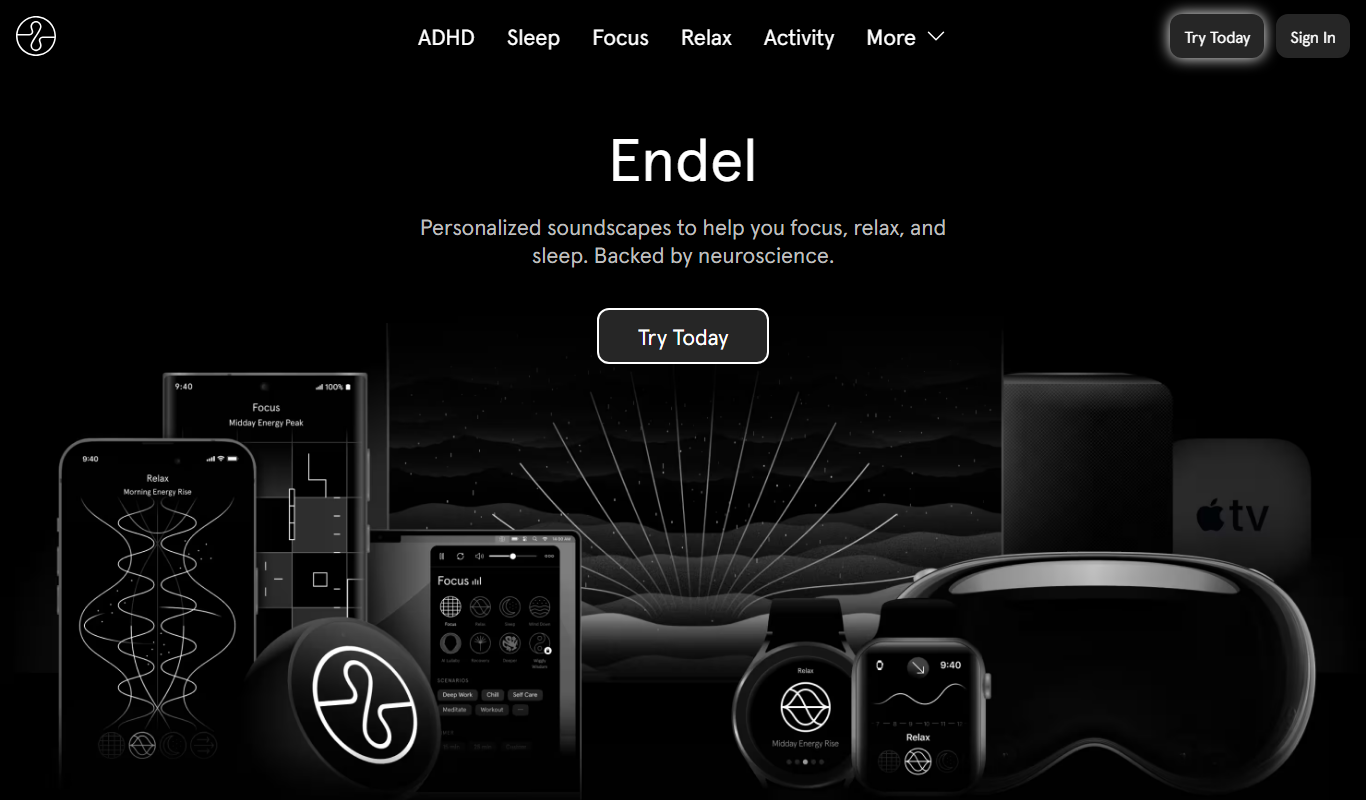
Endel is an AI-driven app that generates adaptive soundscapes tailored to improve focus, relaxation, and sleep by using real-time data such as time, location, and biometric inputs.

SONOTELLER
SONOTELLER.AI is an AI song analyzer that tags lyrics and music (genres, moods, instruments, BPM and key) and autotags music catalogs through its API.

AI Song Generator-Make Song
AI Song Generator-Make Song is an online tool that uses artificial intelligence to create original songs by generating melodies and lyrics based on user inputs such as themes or moods.