

Running Pace Calculator
Running pace measures how long it takes to cover a specific distance, typically expressed as minutes per mile or kilometer. It provides a standardized way to understand your speed regardless of the total distance run. When to Use a Running Pace Calculator Planning race strategies…
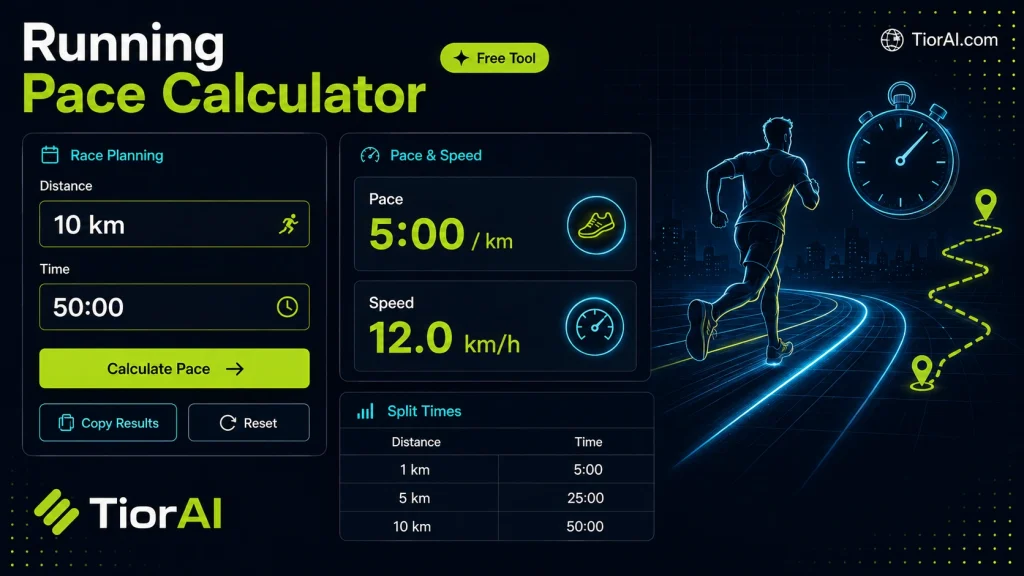
Running Pace Calculator
Calculate your running pace, speed, and finish time. Enter any two values to calculate the third.
Results
Split Times
| Kilometer | Split Time | Cumulative |
|---|
How to use it
- Enter Your Values Input your numbers or parameters into the Running Pace Calculator. Fill in all required fields for an accurate calculation.
- Calculate Results Click the calculate button to process your inputs. The Running Pace Calculator delivers instant, accurate results.
- Review and Use Review your calculated results, explore the breakdown, and copy or share the output for your needs.
Tip Use the Running Pace Calculator on mobile devices too — it's fully responsive and works perfectly on any screen size.
Understanding Running Pace and Its Importance
Running pace refers to the amount of time it takes to cover a specific distance, usually expressed as minutes per mile or minutes per kilometer. Calculating your running pace helps you monitor performance, set realistic goals, and improve endurance over time.
Using a running pace calculator involves inputting either your total running time and distance to find your pace, or your desired pace and distance to estimate finish time. This conversion is essential because raw time or distance alone doesn’t provide insight into speed consistency or training progress.
Why is pace calculation needed?
- It allows runners to plan workouts and races effectively.
- Helps in comparing performances across different distances.
- Assists in setting achievable goals based on current fitness levels.
Common scenarios for pace calculation include training for races, tracking improvements, or adjusting running strategies during workouts. Understanding pace also aids in preventing overexertion by maintaining a sustainable speed.
What is Running Pace?
Running pace measures how long it takes to cover a specific distance, typically expressed as minutes per mile or kilometer. It provides a standardized way to understand your speed regardless of the total distance run.
When to Use a Running Pace Calculator
- Planning race strategies by estimating finish times based on target pace.
- Tracking training progress by comparing pace over similar distances.
- Adjusting workout intensity to meet specific pace goals.
Common Mistakes to Avoid
- Mixing units like miles and kilometers without proper conversion, which leads to inaccurate pace calculations.
- Confusing average pace with instantaneous pace, resulting in misleading performance insights.
Technical Context
Running pace calculation involves simple arithmetic: dividing total time by distance to get pace, or multiplying pace by distance to estimate time. Despite its simplicity, accuracy depends on consistent units and precise input data. This calculation is fundamental for runners to set goals, monitor improvements, and optimize training plans.
Frequently asked questions
Reviews and questions
Whether this tool gave people the answer they needed, and what they asked about it.
Sign in to review this tool.
Sign In to ReviewNo reviews yet
Be the first to say whether this tool gave you what you needed.
Ask how to read the result, or what the tool does with an edge case — or answer someone else.
Sign In to AskNo questions yet
Not sure how to read a result? Be the first to ask.
AI tools related to this topic
Tools from the TiorAI directory that work on the same kind of job.

Brooks Ghost Running Shoes
Brooks Ghost Running Shoes are neutral running shoes designed to provide balanced cushioning, smooth transitions, and breathable support for road runners and fitness enthusiasts.

GoDiary: Running Tracker
GoDiary is a running tracker app that uses GPS to monitor your runs, log workouts, analyze progress, and connect with a fitness community.