

Body Fat Calculator
Estimate your body fat percentage from tape measurements using the US Navy method.
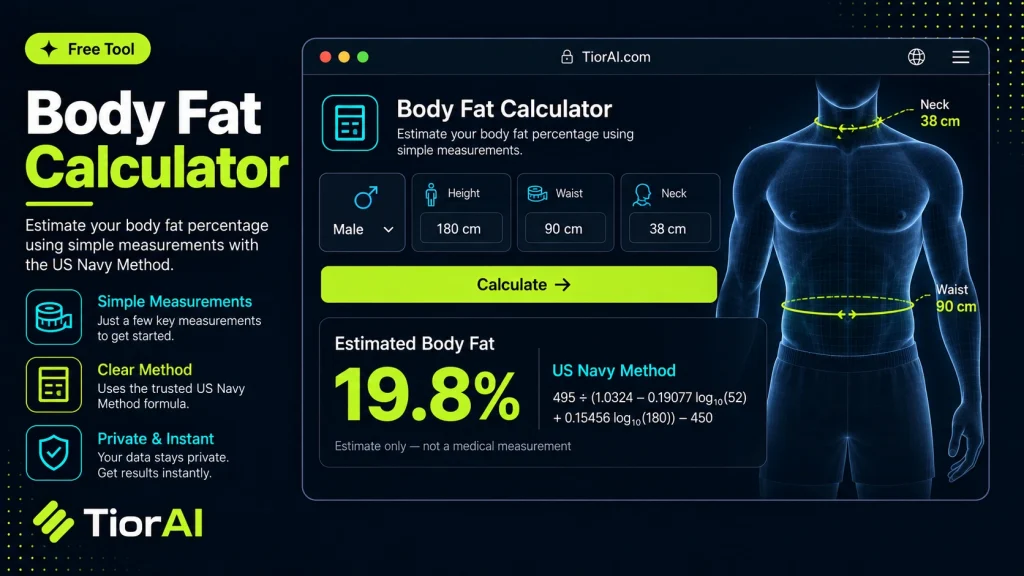
| Estimated Body Fat | — |
|---|---|
| Category | — |
| Fat Mass | — |
| Lean Mass | — |
| Method | — |
Body fat categories and how to measure
| Category | Men | Women |
|---|---|---|
| Essential fat | 2–5% | 10–13% |
| Athletic | 6–13% | 14–20% |
| Fitness | 14–17% | 21–24% |
| Average | 18–24% | 25–31% |
| Obese | 25%+ | 32%+ |
- Measure the waist at navel level for men, at the narrowest point for women.
- Measure the neck just below the larynx, with the tape sloping slightly down at the front.
- Measure the hip at its widest point. Women need this measurement; men do not.
- Keep the tape snug but not tight, and measure after breathing out normally.
The US Navy method is an estimate from tape measurements, typically within 3–4% of a DEXA scan.
How to use it
- Enter Your Values Input your numbers or parameters into the Body Fat Calculator. Fill in all required fields for an accurate calculation.
- Calculate Results Click the calculate button to process your inputs. The Body Fat Calculator delivers instant, accurate results.
- Review and Use Review your calculated results, explore the breakdown, and copy or share the output for your needs.
Tip Double-check critical calculations by adjusting one variable at a time in the Body Fat Calculator to spot trends.
Understanding Body Fat Percentage
Body fat percentage is a measure of how much of your body mass is made up of fat compared to lean mass such as muscle, bone, and water. Unlike weight alone, which does not distinguish between fat and muscle, body fat percentage provides a clearer picture of your overall health and fitness level.
Why measure body fat percentage? It helps assess health risks related to obesity, track fitness progress, and tailor nutrition and exercise plans. For example, two people may weigh the same, but the one with a higher body fat percentage may have greater health risks.
How is it calculated? Body fat calculators use various formulas that estimate fat percentage based on measurements like waist, neck, and hip circumferences, along with height, weight, age, and gender. These formulas apply statistical models derived from population studies to approximate body composition without expensive equipment.
Common uses include:
- Tracking fat loss or muscle gain during fitness programs
- Assessing risk factors for cardiovascular disease or diabetes
- Helping athletes optimize body composition for performance
While not as precise as methods like DEXA scans or hydrostatic weighing, body fat calculators provide a convenient and accessible way to estimate body fat percentage at home or in clinical settings.
What Is Body Fat Percentage?
Body fat percentage represents the proportion of fat mass relative to total body weight. Unlike weight alone, it distinguishes fat from muscle, bone, and other tissues, providing a clearer indication of health and fitness.
When to Use a Body Fat Calculator
- To quickly estimate your body fat without specialized equipment
- When tracking progress during weight loss or muscle gain programs
- Before starting a new fitness or nutrition plan to establish a baseline
- To monitor changes over time for motivation and health assessment
Common Mistakes to Avoid
- Measuring body parts inconsistently or inaccurately, such as waist circumference at different heights
- Expecting exact precision instead of an estimate
- Ignoring factors like hydration or recent meals that affect measurements
- Using formulas not tailored for your body type or population group
Body fat calculators use formulas based on body measurements to estimate fat percentage. While not as precise as clinical methods, they offer a practical, accessible way to assess body composition at home or in fitness settings. Consistent measurement technique and understanding the limitations of these estimates will help you make the most of this tool.
Frequently asked questions
Reviews and questions
Whether this tool gave people the answer they needed, and what they asked about it.
Sign in to review this tool.
Sign In to ReviewNo reviews yet
Be the first to say whether this tool gave you what you needed.
Ask how to read the result, or what the tool does with an edge case — or answer someone else.
Sign In to AskNo questions yet
Not sure how to read a result? Be the first to ask.