

Ideal Weight Calculator
Estimate ideal weight using Robinson, Miller, Hamwi, and Devine formulas.
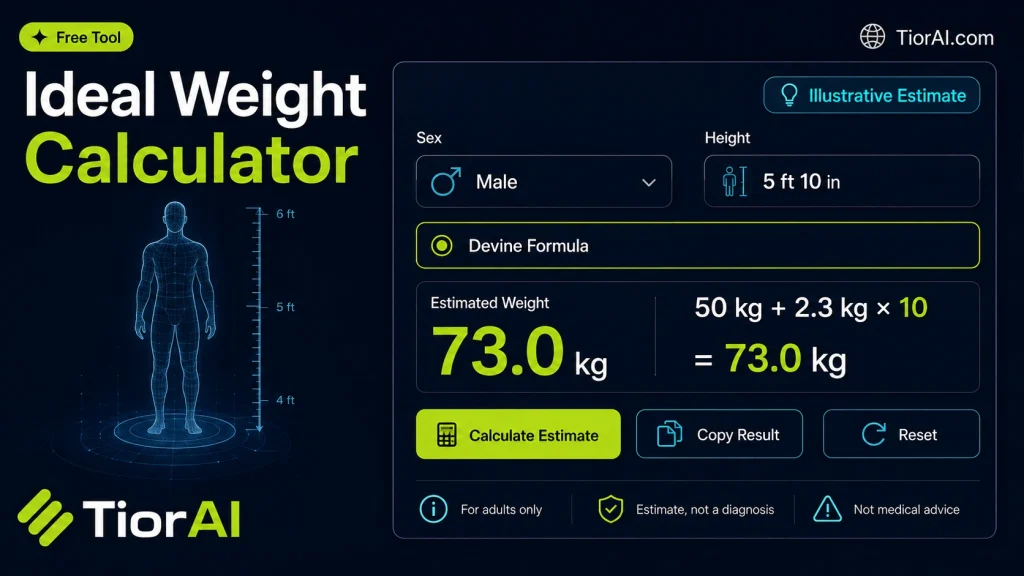
| Formula | Ideal Weight |
|---|---|
| Robinson | - |
| Miller | - |
| Hamwi | - |
| Devine | - |
| Average | - |
How to use it
- Enter Your Values Input your numbers or parameters into the Ideal Weight Calculator. Fill in all required fields for an accurate calculation.
- Calculate Results Click the calculate button to process your inputs. The Ideal Weight Calculator delivers instant, accurate results.
- Review and Use Review your calculated results, explore the breakdown, and copy or share the output for your needs.
Tip The Ideal Weight Calculator rounds results automatically, but you can use the full decimal output for precision work.
Understanding Ideal Weight Calculation
Ideal weight calculators estimate a person’s optimal body weight based on various factors such as height, age, gender, and sometimes body frame size. The goal is to provide a reference point that reflects a healthy weight range rather than an exact target. These calculations help individuals and healthcare providers assess whether a person is underweight, overweight, or within a healthy range.
Why is this important? Maintaining an ideal weight is linked to reduced risks of chronic diseases like diabetes, heart disease, and joint problems. It also supports overall physical fitness and well-being.
Common methods used:
BMI (Body Mass Index): Calculates weight relative to height squared but does not account for muscle mass or frame size.Devine Formula: Estimates ideal weight based on height and gender.Hamwi Formula: Similar to Devine but with slight variations.Body Frame Size Adjustments: Some calculators adjust ideal weight based on wrist circumference or bone structure.
People use ideal weight calculators when planning fitness goals, evaluating health risks, or tracking weight changes over time. It serves as a guideline rather than a strict rule, as individual health depends on many factors beyond weight alone.
What is Ideal Weight Calculation?
Ideal weight calculation estimates a healthy weight range based on factors like height, gender, and sometimes body frame size. It provides a reference point to help individuals understand if their weight is within a range associated with lower health risks. Various formulas exist, such as the Devine and Hamwi methods, which use height increments to suggest an ideal weight.
When to Use an Ideal Weight Calculator
- Setting realistic weight goals for fitness or health improvement.
- Assessing whether your current weight falls within a healthy range relative to your height and frame.
- Preparing for a healthcare consultation with a baseline understanding of your weight status.
- Monitoring weight changes over time to track progress or potential health concerns.
Common Mistakes to Avoid
- Treating the ideal weight as a strict target rather than a flexible guideline.
- Overlooking body composition differences like muscle mass, which can make some calculations misleading.
Ideal weight calculators are useful tools but should be combined with other health assessments for a complete picture. They help guide decisions but do not replace professional medical advice or personalized health evaluations.
Frequently asked questions
Reviews and questions
Whether this tool gave people the answer they needed, and what they asked about it.
Sign in to review this tool.
Sign In to ReviewNo reviews yet
Be the first to say whether this tool gave you what you needed.
Ask how to read the result, or what the tool does with an edge case — or answer someone else.
Sign In to AskNo questions yet
Not sure how to read a result? Be the first to ask.