

Horsepower Calculator
Horsepower is a unit used to measure power, specifically the rate at which work is done by engines or motors. It helps quantify how much mechanical energy a device can produce over time. Calculating horsepower typically involves knowing the torque (rotational force) and the rotational…
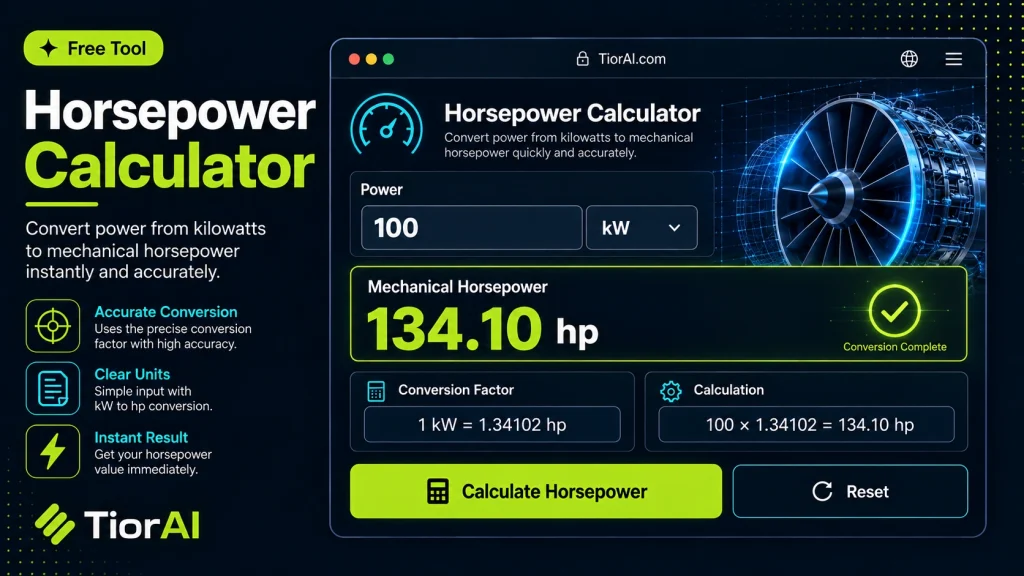
Horsepower Calculator
Convert between different types of horsepower and electrical power units. Enter a value and select the source unit to see all equivalent values.
Conversion Results
| Unit | Value | Symbol |
|---|---|---|
| Mechanical HP | -- | hp(I) |
| Metric HP | -- | hp(M) / PS |
| Electrical HP | -- | hp(E) |
| Watts | -- | W |
| Kilowatts | -- | kW |
| Boiler HP | -- | hp(S) |
Unit Reference
- Mechanical HP
1 hp(I) = 745.7 W- Metric HP
1 hp(M) = 735.5 W- Electrical HP
1 hp(E) = 746 W- Boiler HP
1 hp(S) = 9,813 W
How to use it
- Enter Your Values Input your numbers or parameters into the Horsepower Calculator. Fill in all required fields for an accurate calculation.
- Calculate Results Click the calculate button to process your inputs. The Horsepower Calculator delivers instant, accurate results.
- Review and Use Review your calculated results, explore the breakdown, and copy or share the output for your needs.
Tip Share your Horsepower Calculator results by copying the output — great for reports, homework, or team discussions.
Understanding Horsepower and Its Calculation
Horsepower is a unit of power that quantifies the rate at which work is done. It is commonly used to measure the power output of engines, motors, and other mechanical devices. The concept originated to compare the power of steam engines to the work done by horses.
Calculating horsepower involves converting mechanical parameters such as torque and rotational speed (RPM) into a power value. The standard formula to calculate horsepower from torque and RPM is:
Horsepower (HP) = (Torque (lb-ft) × RPM) / 5252
This formula applies when torque is measured in pound-feet and RPM is revolutions per minute. The constant 5252 is derived from unit conversions linking torque, angular velocity, and power.
Why calculate horsepower? Knowing horsepower helps engineers and mechanics assess engine performance, compare different machines, and ensure equipment operates within safe limits. It is essential in automotive design, industrial machinery, and any application involving rotational power.
Common uses include:
- Determining engine output for vehicles and machinery
- Comparing motor power ratings
- Estimating energy consumption and efficiency
- Converting between power units like horsepower and kilowatts
What is Horsepower and How Is It Calculated?
Horsepower is a unit used to measure power, specifically the rate at which work is done by engines or motors. It helps quantify how much mechanical energy a device can produce over time. Calculating horsepower typically involves knowing the torque (rotational force) and the rotational speed (RPM) of the engine or motor.
The standard formula to find horsepower from torque and RPM is:
Horsepower = (Torque × RPM) / 5252
This formula assumes torque is measured in pound-feet and RPM is revolutions per minute. The constant 5252 is a conversion factor that relates these units to horsepower.
When to Use a Horsepower Calculator
- If you have torque and RPM data and want to find the horsepower output of an engine or motor.
- When comparing the power of different machines or engines.
- To convert power values between horsepower and kilowatts for engineering or technical purposes.
- To verify manufacturer specifications or troubleshoot mechanical performance issues.
Common Mistakes to Avoid
- Entering torque in the wrong units, such as Newton-meters instead of pound-feet, without conversion.
- Using the formula without knowing both torque and RPM, which leads to incorrect results.
- Confusing different types of horsepower (mechanical vs. metric) and not adjusting calculations accordingly.
- Assuming horsepower can be calculated from torque alone or RPM alone.
Understanding these points ensures accurate horsepower calculations and better assessment of mechanical power in various applications.
Frequently asked questions
Reviews and questions
Whether this tool gave people the answer they needed, and what they asked about it.
Sign in to review this tool.
Sign In to ReviewNo reviews yet
Be the first to say whether this tool gave you what you needed.
Ask how to read the result, or what the tool does with an edge case — or answer someone else.
Sign In to AskNo questions yet
Not sure how to read a result? Be the first to ask.