

From my experience with Mock.Club, I found it excels at simplifying the design feedback process by allowing precise, contextual comments directly on mockups. Its no-signup-needed sharing feature makes it easy to involve clients and stakeholders without friction. The platform is particularly well-suited for UI/UX designers and remote teams who need clear, asynchronous collaboration. However, the free plan’s limits on projects and collaborators may require upgrading for larger teams. Overall, if you want a straightforward, visual-focused tool to streamline design reviews, Mock.Club delivers effective and user-friendly results.
Mock.Club - Collaborative Online Mockup and Design Feedback Tool
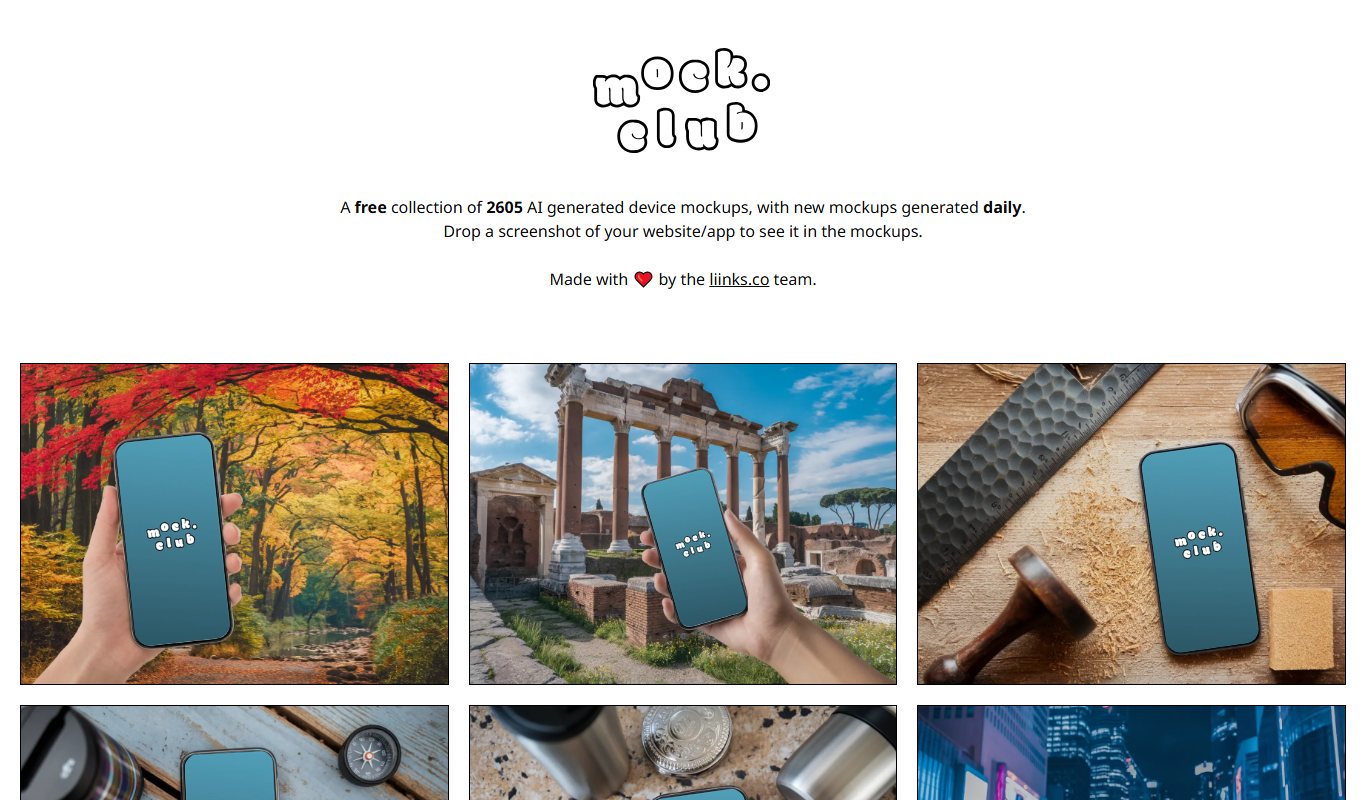
Mock.Club is a web platform that enables designers and teams to upload design mockups and collaborate through contextual comments and version tracking, streamlining feedback and revisions.
- Best for
- Collaborative Design Feedback
- Key capability
- Contextual Commenting
Your actions
Do you recommend this tool?
What is Mock.Club?
Mock.Club is a web-based platform designed to facilitate collaborative feedback on design mockups. It allows designers, clients, and teams to upload design files and provide contextual comments directly on the visuals. This streamlines the review process, reduces miscommunication, and accelerates design iterations.
Key features of Mock.Club
Key features include real-time commenting on mockups, version tracking, easy sharing via links, and a clean interface focused on visual collaboration. It supports various image formats and integrates smoothly into design workflows.
Contextual Commenting
Pin comments directly on design elements to provide clear, actionable feedback.
Version History
Maintain and compare multiple versions of mockups to track design evolution.
Easy Sharing
Share projects via simple links without forcing collaborators to create accounts.
Clean, Intuitive Interface
Focus on visuals with minimal distractions to enhance collaboration efficiency.
Pros and cons of Mock.Club
Pros
- Simple and intuitive interface focused on visual feedback
- No account needed for collaborators to comment
- Supports version tracking for design iterations
Cons
- Limited integrations with other design tools
- Free plan has project and collaborator limits
Key use cases for Mock.Club
Collaborative Design Feedback
Teams and clients can leave comments directly on design mockups to streamline feedback and revisions.
UI/UX Mockup Presentation
Designers can present their UI/UX mockups in an interactive environment to stakeholders for review.
Remote Team Collaboration
Distributed teams can collaborate asynchronously on design projects, improving communication and reducing meetings.
Version Control for Designs
Track changes and feedback across different versions of design mockups to maintain project history.
How Mock.Club works
- 1
Upload Design Mockups
Users upload their design files (images or PDFs) to the platform to create a project.
- 2
Share with Team or Clients
Generate shareable links to invite collaborators for feedback without requiring account creation.
- 3
Add Comments and Annotations
Reviewers leave precise comments pinned to specific areas of the mockup for clear communication.
- 4
Track Versions and Resolve Feedback
Designers update mockups and mark comments as resolved to maintain progress clarity.
Who is using Mock.Club
UI/UX designers
Design agencies
Freelance designers
Product managers
Remote teams
Mock.Club pricing
Free
$0/month
Basic features with limited projects and collaborators.
Pro
$12/month
Unlimited projects, advanced collaboration tools, and priority support.
Plans and prices are as published by the vendor and can change. Check the official site before you buy. Open the pricing page (opens in a new tab)
Frequently asked questions about Mock.Club
Yes, collaborators can view and comment on mockups via shared links without signing up.
It supports common image formats like PNG, JPG, and PDF files for mockups.
Yes, the free plan has a limit on the number of active projects and collaborators.
It depends on your specific needs and how you plan to use the tool. The official website and documentation are the best sources for the latest details.
Yes, it can help with that use case depending on how you configure it and what features are available. You’ll get the best results with clear inputs and a defined goal.
Pricing depends on the plan and included features. For the most accurate and up-to-date details, check the official pricing page.
Sign in to review this tool.
Sign In to ReviewNo reviews yet
Be the first to share how this tool worked for you.
Ask about pricing, limits, or how it compares — or answer someone else.
Sign In to AskNo questions yet
Have a question about using or paying for this tool? Be the first to ask.
Featured on TiorAI



Alternative Tools
Explore similar AI tools that might fit your needs

Free
InVision
InVision is a digital product design platform that enables teams to create interactive prototypes, collaborate on designs, manage workflows, and hand off projects to developers efficiently.
Free
Figma
Figma is a cloud-based design tool for creating user interfaces and prototypes collaboratively in real time, accessible via web and desktop apps.
Free
Zeplin
Zeplin is a collaborative platform that simplifies design handoff by generating specs, assets, and code snippets from design files, enabling seamless communication between designers and developers.
More AI Design Generator tools
Other tools in the same category, for when this one is not quite the fit.

Free
TilePlanner
TilePlanner is a web-based floor planning software that helps users design and visualize tile layouts and interior spaces in 2D and 3D, ideal for renovation and interior design projects.
Perpetual License
Geomagic Design X
Geomagic Design X is a reverse engineering software that converts 3D scan data into editable CAD models, enabling precise product design and manufacturing workflows.

Free
PaintFont
PaintFont is a free online tool that lets you create custom fonts by scanning your handwritten characters and converting them into TrueType font files.

Free Trial
Balsamiq
Balsamiq is a wireframing tool that enables rapid creation of low-fidelity UI mockups and clickable prototypes, supporting collaboration and easy sharing.
Free
Sketchbook
Sketchbook is a professional digital drawing and painting software by Autodesk that offers customizable brushes, layers, and cross-platform support for artists and designers.
Free Trial
PlantFactory
PlantFactory is a desktop 3D software tool that enables users to create, customize, and animate realistic plants using procedural modeling techniques, suitable for visual effects, games, and architectural projects.

Paid
Pool Studio
Pool Studio is a Windows-based 3D pool and landscape design software that helps professionals create detailed models, photorealistic renderings, and construction plans for swimming pool projects.

Free
BrickIt
BrickIt is an AI-powered mobile app that scans LEGO bricks from photos, identifies them, and generates building instructions for models you can build with those bricks.