

From my experience researching Cradle, it stands out as a specialized AI platform focused on protein design and molecular engineering, offering advanced tools that integrate computational predictions with experimental data. This makes it particularly valuable for biotech companies and researchers aiming to accelerate drug discovery and develop novel biomolecules. However, the platform’s pricing model is not publicly available, which may require direct engagement for access and budgeting. Overall, Cradle delivers a sophisticated solution for users with domain expertise seeking to leverage AI in molecular design projects.
Cradle AI Platform for Protein Design and Molecular Engineering Solutions
Cradle is an AI platform that enables protein design and molecular engineering by using machine learning to predict and optimize biomolecular structures and properties, accelerating drug discovery and biotech innovation.
- Best for
- Protein Design
- Key capability
- AI-Powered Protein Structure Prediction
Your actions
Save Cradle, follow its updates and vote on it — everything stays in your account.
Sign in or create a free account

What is Cradle?
Cradle is an AI-powered platform specializing in protein design and molecular engineering. It leverages advanced machine learning and computational biology techniques to enable researchers and biotech companies to design novel proteins and molecules with specific functions. The platform aims to accelerate drug discovery and development by providing predictive models and design tools that reduce experimental trial and error.
Key features of Cradle
Cradle offers a suite of features including AI-driven protein structure prediction, molecular property optimization, and customizable design workflows. Its platform integrates computational simulations with machine learning to enhance accuracy and speed in biomolecular engineering projects.
AI-Powered Protein Structure Prediction
Predict accurate 3D structures of proteins to guide design and engineering.
Molecular Property Optimization
Optimize molecules for desired traits such as stability, binding affinity, and solubility.
Customizable Design Pipelines
Tailor workflows to specific research needs and project requirements.
Integration with Experimental Data
Incorporate laboratory results to improve model accuracy and design relevance.
Pros and cons of Cradle
Pros
- Advanced AI models specialized for protein and molecular design
- Customizable workflows to fit diverse research needs
- Supports integration of experimental data for improved accuracy
Cons
- Pricing is not publicly disclosed and requires direct contact
- Platform access is primarily web-based with no mobile apps
- May require domain expertise to fully leverage advanced features
Key use cases for Cradle
Protein Design
Design novel proteins with desired functions using AI-driven molecular modeling.
Drug Discovery
Accelerate drug candidate identification by predicting molecular interactions and properties.
Molecular Engineering
Engineer molecules for improved stability, efficacy, and specificity in therapeutic applications.
Biotechnology Research
Support academic and industrial research with advanced computational tools for biomolecular design.
How Cradle works
- 1
Initial Consultation
Engage with Cradle’s team to define project goals and molecular targets.
- 2
Data Input
Provide molecular sequences or structures to the platform for analysis.
- 3
AI-Driven Design
Leverage Cradle’s AI models to generate and optimize novel protein or molecule designs.
- 4
Evaluation and Iteration
Review predicted properties and refine designs through iterative computational cycles.
- 5
Experimental Validation
Translate computational designs into laboratory experiments for validation and development.
Who is using Cradle
Biotechnology companies
Pharmaceutical researchers
Academic molecular biology labs
Protein engineers
Drug discovery teams
Cradle pricing
Contact for Pricing
Custom
Pricing tailored based on project scope and collaboration details.
Plans and prices are as published by the vendor and can change. Check the official site before you buy. Open the pricing page (opens in a new tab)
Frequently asked questions about Cradle
Cradle can design a wide range of proteins including enzymes, antibodies, and therapeutic proteins tailored to specific functions.
Yes, Cradle supports both industrial and academic research projects with customizable tools.
Users can input experimental results to refine AI models and improve design predictions.
Timelines vary depending on project complexity, but Cradle aims to accelerate design cycles compared to traditional methods.
This tool is designed to help users accomplish its core tasks more efficiently. It is typically used by individuals or teams looking to improve productivity and workflow.
It depends on your specific needs and how you plan to use the tool. The official website and documentation are the best sources for the latest details.
It depends on your specific needs and how you plan to use the tool. The official website and documentation are the best sources for the latest details.
Sign in to review this tool.
Sign In to ReviewNo reviews yet
Be the first to share how this tool worked for you.
Ask about pricing, limits, or how it compares — or answer someone else.
Sign In to AskNo questions yet
Have a question about using or paying for this tool? Be the first to ask.
Featured on TiorAI



Alternative Tools
Explore similar AI tools that might fit your needs

Free
AlphaFold
AlphaFold is an AI system developed by DeepMind that predicts highly accurate 3D protein structures from amino acid sequences, accessible free via the EBI website.
More AI Code Assistant tools
Other tools in the same category, for when this one is not quite the fit.

Free
Cymath
Cymath is an AI-powered math solver that provides step-by-step solutions for algebra, calculus, and other math problems via web and mobile apps.

Free
Sphinx
Sphinx is an open-source documentation generator primarily for Python projects that converts reStructuredText and docstrings into multi-format technical documentation.

Free
The Odin Project
The Odin Project is a free, open-source online curriculum that teaches full-stack web development through project-based learning and community support.

Free
freeCodeCamp
freeCodeCamp is a free online platform offering interactive coding lessons, projects, and certifications to help beginners learn programming and web development.

Free
Codecademy
Codecademy is an online platform offering interactive coding courses and projects to help users learn programming languages and prepare for tech careers.

Free
Python-Future
Python-Future is a compatibility library that allows Python developers to write code that runs on both Python 2 and Python 3 interpreters without modification, easing migration and maintenance.
Free
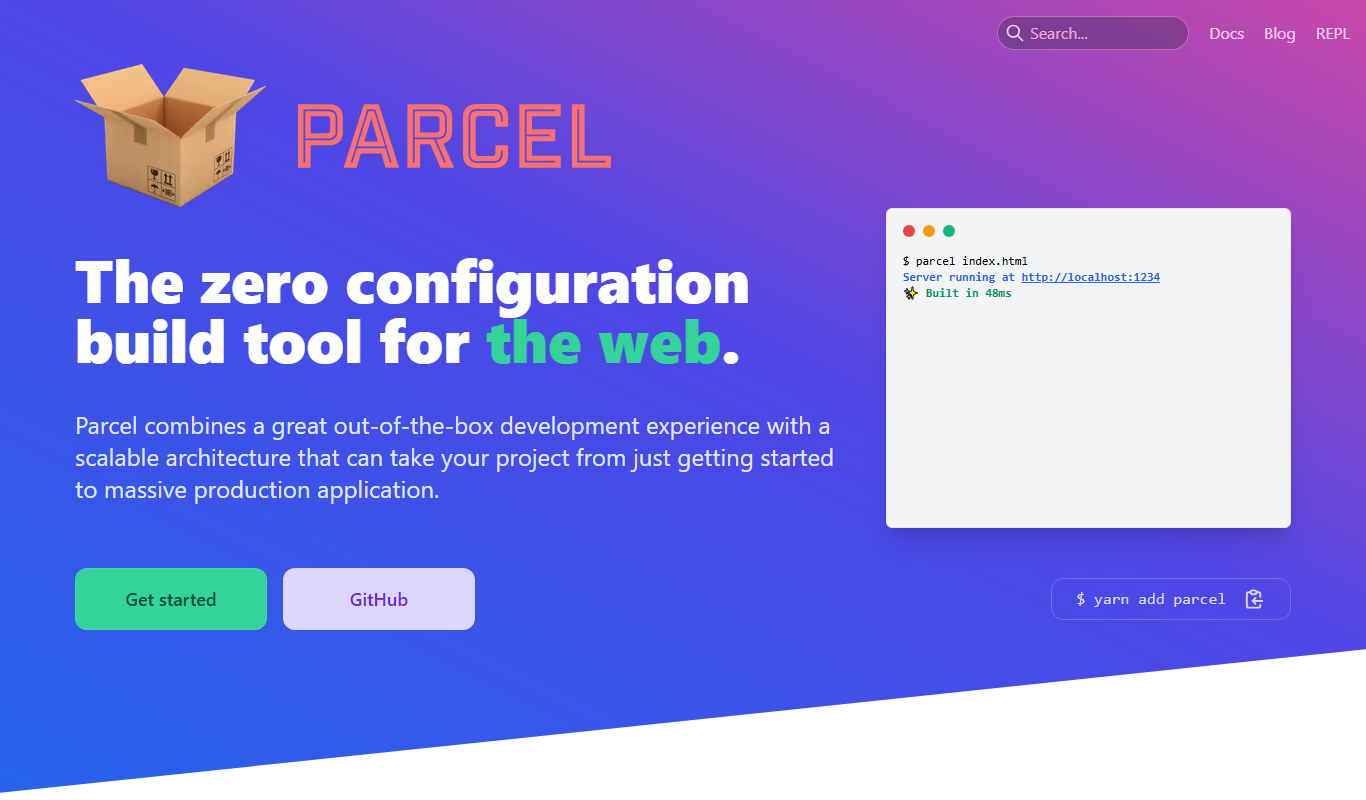
Parcel
ParcelJS is an open-source web bundler that offers zero configuration, fast multi-core builds, and automatic asset handling for modern web development.

Free
Kodable
Kodable is an educational platform that teaches young children coding basics through interactive games and visual programming, suitable for ages 4 to 10.