


Freemium
ReRoom
ReRoom is AI interior rendering: upload a screenshot of your model and get a photorealistic render, with your design and materials unchanged.
Every AI tool we track, with pricing, platform and category on each entry. Filter down to a shortlist, then open the ones worth a closer look.
Filter 8,929 AI tools by pricing, category, platform and language.
ReRoom is AI interior rendering: upload a screenshot of your model and get a photorealistic render, with your design and materials unchanged.

GetFloorPlan is an AI service that turns an uploaded floor plan into 2D and 3D floor plans, renders and a 360 virtual tour, delivered within 24 hours.

Architecture Helper uses AI to analyze buildings, generate new architecture and restyle your home in any of 49 architecture styles.

FloorPlan-AI generates floor plans with AI from requirements or text prompts, with a web editor, 3D previews, renders and DWG or DXF export.

Artadum is a mockup generator that places your art or photography in realistic decors and exports product images for Etsy, Shopify or eBay listings.
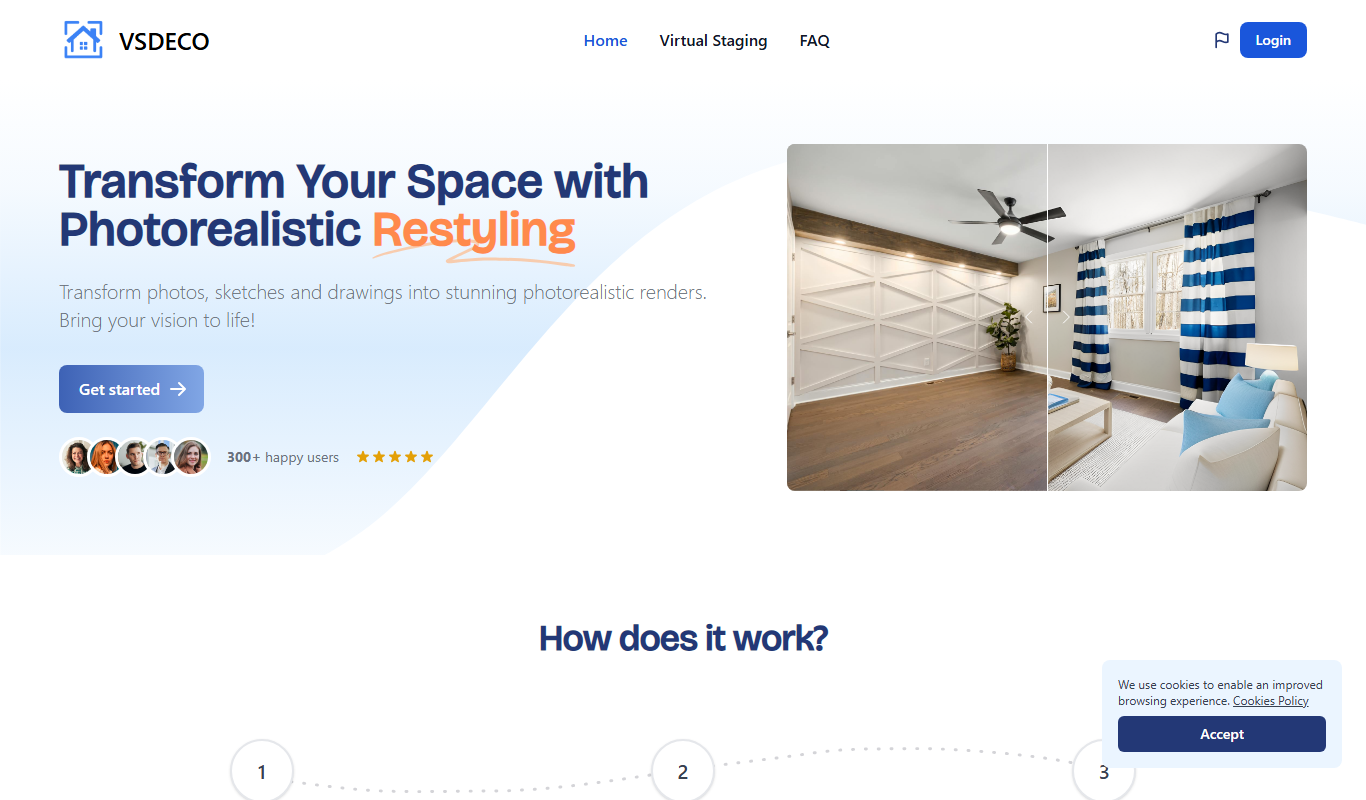
VSDECO uses artificial intelligence to transform photos, sketches and drawings into photorealistic renders for virtual home staging and interior restyling.

Interior Amore is an AI visualizer that shows any paint color on your walls in 30 seconds, with 10,000+ colors from top brands, plus AI room redesign and virtual staging.

DecorAI.xyz is an AI-driven web platform that helps users generate personalized interior design ideas and virtual staging by uploading room photos and selecting style preferences.
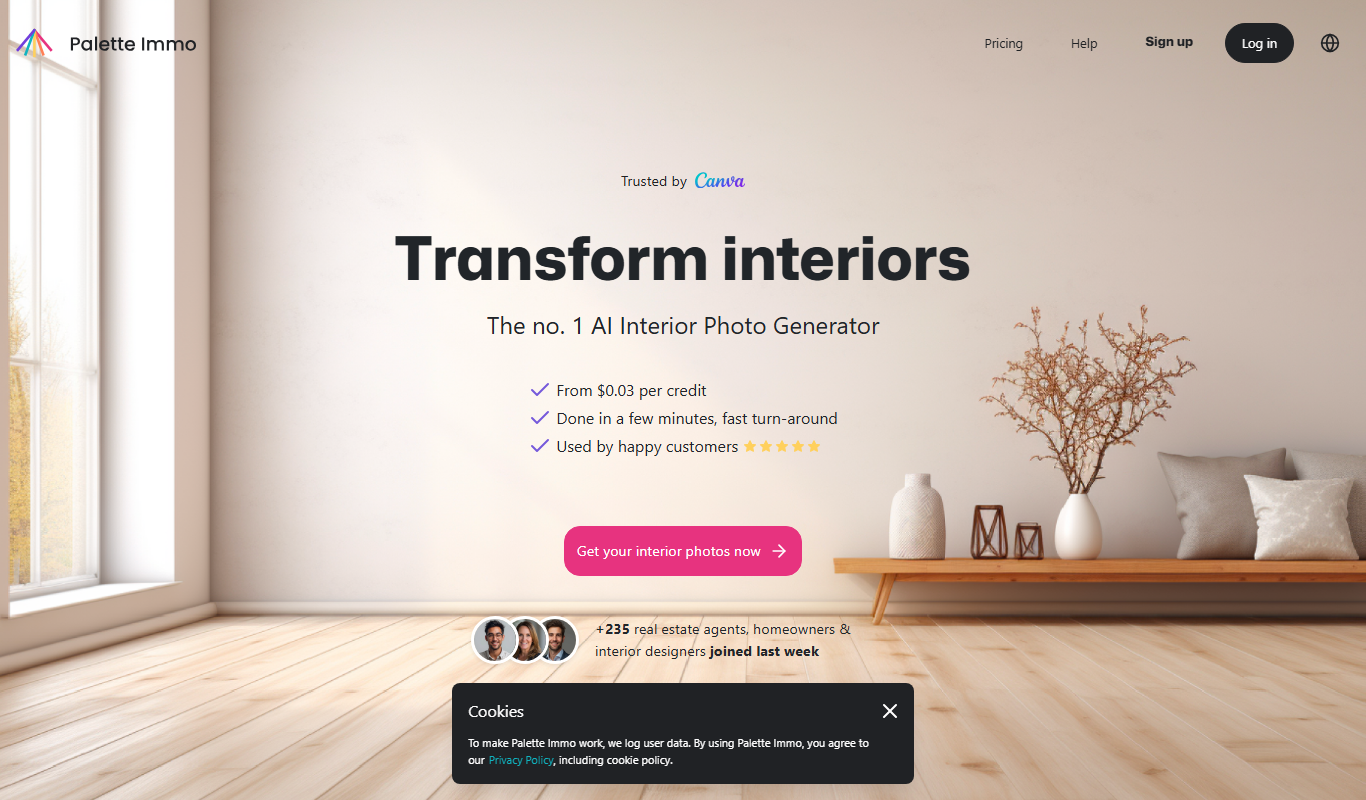
Palette Immo is AI-powered virtual staging and interior design that transforms empty or furnished rooms with 30+ styles in minutes.

Pristina.ai is an AI-powered architectural rendering plugin for Blender and 3ds Max that turns low-res models into photorealistic renders.

Shoppackage lets you choose a bathroom or kitchen package from 200+ curated designs, preview it with AI rendering and have the materials procured for you.

Decoratly is an AI-powered web platform that converts your room photos into personalized interior design ideas, offering style suggestions and furniture recommendations.
Page 576 of 745
Ten tools per shortlist, ranked, for when a category is still too many results.
Still deciding
Pricing, supported platforms and what each one is actually good at, laid out in one table. 764 comparisons are written and ready.
Browse comparisonsComparable tools for the products people already use.
Every one of the 8,929 entries here carries the same fields: what the tool does, what it costs, which platforms it runs on, and which categories it belongs to. That is what makes filtering across the whole catalogue possible rather than decorative.
The catalogue is not the point on its own; competitors list the same tools. What is worth your time is what sits on top of it: comparisons that commit to a recommendation, alternative sets that are genuinely comparable, and entries that get corrected when a vendor changes its pricing.
Start from a category rather than the full list: the category index above jumps straight into the twelve largest ones. From there, use the pricing shortcuts to drop anything outside your budget, then open the three or four entries that look closest and compare them side by side.
Free means there is a usable tier at no cost with no time limit. Freemium means a free tier exists but the useful features sit behind a paid plan. Free trial means paid-only after a fixed evaluation window. Subscription means recurring billing with no free tier. Labels come from the vendor and are re-checked when a listing is updated.
Yes. Category, pricing, tech stack, language and platform stack together, and every combination has its own URL, so a filtered view can be bookmarked or shared. Active filters appear above the results and can be removed one at a time.
Around 8% of entries have no captured screenshot, usually because the tool sits behind a login or the site blocks automated capture. Those entries show the tool's initial instead. It is not a signal about the tool's quality.
Newest first, so the front of the directory reflects what has recently shipped. Switch the sort to Top Rated for the highest-scoring entries, or Most Popular to order by real visitor interest across views and outbound clicks.
An alternatives page answers "what else does this job?" and lists comparable tools for one product. A comparison page takes two named tools and works through pricing, capability and fit to reach a recommendation. Both are linked from every tool entry.