

From my experience with Open Source Database Designs, I found it excels at providing clear, practical examples of database schemas that are invaluable for learning and reference. The platform’s straightforward access to a variety of open source designs makes it especially useful for developers and data architects seeking inspiration or templates without the need for complex tools. However, the site lacks interactive design features or editing capabilities, so users needing hands-on modeling must use separate software. Overall, if you want to study or quickly reference well-structured database designs, this resource delivers solid, no-cost value.
Open Source Database Designs for Developers and Data Architects
Open Source Database Designs is a free web resource offering a collection of database schema examples and ER diagrams to help developers and data professionals learn and implement effective database structures.
- Best for
- Learning Database Design
- Key capability
- Extensive Schema Library
Your actions
Save Open Source Database Designs, follow its updates and vote on it — everything stays in your account.
Sign in or create a free account

What is Open Source Database Designs?
Open Source Database Designs is a web-based resource providing a curated collection of database schema examples and templates. It serves as a learning and reference platform for developers, data architects, and students interested in database design principles and best practices. The tool offers open access to various relational database models, helping users understand and implement efficient data structures.
Key features of Open Source Database Designs
The platform features a wide range of open source database schemas across different domains, easy-to-navigate examples, and downloadable design files. It focuses on clarity and practical usability, making complex database concepts accessible through real-world examples.
Extensive Schema Library
A broad selection of open source database designs covering various industries and applications.
Clear ER Diagrams
Well-illustrated entity-relationship diagrams that simplify understanding complex data relationships.
Free Access
All database designs are freely accessible without registration or payment.
Downloadable Resources
Users can download schema files for offline use or integration into their projects.
Pros and cons of Open Source Database Designs
Pros
- Completely free and open access
- Wide variety of practical database examples
- Clear and educational ER diagrams
Cons
- Limited interactivity or customization on the platform
- No built-in database design tools or editors
Key use cases for Open Source Database Designs
Learning Database Design
Provides practical examples and templates for students and beginners to understand database schema design.
Reference for Developers
Offers a collection of open source database schemas that developers can study or adapt for their projects.
Data Modeling Inspiration
Helps data architects and analysts explore various design patterns and best practices in database structuring.
Rapid Prototyping
Enables quick access to sample database designs to accelerate prototyping and planning phases.
How Open Source Database Designs works
- 1
Browse Designs
Explore the collection of open source database schemas organized by category and use case.
- 2
Review Schema Details
View detailed entity-relationship diagrams and table structures for each design.
- 3
Download or Adapt
Download schema files or use the designs as templates for your own database projects.
Who is using Open Source Database Designs
Database students and learners
Software developers
Data architects
Technical educators
Small businesses planning database projects
Open Source Database Designs pricing
Free
$0
Full access to all open source database designs and resources.
Plans and prices are as published by the vendor and can change. Check the official site before you buy. Open the pricing page (opens in a new tab)
Frequently asked questions about Open Source Database Designs
No, all database designs are freely accessible without any registration.
Yes, the designs are open source and can be adapted for commercial use, but it’s recommended to check individual licenses.
The schemas are conceptual and may require adjustments to fit specific database platforms.
This tool is designed to help users accomplish its core tasks more efficiently. It is typically used by individuals or teams looking to improve productivity and workflow.
Data handling and security practices vary by provider. Review the official privacy policy to understand how your data is stored and used.
Data handling and security practices vary by provider. Review the official privacy policy to understand how your data is stored and used.
Sign in to review this tool.
Sign In to ReviewNo reviews yet
Be the first to share how this tool worked for you.
Ask about pricing, limits, or how it compares — or answer someone else.
Sign In to AskNo questions yet
Have a question about using or paying for this tool? Be the first to ask.
Featured on TiorAI



Alternative Tools
Explore similar AI tools that might fit your needs
Free
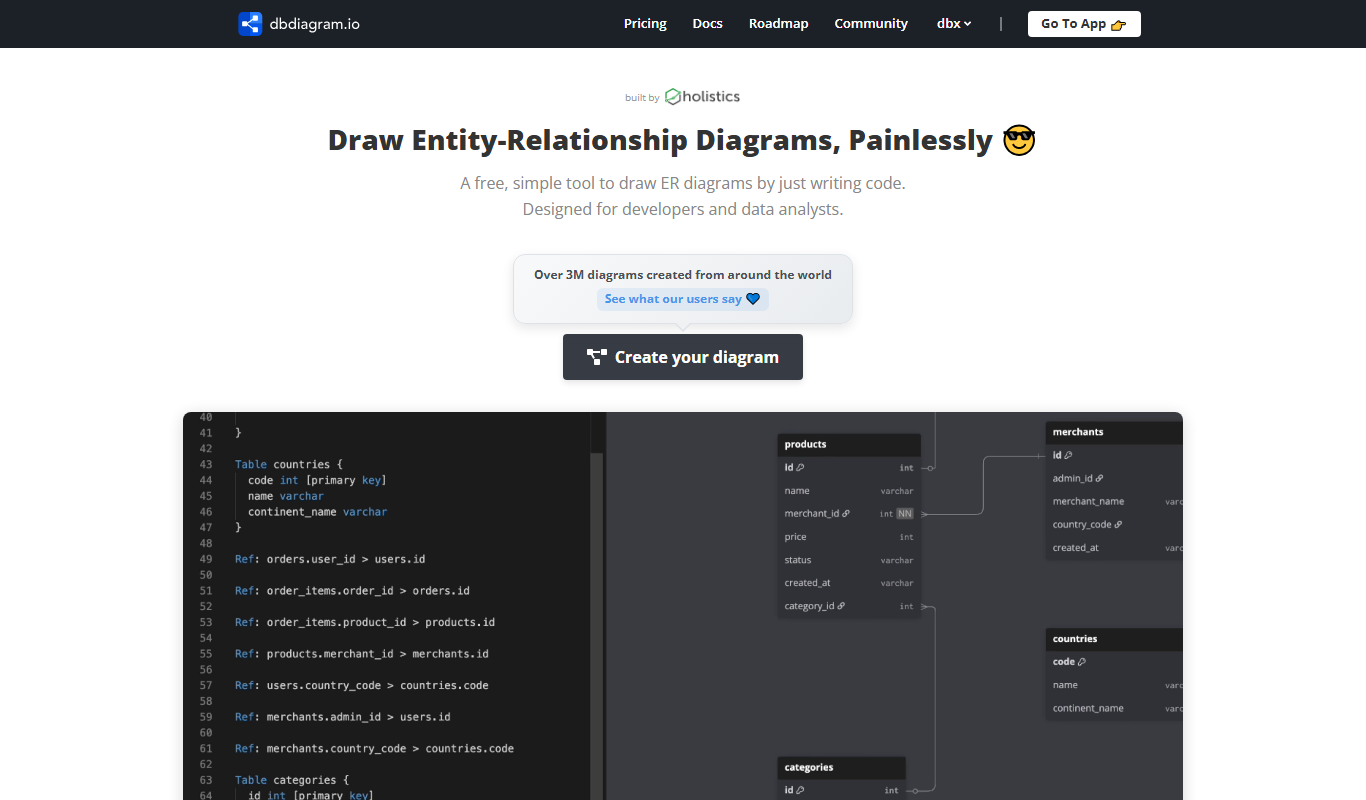
dbdiagram.io
dbdiagram.io is a web-based tool that allows developers and data architects to create, visualize, and share database diagrams using a simple DSL and SQL import/export features.
Free
QuickDBD
QuickDBD is a web-based tool that lets you create database diagrams quickly by typing schema definitions in a simple text format, which it converts into visual ER diagrams in real time.
Free
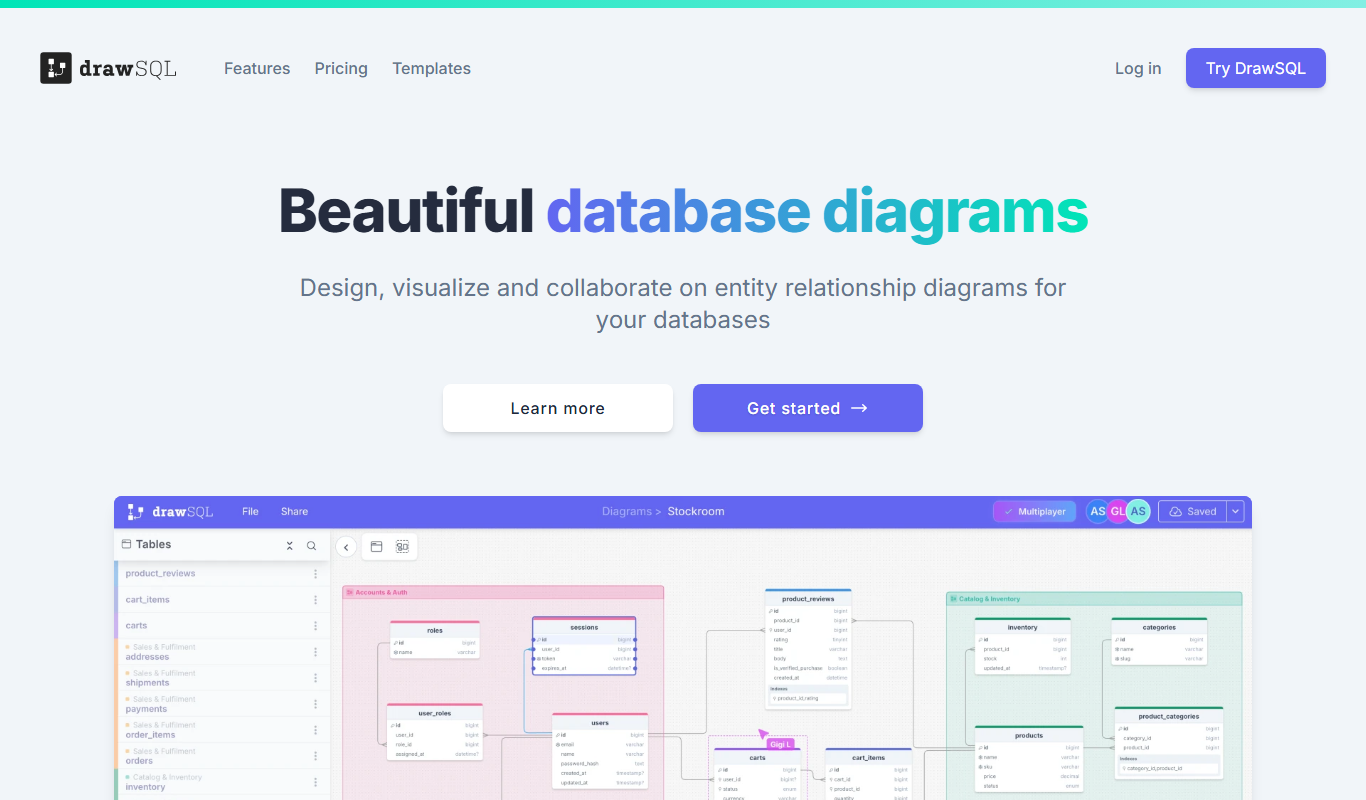
DrawSQL
DrawSQL is a web platform that enables teams to collaboratively design, visualize, and export database schemas using interactive diagrams and real-time editing.
More AI Knowledge Base Tools tools
Other tools in the same category, for when this one is not quite the fit.

Free
Penseum
Penseum is a knowledge management platform that helps individuals and teams organize, share, and collaborate on notes and documents through a hierarchical structure and powerful search, accessible via web and API.
Free
Asklo AI
Asklo AI is an AI-powered conversational search platform that enables users to query internal documents and data sources using natural language, providing context-aware answers and seamless integration via API.

Custom Pricing
Glean
Glean is an AI-powered enterprise knowledge management platform that integrates multiple data sources to provide unified search, expert identification, and collaboration tools for organizations.

Free Trial
RAGFlow
RAGFlow is a no-code AI platform that enables users to build and automate retrieval-augmented generation workflows by integrating document retrieval with generative AI to provide accurate, context-aware responses.
Free Trial
Neocortex
Neocortex is an AI-driven knowledge management platform that centralizes company data and provides fast, accurate search and collaboration tools for teams and enterprises.

Free
Nolej
Nolej is an AI-powered education platform that generates personalized learning content and manages knowledge bases to improve learner engagement and outcomes.

Free
Knowee AI
Knowee AI is an AI-powered knowledge management platform that centralizes and organizes team knowledge, enabling natural language search and collaboration to improve productivity.
Contact for pricing
Knowledge AI
Knowledge AI is an AI-powered platform that enables enterprises to manage and search their internal knowledge bases efficiently using semantic search and natural language queries.