

From my experience with Deploya, I found it excels at simplifying complex cloud deployment workflows, especially for teams managing multi-cloud environments. The platform’s integration with Kubernetes and Terraform provides a solid foundation for infrastructure as code, making deployments more reliable and repeatable. After spending time with Deploya, I can say it’s particularly well-suited for DevOps engineers and cloud architects looking to automate CI/CD pipelines without juggling multiple tools. However, the platform currently only supports web access, which might limit flexibility for users on the go. Overall, if you need a streamlined, automated DevOps platform with multi-cloud capabilities, Deploya delivers strong value.
Deploya DevOps Platform for Automated Cloud Deployment and CI/CD Pipelines
Deploya is a DevOps automation platform that streamlines cloud deployments and CI/CD pipelines by integrating infrastructure as code and multi-cloud orchestration.
- Best for
- Automated Cloud Deployments
- Key capability
- Automated CI/CD Pipelines
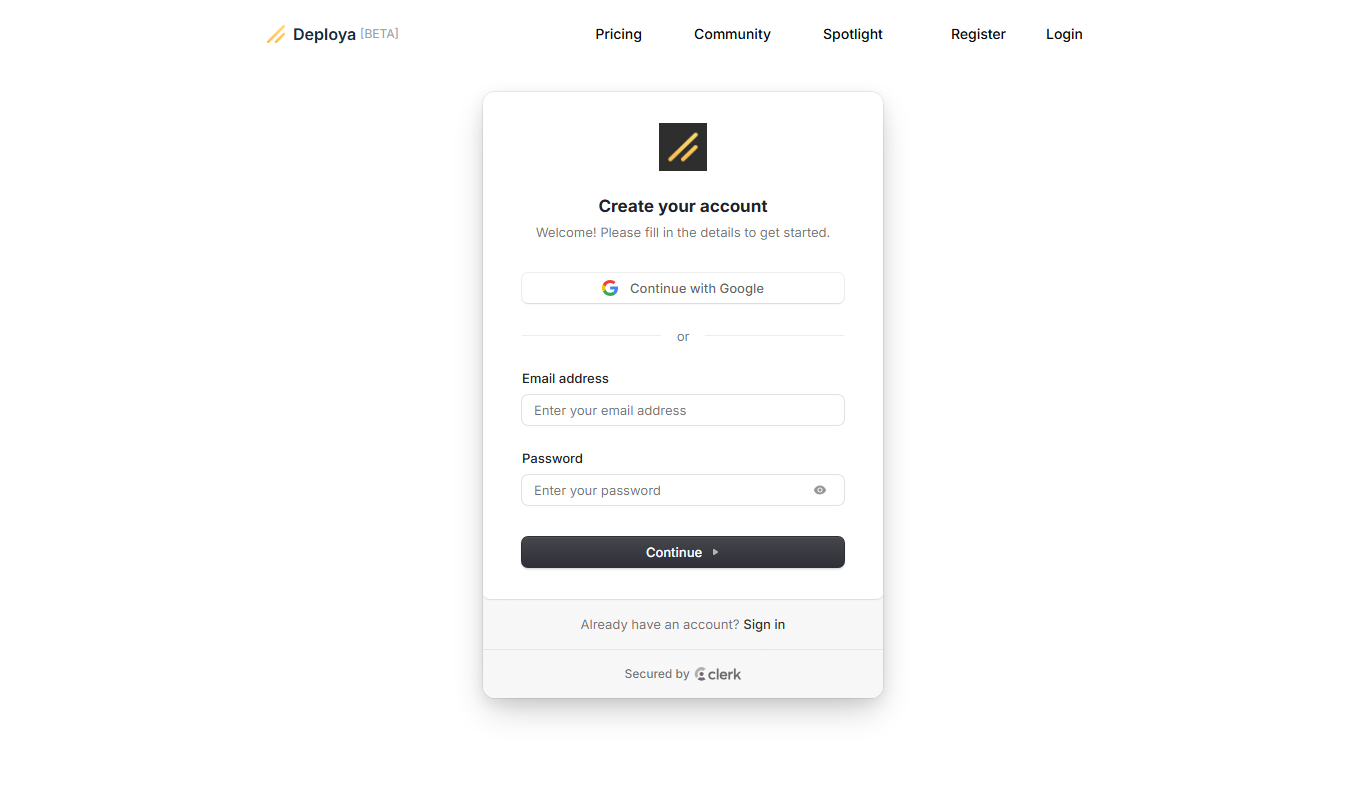

What is Deploya?
Deploya is a DevOps automation platform designed to streamline cloud deployments and continuous integration/continuous delivery (CI/CD) pipelines. It provides a unified interface to manage infrastructure as code, automate deployment workflows, and orchestrate multi-cloud environments. By integrating with popular containerization and infrastructure tools like Kubernetes, Docker, and Terraform, Deploya helps teams accelerate software delivery while maintaining reliability and security.
Key features of Deploya
Deploya offers automated deployment pipelines, infrastructure as code integration, multi-cloud orchestration, role-based access control, and real-time monitoring. Its web-based platform simplifies complex DevOps tasks, enabling faster and more consistent software releases.
Automated CI/CD Pipelines
Create and manage continuous integration and delivery workflows to automate software releases.
Infrastructure as Code Support
Integrate Terraform and Kubernetes manifests for declarative infrastructure management.
Multi-Cloud Deployment
Deploy applications seamlessly across multiple cloud providers from a single platform.
Role-Based Access Control
Manage user permissions and secure access to deployment environments.
Real-Time Monitoring and Logs
Track deployment status and view logs to quickly identify and resolve issues.
Pros and cons of Deploya
Pros
- Simplifies complex multi-cloud deployments
- Supports infrastructure as code with Terraform and Kubernetes
- User-friendly web interface for pipeline management
- Real-time monitoring and detailed logs
- Flexible pricing plans including a free trial
Cons
- Limited mobile platform support (web only)
- Pricing details for Enterprise plans require direct contact
- May require DevOps knowledge to fully leverage advanced features
Key use cases for Deploya
Automated Cloud Deployments
Deploya enables teams to automate deployment workflows across multiple cloud providers, reducing manual errors and speeding up release cycles.
Continuous Integration and Delivery
Integrate code changes automatically and deploy them through customizable CI/CD pipelines with Deploya’s platform.
Infrastructure as Code Management
Manage infrastructure provisioning using Terraform and Kubernetes configurations directly within Deploya.
Multi-Cloud Orchestration
Deploya supports orchestrating deployments across various cloud environments, enabling hybrid and multi-cloud strategies.
Team Collaboration and Access Control
Facilitate collaboration among development and operations teams with role-based access and audit trails.
How Deploya works
-
1
Sign Up
Create an account on Deploya’s web platform to access the dashboard.
-
2
Connect Cloud Providers
Link your cloud accounts such as AWS, GCP, or Azure for deployment orchestration.
-
3
Configure Pipelines
Set up CI/CD pipelines by defining build, test, and deployment stages using Deploya’s interface.
-
4
Deploy and Monitor
Trigger deployments automatically or manually and monitor progress and logs in real time.
Who is using Deploya
DevOps engineers
Cloud architects
Software development teams
IT operations teams
Startups and enterprises adopting multi-cloud strategies
Deploya pricing
Free Trial
$0 for 14 days
Full access to all features for 14 days to evaluate the platform.
Pro
$49/month
Includes unlimited pipelines, multi-cloud support, and premium support.
Enterprise
Custom pricing
Tailored solutions with dedicated support, SLAs, and advanced security features.
Plans and prices are as published by the vendor and can change. Check the official site before you buy. Open the pricing page (opens in a new tab)
Frequently asked questions about Deploya
Deploya supports major cloud providers including AWS, Google Cloud Platform, and Microsoft Azure.
Yes, Deploya can integrate with popular tools and supports custom pipeline configurations.
Yes, Deploya offers a 14-day free trial with full access to all features.
Yes, Deploya supports Kubernetes and allows you to manage manifests and deployments directly.
This tool is designed to help users accomplish its core tasks more efficiently. It is typically used by individuals or teams looking to improve productivity and workflow.
Yes, it can help with that use case depending on how you configure it and what features are available. You’ll get the best results with clear inputs and a defined goal.
It depends on your specific needs and how you plan to use the tool. The official website and documentation are the best sources for the latest details.
Sign in to review this tool.
Sign In to ReviewNo reviews yet
Be the first to share how this tool worked for you.
Ask about pricing, limits, or how it compares — or answer someone else.
Sign In to AskNo questions yet
Have a question about using or paying for this tool? Be the first to ask.
Featured on TiorAI



Alternative Tools
Explore similar AI tools that might fit your needs

Free
CircleCI
CircleCI is a cloud-based continuous integration and deployment platform that automates software build, test, and deployment workflows to accelerate development and improve code quality.

Free
Jenkins
Jenkins is an open-source automation server that enables continuous integration and continuous delivery by automating software build, test, and deployment processes.
More AI Devops Tools tools
Other tools in the same category, for when this one is not quite the fit.

Free Trial
PagerGPT
PagerGPT is an AI assistant that integrates with PagerDuty to automate incident triage, provide contextual summaries, and assist engineers in resolving incidents faster.

Free
0ptikube
0ptikube is an open-source tool designed to simplify Kubernetes cluster creation, management, and automation for developers and DevOps professionals.
Free Trial
brainboard.co
Brainboard is a web-based platform that allows users to visually design cloud infrastructure and automatically generate Terraform code for deployment across multiple cloud providers, enhancing collaboration and compliance.

Free Trial
Released
Released is a cloud platform that helps teams plan, automate, and coordinate software releases with features like visual planning boards, workflow automation, and reporting.
Free Trial
brainboard.co
Brainboard is a web-based platform that allows users to visually design cloud infrastructure and automatically generate Terraform code for multi-cloud deployments, facilitating collaboration and compliance.

Free
K8Studio
K8Studio is an integrated development environment designed to manage Kubernetes clusters and develop cloud-native applications with features like multi-cluster support, YAML editing, and CI/CD integration.

Free
Release AI
Release AI is a cloud platform that monitors APIs in real-time, detects incidents automatically, and alerts teams to ensure high API reliability and performance.

Free
BuildKeeper
BuildKeeper is a tool that automates code review by analyzing pull requests and provides detailed insights into CI/CD pipelines to improve code quality and developer productivity.