

From my experience with Anima, it excels at bridging the gap between design and development by automating the conversion of Figma and other design files into clean React code. This significantly speeds up the prototyping and handoff process, making it ideal for UI/UX designers and frontend developers working collaboratively. However, the tool requires some familiarity with code to fully leverage the exported assets, and certain advanced features are locked behind paid plans. Overall, if you want to streamline your design-to-code workflow and create interactive prototypes quickly, Anima delivers practical and efficient solutions.
Anima App for Designers: Convert Figma to Code with AI Automation
Anima is a tool that converts UI/UX designs from Figma, Sketch, or Adobe XD into clean React, HTML, or Vue code, enabling interactive prototypes and faster developer handoff.
- Best for
- Design to Code Conversion
- Key capability
- Code Export

What is Anima?
Anima is a design-to-code platform that integrates with Figma, Sketch, and Adobe XD to transform UI/UX designs into developer-friendly code automatically. It streamlines the handoff process between designers and developers by generating React, HTML, or Vue code directly from design files, enabling faster prototyping and production deployment.
Key features of Anima
Anima offers features such as real code export, interactive prototypes, responsive design support, and collaboration tools that help teams convert static designs into functional web components efficiently.
Code Export
Generate clean, reusable React, HTML, or Vue code directly from design files.
Interactive Prototypes
Create clickable, animated prototypes with real code for realistic user testing.
Responsive Design Support
Build designs that adapt to different screen sizes and devices automatically.
Design Tool Integration
Seamlessly integrates with popular design tools like Figma, Sketch, and Adobe XD.
Collaboration Features
Facilitates communication between designers and developers with shared prototypes and code.
Pros and cons of Anima
Pros
- Speeds up design-to-development handoff
- Supports multiple popular design tools
- Generates clean, reusable React code
- Enables interactive, clickable prototypes
- Facilitates collaboration between teams
Cons
- Some advanced features require paid plans
- Learning curve for non-developers to understand exported code
- Limited support for complex animations
Key use cases for Anima
Design to Code Conversion
Automatically convert Figma designs into clean, developer-friendly React, HTML, or Vue code.
Rapid Prototyping
Create interactive prototypes with real code that can be tested and iterated quickly.
Collaboration Between Designers and Developers
Bridge the gap between design and development teams by providing code-ready assets directly from design files.
No-Code Website Building
Enable non-developers to build responsive websites from design files without writing code.
Export Production-Ready Code
Generate clean, reusable React components that can be integrated into production applications.
How Anima works
-
1
Install Plugin
Add the Anima plugin to your Figma, Sketch, or Adobe XD environment.
-
2
Design Your UI
Create your user interface designs as usual within your design tool.
-
3
Add Interactions
Use Anima to add links, hover states, and animations to your design elements.
-
4
Export Code
Export your design as clean React, HTML, or Vue code ready for development or prototyping.
-
5
Collaborate and Iterate
Share prototypes and code with your team for feedback and continuous improvement.
Who is using Anima
UI/UX designers
Frontend developers
Product teams
No-code enthusiasts
Design agencies
Anima pricing
Free
$0/month
Basic features with limited code exports and prototypes.
Pro
$19/month
Unlimited prototypes, code exports, and advanced collaboration tools.
Team
$49/month
Designed for teams with shared projects, priority support, and enhanced features.
Plans and prices are as published by the vendor and can change. Check the official site before you buy. Open the pricing page (opens in a new tab)
Compare similar tools
How Anima lines up against the tools people weigh it against.
Character.AI
Anima
Character AI vs Anima: Features, Pricing & Performance
Frequently asked questions about Anima
Anima supports Figma, Sketch, and Adobe XD through dedicated plugins.
You can export React, HTML, and Vue code from your designs.
Yes, Anima generates clean, reusable code suitable for production with minimal adjustments.
Yes, Anima allows you to add interactions and animations to create realistic prototypes.
It depends on your specific needs and how you plan to use the tool. The official website and documentation are the best sources for the latest details.
It depends on your specific needs and how you plan to use the tool. The official website and documentation are the best sources for the latest details.
Yes, it can help with that use case depending on how you configure it and what features are available. You’ll get the best results with clear inputs and a defined goal.
Yes, it can help with that use case depending on how you configure it and what features are available. You’ll get the best results with clear inputs and a defined goal.
Sign in to review this tool.
Sign In to ReviewNo reviews yet
Be the first to share how this tool worked for you.
Ask about pricing, limits, or how it compares — or answer someone else.
Sign In to AskNo questions yet
Have a question about using or paying for this tool? Be the first to ask.
Featured on TiorAI



Alternative Tools
Explore similar AI tools that might fit your needs

Free
Framer
Framer is a design and prototyping tool that allows users to create interactive UI prototypes and export production-ready React code, supporting collaboration and design systems.
Free
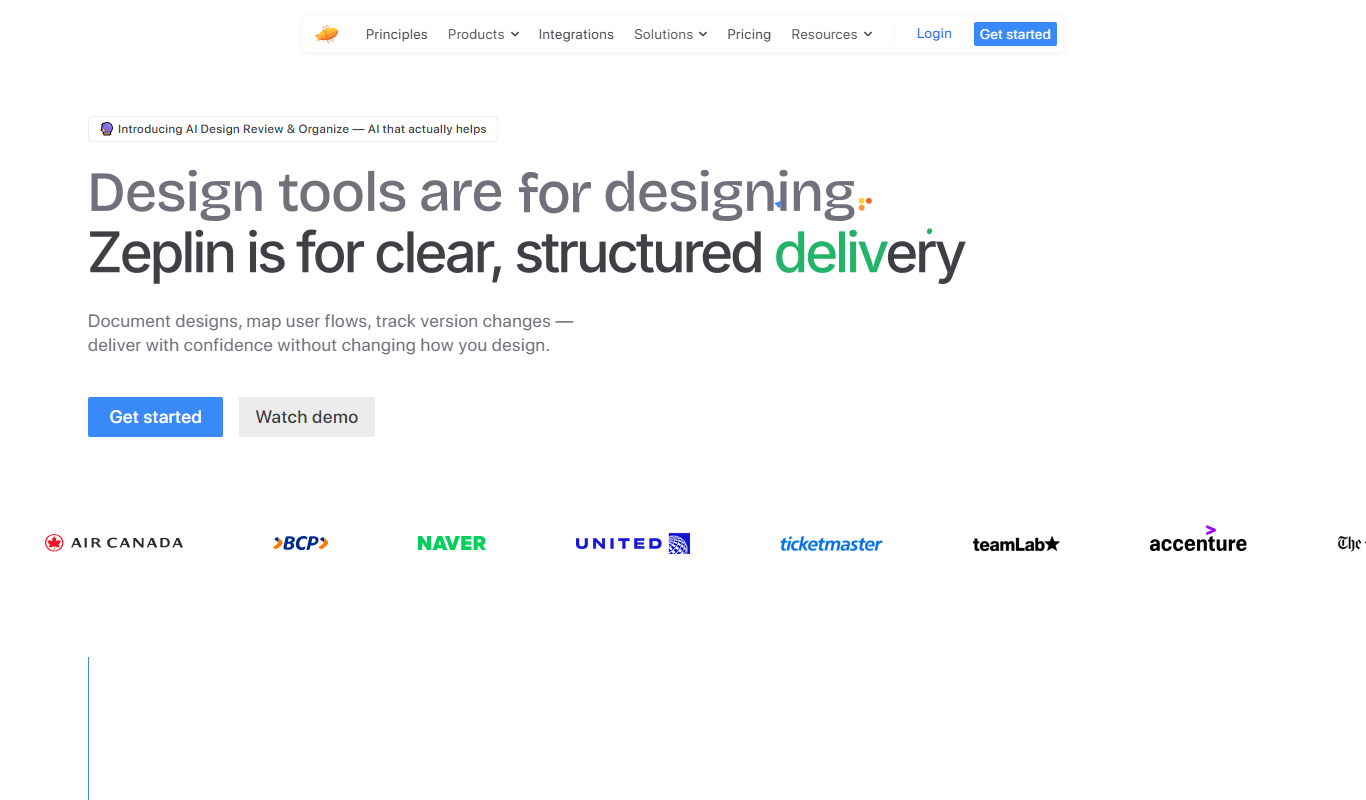
Zeplin
Zeplin is a collaborative platform that simplifies design handoff by generating specs, assets, and code snippets from design files, enabling seamless communication between designers and developers.
More AI Developer Tools tools
Other tools in the same category, for when this one is not quite the fit.

Freemium
Amadeus Travel API
Amadeus Travel API is a developer platform offering RESTful APIs to access global flight, hotel, and travel data for building travel booking and itinerary management applications.

Freemium
Zyte
Zyte is a web scraping platform that enables businesses and developers to extract structured data from websites using smart crawlers, proxy rotation, and API integration to automate data collection at scale.

Enterprise License
NiceLabel
NiceLabel is an enterprise label design and management software that enables businesses to create, manage, and automate barcode and RFID label printing with compliance and integration capabilities.
Perpetual License
Geomagic Design X
Geomagic Design X is a reverse engineering software that converts 3D scan data into editable CAD models, enabling precise product design and manufacturing workflows.
Free
Changelog Generator
GitHub Changelog Generator is a free, open-source Ruby-based CLI tool that automates the creation of changelogs by extracting data from GitHub issues, pull requests, and commits to streamline release note management.

Free
UnoCSS
UnoCSS is an open-source, utility-first atomic CSS engine that generates CSS on-demand based on the classes used in your code, optimizing performance by minimizing CSS bundle size.

Enterprise
CockroachDB
CockroachDB is a distributed SQL database designed for cloud-native applications that require strong consistency, high availability, and horizontal scalability across multiple regions.
Subscription
VividCortex
VividCortex is a cloud-based database monitoring platform that provides real-time insights into SQL query performance and resource usage to help optimize and troubleshoot relational databases.