

Significant Figures Calculator
Significant figures represent the meaningful digits in a number that indicate its precision. These include all non-zero digits, zeros between significant digits, and trailing zeros in decimal numbers. Understanding significant figures is essential in fields like science and engineering, where the accuracy of measurements impacts…
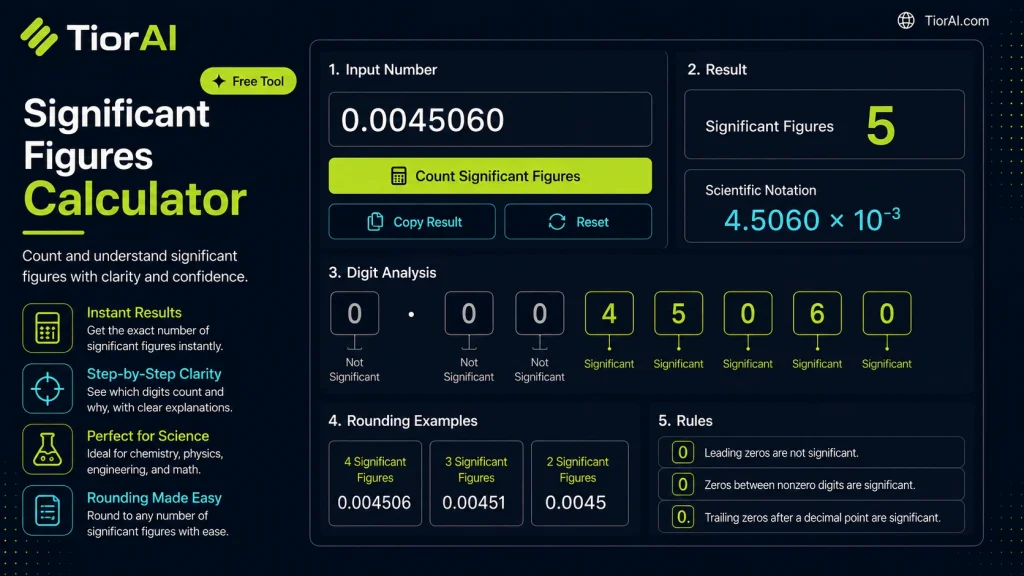
| Rounded | - |
|---|---|
| Scientific | - |
| Identified Sig Figs | - |
How to use it
- Enter Your Values Input your numbers or parameters into the Significant Figures Calculator. Fill in all required fields for an accurate calculation.
- Calculate Results Click the calculate button to process your inputs. The Significant Figures Calculator delivers instant, accurate results.
- Review and Use Review your calculated results, explore the breakdown, and copy or share the output for your needs.
Tip The Significant Figures Calculator rounds results automatically, but you can use the full decimal output for precision work.
Understanding Significant Figures
Significant figures are the digits in a number that carry meaningful information about its precision. They include all non-zero digits, any zeros between significant digits, and trailing zeros in the decimal portion. This concept is crucial in scientific and engineering calculations where the precision of measurements affects the reliability of results.
Using significant figures helps communicate the accuracy of data and prevents overstatement of precision. For example, if a measurement is recorded as 12.3, it implies three significant figures, indicating a certain level of confidence in the measurement. In contrast, 12.300 suggests greater precision with five significant figures.
Why is this important? When performing calculations, the result should not imply greater precision than the least precise measurement. Rounding to the correct number of significant figures ensures consistency and honesty in reporting data.
Common situations where significant figures are used include:
- Scientific experiments where measurements have inherent uncertainty.
- Engineering calculations requiring precise tolerances.
- Financial computations where rounding affects outcomes.
- Data reporting in research papers and technical documents.
What Are Significant Figures?
Significant figures represent the meaningful digits in a number that indicate its precision. These include all non-zero digits, zeros between significant digits, and trailing zeros in decimal numbers. Understanding significant figures is essential in fields like science and engineering, where the accuracy of measurements impacts the validity of results.
When to Use a Significant Figures Calculator
This tool is useful when you need to round numbers to a specific precision without losing the integrity of the data. It is commonly applied in scientific experiments, engineering calculations, and financial reporting to ensure that results reflect the true accuracy of the input values.
Common Mistakes to Avoid
- Mixing up significant figures with decimal places, which can lead to incorrect rounding.
- Overlooking trailing zeros in decimal numbers, causing misinterpretation of precision.
- Rounding numbers too early in multi-step calculations, which can accumulate errors.
Technical Context
Rounding numbers to significant figures involves identifying the correct digit to round to and adjusting the number accordingly. This process differs from simply rounding to a fixed number of decimal places because it accounts for the overall precision of the number, regardless of its scale. Using a calculator designed for significant figures automates this process, reducing human error and ensuring consistent results.
Frequently asked questions
Reviews and questions
Whether this tool gave people the answer they needed, and what they asked about it.
Sign in to review this tool.
Sign In to ReviewNo reviews yet
Be the first to say whether this tool gave you what you needed.
Ask how to read the result, or what the tool does with an edge case — or answer someone else.
Sign In to AskNo questions yet
Not sure how to read a result? Be the first to ask.