

Safelink Decoder
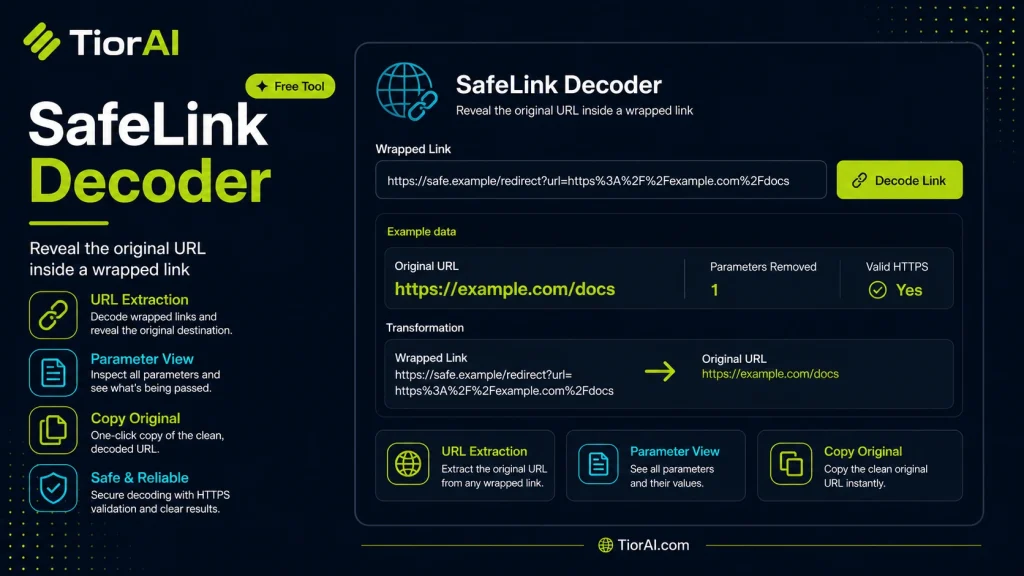
SafeLink decoding is the process of extracting the original URL hidden inside a SafeLink-protected hyperlink. SafeLinks are security-wrapped URLs used by services like Microsoft Defender to protect users from malicious websites by scanning and rewriting links in emails or web content. These rewritten links often…
How to use it
- Paste or Enter Your Input Paste your code, text, or data into the input field. The tool supports large inputs without performance issues.
- Process and Analyze Click the action button or let the tool auto-process your input. Results appear in real time with highlighted details.
- Copy or Download the Output Review the results and copy the output to clipboard or download as a file for use in your project.
Tip This tool preserves your input formatting. Check format settings if the output differs from expected.
Understanding SafeLink Decoding
SafeLink decoding involves extracting the original URL from a SafeLink-protected hyperlink. SafeLinks are URLs wrapped by security services, such as Microsoft Defender, to protect users from malicious sites by scanning and rewriting links in emails or web pages. These rewritten URLs often appear complex and obfuscated, making it difficult to see the actual destination.
Why is decoding needed? When a link is wrapped in a SafeLink, it can be challenging to verify its legitimacy or destination before clicking. Decoding reveals the true URL hidden behind the SafeLink wrapper, allowing users or security analysts to assess the link’s safety without exposing themselves to potential threats.
Common use cases include:
- Security professionals analyzing suspicious emails or messages.
- Users wanting to verify a link’s destination before clicking.
- Developers or IT teams troubleshooting email filtering and link rewriting issues.
SafeLink decoding is a form of URL parsing and extraction, focusing on reversing the protective wrapping applied by security services. It helps maintain security awareness and transparency in environments where link rewriting is common.
What is SafeLink Decoding?
SafeLink decoding is the process of extracting the original URL hidden inside a SafeLink-protected hyperlink. SafeLinks are security-wrapped URLs used by services like Microsoft Defender to protect users from malicious websites by scanning and rewriting links in emails or web content. These rewritten links often look complex and obscure the actual destination.
When to Use a SafeLink Decoder
- When you receive an email containing SafeLinks and want to verify the destination before clicking.
- During security investigations to analyze suspicious links embedded in messages.
- For IT professionals troubleshooting email filtering or link rewriting issues in corporate environments.
Common Mistakes to Avoid
- Assuming the decoded URL is safe without further checks—decoding only reveals the destination, not its safety.
- Confusing SafeLink decoding with general URL decoding or URL shortening, which serve different purposes.
SafeLink decoding is a valuable technique for improving security awareness by making hidden URLs visible. It helps users and security teams understand where a link actually leads, reducing the risk of phishing or malware infections caused by clicking on disguised URLs.
Frequently asked questions
Reviews and questions
Whether this tool gave people the answer they needed, and what they asked about it.
Sign in to review this tool.
Sign In to ReviewNo reviews yet
Be the first to say whether this tool gave you what you needed.
Ask how to read the result, or what the tool does with an edge case — or answer someone else.
Sign In to AskNo questions yet
Not sure how to read a result? Be the first to ask.
AI tools related to this topic
Tools from the TiorAI directory that work on the same kind of job.

ChatGPT
ChatGPT is an AI chatbot by OpenAI powered by GPT-4o. It handles writing, coding, research, data analysis, and natural conversation. Free tier available, Plus at $20/month.