

From my experience with Label Studio, it stands out as a versatile and powerful open source data labeling tool that supports a broad range of data types including images, text, audio, and video. Its customizable interfaces and API integrations make it highly adaptable for various machine learning projects. However, setting it up and tailoring it to specific workflows requires some technical expertise, which might be a barrier for beginners. Overall, if you need a flexible, self-hosted annotation platform with strong community support, Label Studio delivers excellent value.
Label Studio Open Source Data Labeling Tool for Machine Learning Projects
Label Studio is an open source data labeling tool by Heartex that supports multi-modal annotation for machine learning datasets with customizable interfaces and API integration.
- Best for
- Image and Video Annotation
- Key capability
- Multi-Modal Data Support
Your actions
Save Label Studio, follow its updates and vote on it — everything stays in your account.
Sign in or create a free account
What is Label Studio?
Label Studio is an open source data labeling and annotation tool designed to help teams create high-quality training datasets for machine learning models. It supports a wide variety of data types including images, videos, text, and audio. The platform offers customizable labeling interfaces and flexible deployment options, making it suitable for diverse ML projects.
Key features of Label Studio
Label Studio provides versatile annotation capabilities, supports multiple data types, offers collaborative labeling workflows, and integrates easily with machine learning pipelines. Its open source nature allows customization and self-hosting for data privacy and control.
Multi-Modal Data Support
Annotate images, videos, text, audio, and time series data within one platform.
Customizable Labeling Interfaces
Define your own labeling templates using XML-like configuration for tailored annotation workflows.
Collaboration and Quality Control
Supports multiple users, annotation review, and consensus scoring to ensure data quality.
Flexible Deployment
Run Label Studio on-premises, in the cloud, or via Docker containers for maximum control.
API and SDK Integration
Integrate labeling workflows into ML pipelines with REST APIs and Python SDK.
Pros and cons of Label Studio
Pros
- Supports a wide range of data types and annotation tasks
- Open source with customizable interfaces
- Flexible deployment options including on-premises
- API and SDK support for integration
- Strong community and documentation
Cons
- Requires technical knowledge to set up and customize
- Enterprise features require paid plans
- User interface can be complex for beginners
Key use cases for Label Studio
Image and Video Annotation
Label Studio supports bounding boxes, polygons, keypoints, and segmentation masks for annotating images and videos.
Text and Audio Labeling
Users can label text data with entity recognition, classification, and transcription tasks, as well as audio transcription and classification.
Custom ML Dataset Creation
Create tailored datasets for training machine learning models across various domains using customizable labeling interfaces.
Quality Control and Review
Built-in tools allow for annotation review, consensus scoring, and quality assurance workflows.
Integration with ML Pipelines
Label Studio can be integrated with existing machine learning workflows via APIs and SDKs for seamless data management.
How Label Studio works
- 1
Install and Set Up
Deploy Label Studio locally or on a server using Docker or pip installation.
- 2
Configure Labeling Interface
Customize labeling templates to fit your data type and annotation requirements.
- 3
Import Data
Upload datasets such as images, videos, text, or audio files for annotation.
- 4
Annotate Data
Label data using the intuitive interface with support for multiple annotation types.
- 5
Review and Export
Perform quality checks and export labeled data in formats compatible with ML frameworks.
Who is using Label Studio
Machine learning engineers
Data scientists
AI research teams
Annotation service providers
Enterprises needing custom data labeling
Label Studio pricing
Open Source
$0
Free to use with full access to core features; self-hosted with community support.
Enterprise
Custom pricing
Includes advanced features, dedicated support, and deployment assistance.
Plans and prices are as published by the vendor and can change. Check the official site before you buy. Open the pricing page (opens in a new tab)
Frequently asked questions about Label Studio
Yes, Label Studio is open source and free to use with core features. Enterprise plans are available for additional support.
You can annotate images, videos, text, audio, and time series data.
Yes, it offers REST APIs and SDKs to integrate with your ML workflows.
Yes, it supports multiple users, annotation review, and quality control features.
This tool is designed to help users accomplish its core tasks more efficiently. It is typically used by individuals or teams looking to improve productivity and workflow.
Some tools offer a free plan or trial with limited features. Availability can vary, so confirm on the official website.
Yes, it can help with that use case depending on how you configure it and what features are available. You’ll get the best results with clear inputs and a defined goal.
Integration support depends on the tool and its available connectors or API. Check the official documentation or integrations page to confirm what is supported.
Sign in to review this tool.
Sign In to ReviewNo reviews yet
Be the first to share how this tool worked for you.
Ask about pricing, limits, or how it compares — or answer someone else.
Sign In to AskNo questions yet
Have a question about using or paying for this tool? Be the first to ask.
Featured on TiorAI



Alternative Tools
Explore similar AI tools that might fit your needs

Freemium
Supervisely
Supervisely is an AI platform specializing in image and video annotation, dataset management, and deep learning model training for computer vision applications.

Paid
Prodigy
Prodigy is a machine teaching tool for efficient data annotation that integrates active learning and customizable workflows to accelerate machine learning model training.

Free
VGG Image Annotator
VGG Image Annotator is a free, browser-based tool for manual image and video annotation supporting multiple shapes and export formats, developed by the University of Oxford.
More AI Audio Editing tools
Other tools in the same category, for when this one is not quite the fit.

Free
Audiotool
Audiotool is a web-based digital audio workstation that lets users create, mix, and collaborate on music projects online using virtual instruments and effects without software installation.

Free
Soundtrap
Soundtrap is a cloud-based digital audio workstation that enables users to create, record, edit, and collaborate on music and podcasts online through web and mobile platforms.

Free
TuneIn Radio
TuneIn Radio is a streaming platform providing access to live radio stations, podcasts, music, and news globally, available on web, mobile, and smart devices with free and premium options.
Free Trial
Radio.co
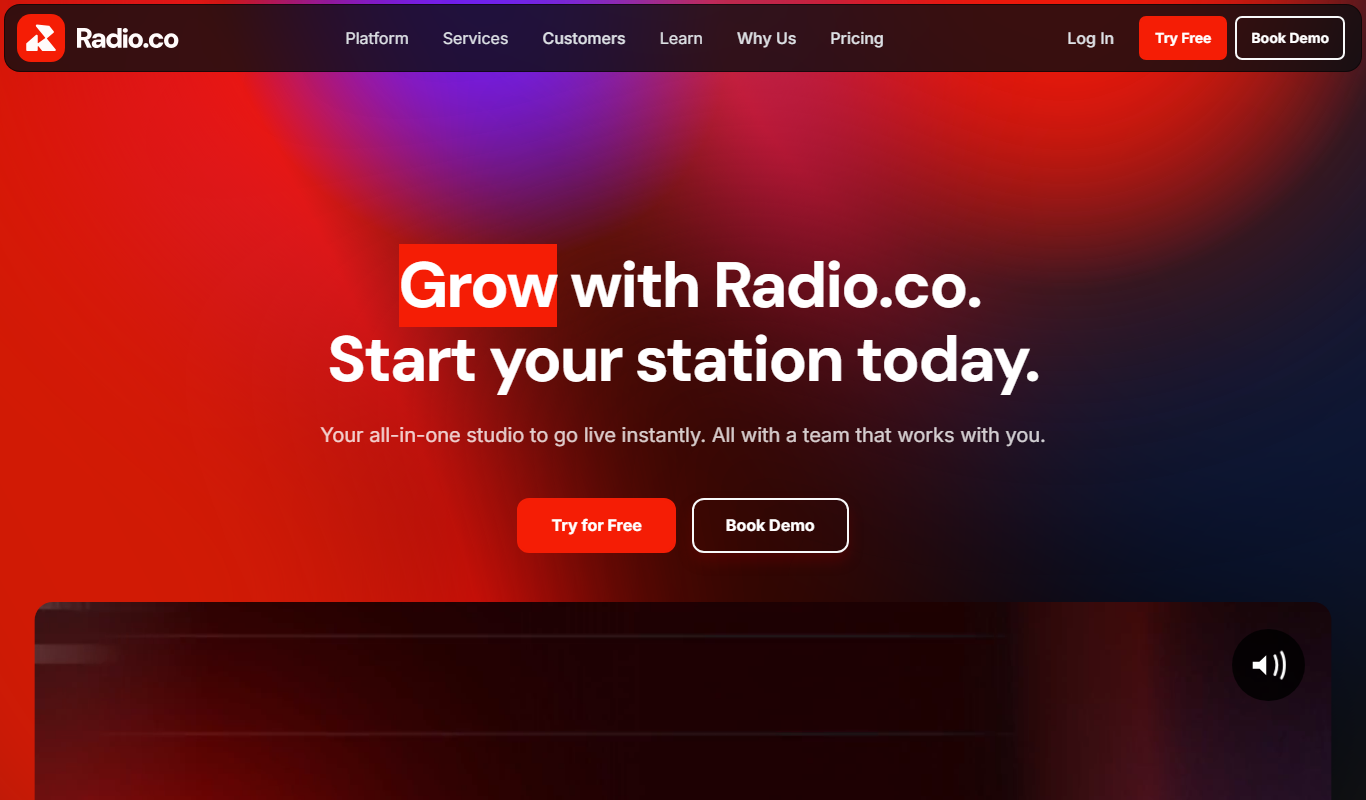
Radio.co is an online platform that allows users to create, manage, and broadcast internet radio stations and podcasts with live streaming, automated scheduling, and monetization features.

Free
Noted
Noted is an AI-powered note-taking app that records audio and provides synchronized transcription and note organization, available on iOS and macOS.

Free
TwistedWave Online
TwistedWave Online is a browser-based audio editor that enables users to record, edit, and export audio files without installing software, featuring multitrack editing and real-time effects.

Free
AudioMass
AudioMass is a free, open-source online audio editor that runs in your browser, enabling multi-track editing, real-time effects, and audio recording without installation.

Free Trial
Acon Digital DeNoise
Acon Digital DeNoise is a professional audio noise reduction tool that removes unwanted background noise from recordings using adaptive algorithms, available as standalone software and plugins for Windows and macOS.