

HTTP Headers Parser
Run instant network lookups with the free http headers parser. Enter a domain, IP, or URL to get detailed diagnostic information and status reports.
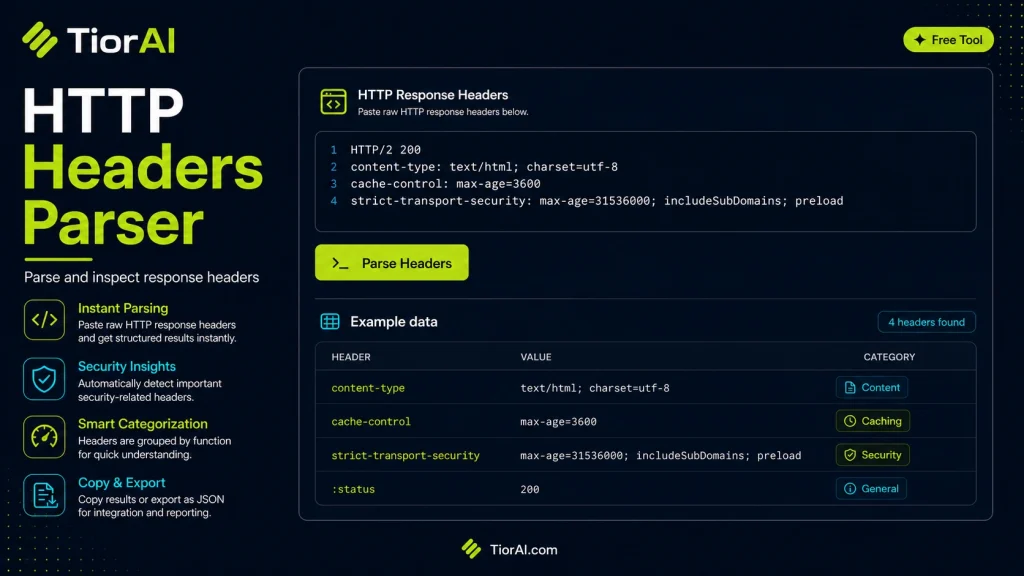
Paste copied request or response headers to break them into a readable structure.
How to use it
- Enter Domain or IP Enter the domain name, IP address, or URL into the Http Headers Parser to start the lookup or analysis.
- Run the Check Click the check button to query the relevant databases. Results are retrieved and displayed in seconds.
- Analyze the Results Review the detailed results including status, records, and diagnostics to troubleshoot or verify your query.
Tip Run the Http Headers Parser from different times of day to catch intermittent issues that only appear during peak traffic.
Understanding HTTP Headers and Their Parsing
HTTP headers are key-value pairs sent between a client and server during web communication. They carry metadata about the request or response, such as content type, caching policies, authentication tokens, and more. Parsing HTTP headers means extracting and interpreting these key-value pairs from raw HTTP messages to make them readable and usable.
Why parse HTTP headers? Raw HTTP headers are often a single block of text that can be difficult to analyze manually. Parsing breaks this text into structured data, allowing developers and network administrators to inspect, debug, or modify headers efficiently.
Common use cases include:
- Debugging web applications by examining request and response headers.
- Security analysis to detect suspicious or malformed headers.
- Optimizing performance by checking caching and compression headers.
- Automating header extraction in scripts or tools for monitoring or logging.
HTTP header parsing is a fundamental step in many network tools and web development workflows, enabling clearer insight into how web clients and servers communicate.
What is HTTP Header Parsing?
HTTP headers are essential components of web communication, carrying metadata about requests and responses. Parsing these headers means converting raw header text into a structured format that is easier to read and analyze. This process is crucial for developers and network professionals who need to inspect or troubleshoot HTTP traffic.
When to Use an HTTP Headers Parser
- Debugging HTTP requests and responses to identify issues with headers.
- Analyzing security headers to ensure proper protection.
- Extracting header data for monitoring or logging purposes.
- Validating headers during API development and testing.
- Reviewing caching and compression headers to optimize performance.
Common Mistakes to Avoid
- Parsing incomplete or malformed headers, which can lead to incorrect results.
- Confusing headers with the HTTP body and parsing the wrong content.
- Overlooking the case-insensitivity of header names, causing missed entries.
Understanding how HTTP headers work and using a parser correctly can greatly simplify web debugging and analysis tasks. This utility helps transform complex header data into a clear, actionable format.
Frequently asked questions
Reviews and questions
Whether this tool gave people the answer they needed, and what they asked about it.
Sign in to review this tool.
Sign In to ReviewNo reviews yet
Be the first to say whether this tool gave you what you needed.
Ask how to read the result, or what the tool does with an edge case — or answer someone else.
Sign In to AskNo questions yet
Not sure how to read a result? Be the first to ask.
AI tools related to this topic
Tools from the TiorAI directory that work on the same kind of job.
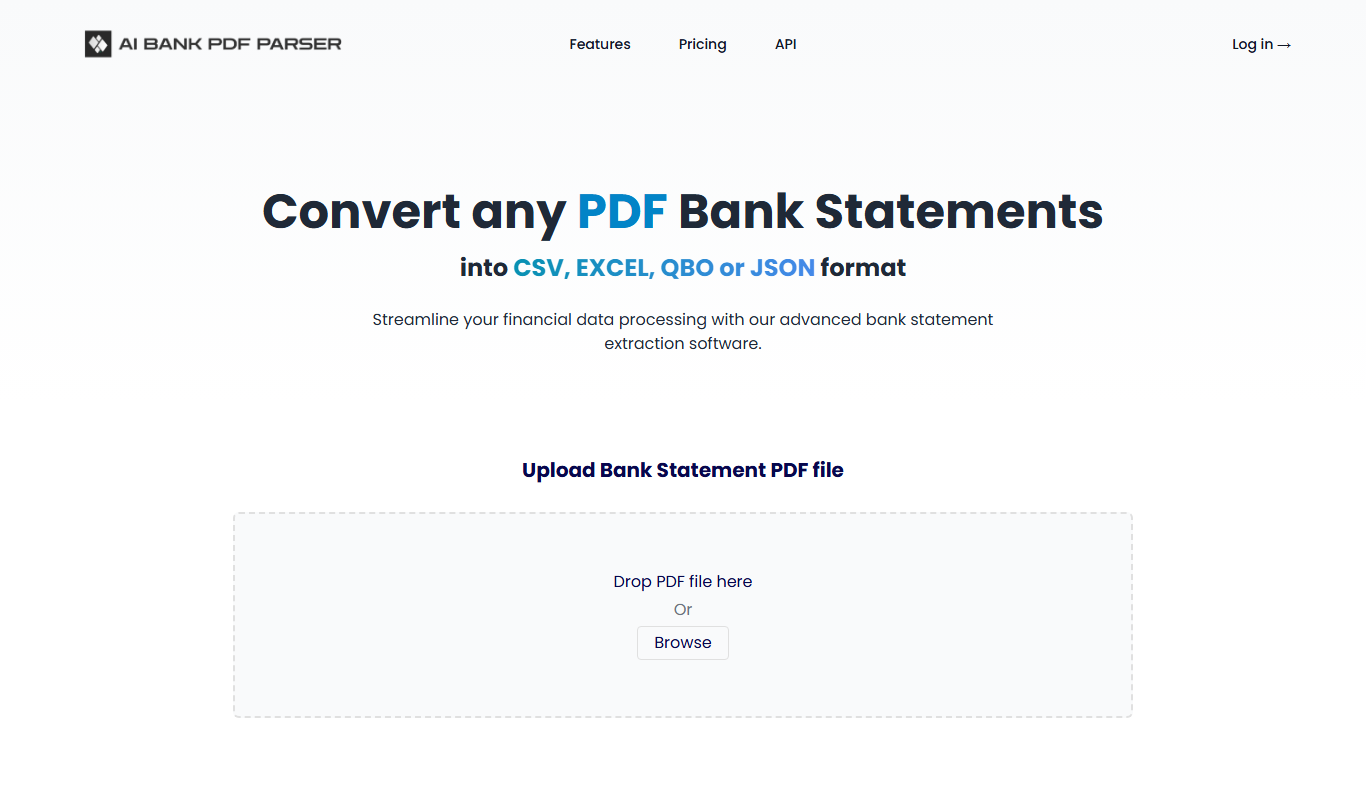
AI PDF bank statement parser
AI PDF Bank Statement Parser is a web-based tool that uses AI and OCR to automatically extract transaction and account data from PDF bank statements, enabling faster financial data processing and integration.