

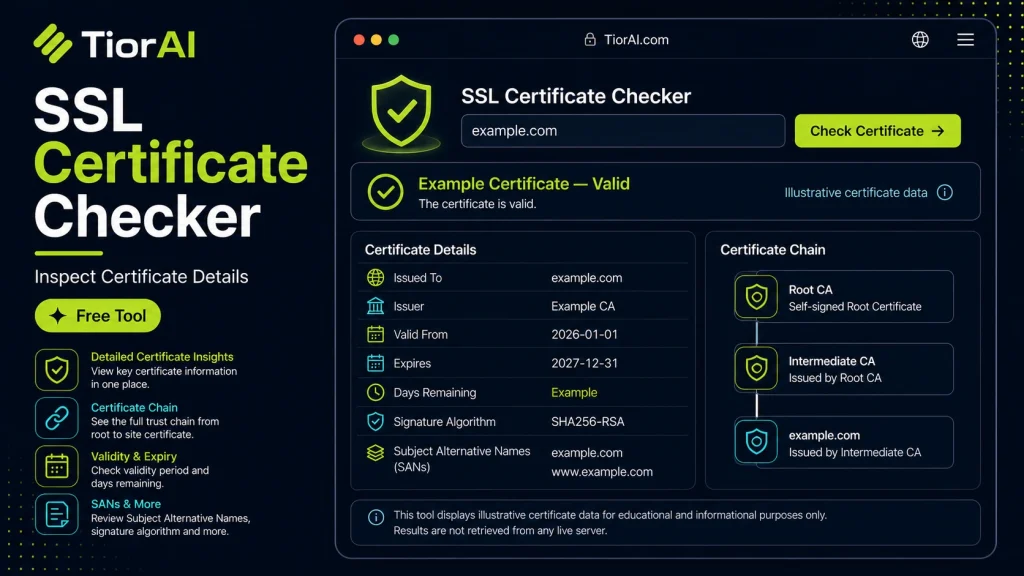
How to use it
- Enter Target URL or Data Enter the URL, domain, or data you want to check into the Ssl Certificate Checker to initiate the security scan.
- Run the Scan Click scan to analyze your input against security databases and threat intelligence sources.
- Review the Report Examine the security report with findings, risk levels, and actionable recommendations to improve safety.
Tip Use the Ssl Certificate Checker on third-party services and APIs you depend on to ensure your supply chain is secure.
Understanding SSL Certificates and Their Importance
SSL (Secure Sockets Layer) certificates are digital certificates that authenticate a website’s identity and enable encrypted connections between a web server and a browser. This encryption ensures that data transferred between users and websites remains private and secure, protecting sensitive information such as passwords, credit card numbers, and personal details.
SSL certificates are issued by trusted Certificate Authorities (CAs) and contain details like the domain name, certificate issuer, expiration date, and public key. Browsers check these certificates to verify a website’s legitimacy and display security indicators like the padlock icon.
Why SSL Certificate Checking is Necessary
- SSL certificates have expiration dates and must be renewed periodically to maintain security.
- Misconfigured or invalid certificates can cause browsers to display warnings, deterring visitors.
- Checking SSL certificates helps ensure that encryption is active and correctly implemented.
Common situations where SSL certificate checking is used include verifying new certificates after installation, troubleshooting SSL errors, and monitoring certificate validity to avoid unexpected expirations.
What is an SSL Certificate Checker?
An SSL certificate checker is a utility that inspects the SSL certificate installed on a website. SSL certificates enable encrypted communication between a user’s browser and the web server, ensuring data privacy and security. The checker retrieves certificate details such as issuer, expiration date, and domain coverage to verify its validity and proper installation.
When to Use an SSL Certificate Checker
- After installing or renewing an SSL certificate to confirm it is correctly set up.
- If your browser shows security warnings related to HTTPS connections.
- To monitor certificate expiration dates and avoid unexpected downtime.
- Before migrating or purchasing a website to verify existing SSL status.
Common Mistakes to Avoid
- Assuming HTTPS means the certificate is valid without checking details.
- Neglecting to renew certificates before they expire, causing security warnings.
- Confusing certificate errors caused by domain mismatches with expired certificates.
Regularly checking your SSL certificate helps maintain website security and trustworthiness. It ensures encrypted connections remain active and prevents visitors from encountering security alerts that can harm your site’s reputation.
Frequently asked questions
Reviews and questions
Whether this tool gave people the answer they needed, and what they asked about it.
Sign in to review this tool.
Sign In to ReviewNo reviews yet
Be the first to say whether this tool gave you what you needed.
Ask how to read the result, or what the tool does with an edge case — or answer someone else.
Sign In to AskNo questions yet
Not sure how to read a result? Be the first to ask.
AI tools related to this topic
Tools from the TiorAI directory that work on the same kind of job.

42Crunch API Security
42Crunch is an AI-powered API security platform that automates vulnerability detection, OpenAPI validation, and continuous monitoring to protect APIs throughout their lifecycle.
Amplifier Security
Amplifier Security is a cybersecurity platform that automates penetration testing and prioritizes vulnerabilities based on risk to help organizations manage and remediate security threats effectively.

Aqua Security
Aqua Security is a cloud native security platform that protects containerized applications and Kubernetes environments by providing vulnerability scanning, runtime threat detection, and compliance management integrated into DevOps workflows.

Beagle Security
Beagle Security is a cloud-based automated vulnerability scanner that detects web application security flaws such as SQL injection and XSS, providing detailed reports and developer integrations to improve security posture.

BITE: Supply Chain Security
BITE is a supply chain security platform that helps organizations monitor third-party risks, ensure compliance, and gain visibility into their supply chains through data analytics.