

From my experience with Windi CSS, it stands out for its impressive speed and efficiency in generating CSS only as needed, which significantly reduces the CSS bundle size compared to traditional frameworks. This makes it especially valuable for developers focused on performance optimization and rapid UI development. While it shares many similarities with Tailwind CSS, Windi CSS offers unique features like variant grouping that simplify writing utility classes. However, the smaller community and less extensive documentation can pose challenges for newcomers. Overall, if you want a fast, flexible utility-first CSS framework that integrates well with modern frontend tools, Windi CSS is a solid choice.
Windi CSS Utility-First CSS Framework for Fast Web Development
Windi CSS is a utility-first CSS framework that generates styles on-demand, enabling faster and more efficient web development with smaller CSS bundles.
- Best for
- Rapid UI Development
- Key capability
- On-Demand CSS Generation
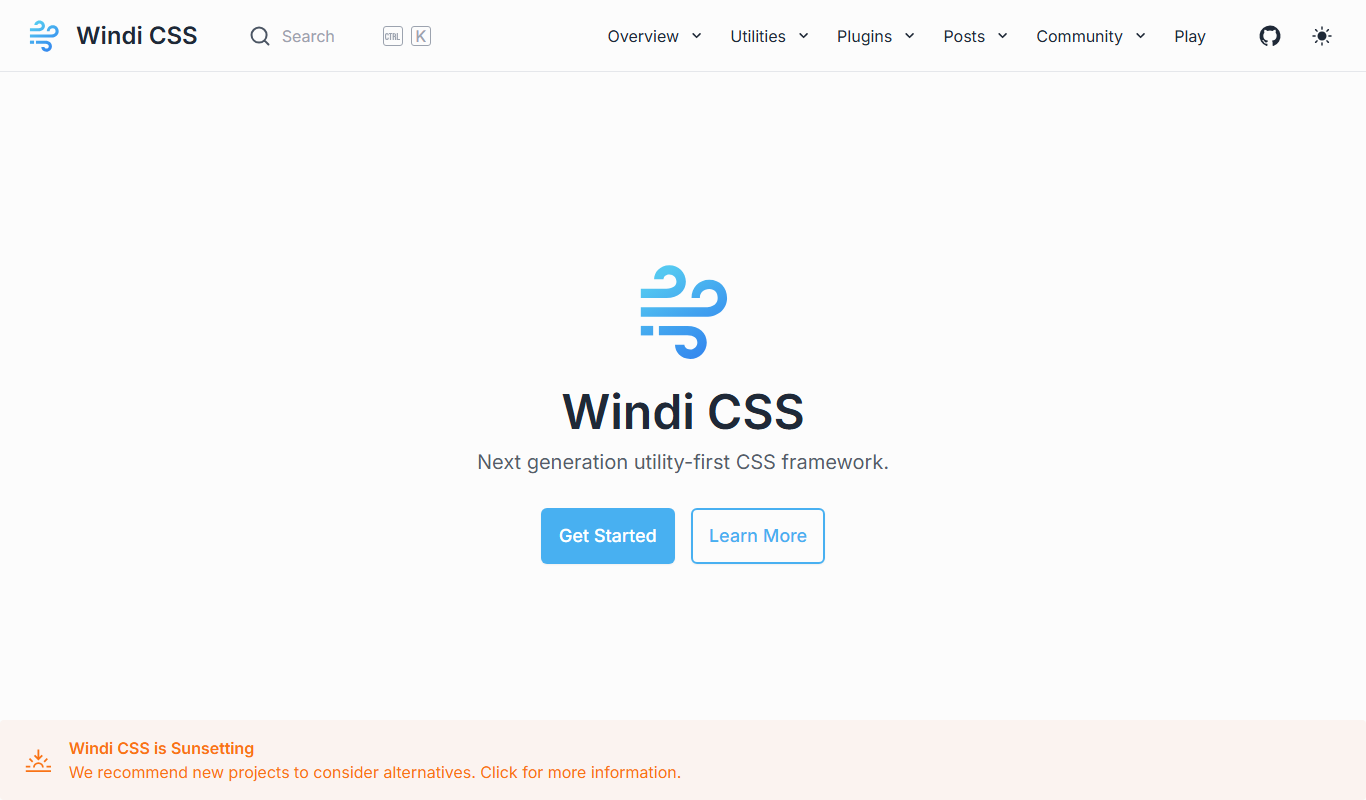
What is Windi CSS?
Windi CSS is a next-generation utility-first CSS framework that generates styles on-demand, enabling developers to build fast and optimized web interfaces. It is inspired by Tailwind CSS but focuses on performance improvements and enhanced developer experience through features like variant grouping, directives, and instant CSS generation.
Key features of Windi CSS
Windi CSS offers on-demand CSS generation, variant grouping, directives support, integration with popular frontend frameworks, and a CLI tool for efficient styling workflows. Its design prioritizes speed and minimal CSS output to improve web performance.
On-Demand CSS Generation
Generates CSS dynamically based on used utilities, minimizing unused styles and improving load times.
Variant Grouping
Allows grouping of variants to write cleaner and more maintainable utility classes.
Directives Support
Supports directives like @apply and @extract for advanced styling and component extraction.
Framework Integrations
Provides plugins and presets for Vue, React, Nuxt, and other modern frontend frameworks.
CLI and Devtools
Includes command-line tools and browser devtools extension for easier development and debugging.
Pros and cons of Windi CSS
Pros
- Significantly reduces CSS bundle size with on-demand generation
- Supports variant grouping for cleaner utility classes
- Easy integration with popular frontend frameworks
- Open-source and free to use
- Includes CLI and devtools for enhanced developer experience
Cons
- Smaller community compared to Tailwind CSS
- Documentation can be less extensive for advanced use cases
- Some learning curve for developers new to utility-first CSS
Key use cases for Windi CSS
Rapid UI Development
Use Windi CSS to quickly build user interfaces with utility classes that speed up styling without writing custom CSS.
Performance Optimized Styling
Leverage Windi CSS’s on-demand CSS generation to reduce CSS bundle size and improve page load times.
Tailwind CSS Alternative
Adopt Windi CSS as a faster, more flexible alternative to Tailwind CSS with enhanced features like variant grouping and directives.
Custom Design Systems
Create scalable and maintainable design systems by customizing utilities and extracting components.
Integration with Modern Frameworks
Integrate seamlessly with frameworks like Vue, React, and Nuxt for streamlined styling workflows.
How Windi CSS works
-
1
Install Windi CSS
Add Windi CSS to your project via npm or yarn and configure it according to your framework or build tool.
-
2
Use Utility Classes
Apply utility-first classes directly in your markup to style elements without writing custom CSS.
-
3
On-Demand CSS Generation
Windi CSS scans your files and generates only the CSS needed for the utilities used, reducing bundle size.
-
4
Customize and Extend
Configure themes, variants, and plugins to tailor the framework to your project’s design requirements.
Who is using Windi CSS
Frontend developers
Web designers
JavaScript framework users
Performance-focused web teams
Open-source enthusiasts
Windi CSS pricing
Free
$0
Open-source and free to use for all projects with community support.
Plans and prices are as published by the vendor and can change. Check the official site before you buy. Open the pricing page (opens in a new tab)
Frequently asked questions about Windi CSS
Yes, Windi CSS is designed to be a faster alternative to Tailwind CSS and supports most of its utility classes and configuration.
Absolutely, Windi CSS provides official plugins and presets for seamless integration with React, Vue, and other frameworks.
Yes, by generating CSS on-demand and only including used utilities, Windi CSS reduces CSS bundle size and improves load times.
Yes, Windi CSS is open-source and free for personal and commercial projects.
This tool is designed to help users accomplish its core tasks more efficiently. It is typically used by individuals or teams looking to improve productivity and workflow.
It depends on your specific needs and how you plan to use the tool. The official website and documentation are the best sources for the latest details.
Yes, it can help with that use case depending on how you configure it and what features are available. You’ll get the best results with clear inputs and a defined goal.
Sign in to review this tool.
Sign In to ReviewNo reviews yet
Be the first to share how this tool worked for you.
Ask about pricing, limits, or how it compares — or answer someone else.
Sign In to AskNo questions yet
Have a question about using or paying for this tool? Be the first to ask.
Featured on TiorAI



Alternative Tools
Explore similar AI tools that might fit your needs

Free
Bootstrap
Bootstrap is a free, open-source front-end framework that helps developers build responsive, mobile-first websites quickly using a grid system, pre-styled UI components, and JavaScript plugins.

Free
Bulma
Bulma is a free, open-source CSS framework based on Flexbox that helps developers build responsive, mobile-friendly websites quickly without JavaScript dependencies.
More AI Code Assistant tools
Other tools in the same category, for when this one is not quite the fit.

Free
UnoCSS
UnoCSS is an open-source, utility-first atomic CSS engine that generates CSS on-demand based on the classes used in your code, optimizing performance by minimizing CSS bundle size.

Free
Rectangle
Rectangle is an AI code assistant that generates, explains, and helps debug code using natural language inputs, designed to accelerate software development.
Free
Objection.js
Objection.js is a JavaScript ORM for Node.js that provides a powerful query builder and model-based database interaction for SQL databases, enabling developers to write complex queries and manage relations with ease.

Free
Vue CLI
Vue CLI is the official command line interface for Vue.js that helps developers quickly scaffold, develop, and build Vue.js applications with an extensible plugin system and optimized tooling.

Free
CodinGame
CodinGame is an online platform providing coding challenges, multiplayer contests, and recruitment tools to help developers improve skills and companies assess candidates.

Free
Godot
Godot is a free, open-source game engine for creating 2D and 3D games, featuring a flexible scene system, multiple scripting languages, and cross-platform export capabilities.
Free
YAML Validator
YAML Validator is a free online tool that checks YAML code for syntax errors and formats it for readability, helping developers ensure their YAML files are correct.

Free
Arduino IDE
Arduino IDE is a free, open-source integrated development environment used to write, compile, and upload code to Arduino microcontroller boards, supporting embedded systems development and prototyping.