

From my experience with Pear Deck, I found it excels at transforming traditional presentations into interactive learning experiences that actively engage students. The seamless integration with Google Slides and PowerPoint makes it easy for educators to adopt without steep learning curves. It’s particularly well-suited for K-12 teachers looking to boost participation both in-person and remotely. However, the trade-off is that many advanced features require a paid subscription, which might be a consideration for budget-conscious schools. Overall, if you want to foster real-time student interaction and formative assessment, Pear Deck delivers reliable and user-friendly tools.
Pear Deck Interactive Presentation Tool for Engaging Classroom Learning
Pear Deck is an interactive presentation tool that helps educators engage students through real-time questions and activities integrated into Google Slides and PowerPoint.
- Best for
- Interactive Classroom Presentations
- Key capability
- Interactive Question Types
Your actions

Do you recommend this tool?
What is Pear Deck?
Pear Deck is an interactive presentation platform designed to enhance student engagement and participation in educational settings. It integrates seamlessly with Google Slides and Microsoft PowerPoint, allowing educators to embed interactive questions, polls, and activities directly into their presentations. This tool facilitates formative assessments and real-time feedback, making lessons more dynamic and inclusive for both in-person and remote learners.
Key features of Pear Deck
Pear Deck offers interactive question types, real-time student responses, anonymous participation options, integration with popular presentation software, and detailed session reports to help educators track student understanding and engagement.
Interactive Question Types
Supports multiple choice, text responses, draggable slides, number responses, and polls to engage students.
Real-Time Student Feedback
Teachers can see student answers live to adapt lessons on the fly.
Anonymous Participation
Allows students to respond without revealing their identity to encourage honest feedback.
Integration with Google Slides and PowerPoint
Seamlessly embed Pear Deck activities within familiar presentation tools.
Session Reports and Analytics
Detailed insights on student engagement and understanding for data-driven teaching.
Pros and cons of Pear Deck
Pros
- Easy integration with popular presentation software
- Engages students with interactive and varied question types
- Supports anonymous student responses
- Real-time feedback helps adapt teaching instantly
- Useful for both in-person and remote classrooms
Cons
- Advanced features require a paid subscription
- Limited language support (primarily English)
- No dedicated mobile app; relies on web access
Key use cases for Pear Deck
Interactive Classroom Presentations
Teachers can create engaging lessons with interactive questions and activities to increase student participation.
Formative Assessment
Educators can assess student understanding in real-time through polls, quizzes, and open-ended questions.
Remote and Hybrid Learning
Supports synchronous and asynchronous learning by allowing students to interact with lessons from any location.
Student Feedback Collection
Gather immediate feedback from students to adjust teaching strategies and improve learning outcomes.
Professional Development
Schools and districts can use Pear Deck for training sessions to engage staff and collect input.
How Pear Deck works
- 1
Create or Import Presentation
Start by creating a new presentation or importing existing slides into Pear Deck via Google Slides or PowerPoint.
- 2
Add Interactive Elements
Embed various question types such as multiple choice, draggable, text response, and polls into your slides.
- 3
Present to Students
Launch the session live or assign it for student self-paced interaction, allowing them to respond via any device.
- 4
Monitor Responses
View student answers in real-time to gauge understanding and adjust instruction accordingly.
- 5
Review Reports
Access detailed reports post-session to analyze participation and comprehension for future lesson planning.
Who is using Pear Deck
K-12 Teachers
School Administrators
Educational Technology Coordinators
Remote and Hybrid Educators
Professional Development Trainers
Pear Deck pricing
Free
$0/month
Basic interactive slides and question types with limited features.
Premium
Contact for pricing
Full access to all interactive question types, detailed reports, and advanced features.
Plans and prices are as published by the vendor and can change. Check the official site before you buy. Open the pricing page (opens in a new tab)
Frequently asked questions about Pear Deck
Pear Deck offers a free plan with basic features, while premium plans unlock advanced functionalities.
Yes, Pear Deck supports remote and hybrid learning by allowing students to participate from any device.
Pear Deck integrates with Google Slides and Microsoft PowerPoint and is accessible via web browsers.
Yes, premium plans include detailed session reports and analytics.
It depends on your specific needs and how you plan to use the tool. The official website and documentation are the best sources for the latest details.
Some tools offer a free plan or trial with limited features. Availability can vary, so confirm on the official website.
Sign in to review this tool.
Sign In to ReviewNo reviews yet
Be the first to share how this tool worked for you.
Ask about pricing, limits, or how it compares — or answer someone else.
Sign In to AskNo questions yet
Have a question about using or paying for this tool? Be the first to ask.
Featured on TiorAI



Alternative Tools
Explore similar AI tools that might fit your needs

Free
Nearpod
Nearpod is an interactive educational platform that allows teachers to create and deliver engaging lessons with real-time assessments, multimedia content, and virtual reality experiences for both in-person and remote learning.
Free
Kahoot
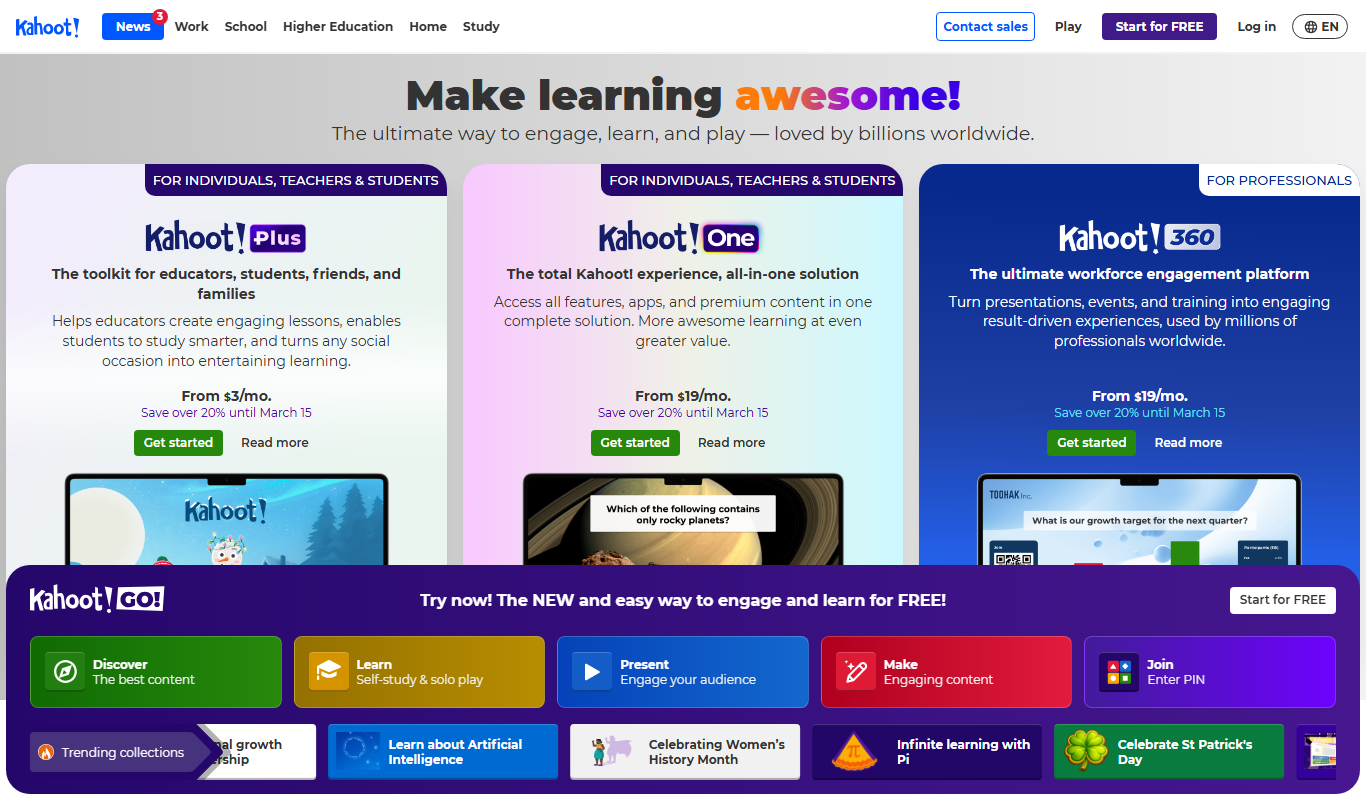
Kahoot is a game-based learning platform that enables users to create and play interactive quizzes and games to boost engagement in education, training, and events.

Free
Mentimeter
Mentimeter is an interactive presentation platform that allows users to create live polls, quizzes, and Q&A sessions to engage audiences in real-time during meetings, webinars, and events.
More Business Management tools
Other tools in the same category, for when this one is not quite the fit.

Free
Roadtrippers
Roadtrippers is a travel planning app that helps users create detailed road trip itineraries by mapping routes, discovering attractions, and optimizing travel plans.

Free
TripIt
TripIt is a travel app that automatically organizes your travel plans into a single itinerary by parsing confirmation emails, providing real-time flight alerts, and allowing itinerary sharing.

Free
FormSwift
FormSwift is an online platform that provides customizable legal and business document templates, PDF editing, and electronic signature capabilities to help users create and manage important documents easily.

Pay As You Go
TextMagic
TextMagic is a cloud-based SMS marketing platform that enables businesses to send bulk text messages, automate notifications, and engage customers with two-way messaging and API integration.

Free Trial
EZ Texting
EZ Texting is a cloud-based SMS marketing platform that enables businesses to send mass text messages, automate campaigns, and engage customers with two-way messaging.

Free Trial
SimpleTexting
SimpleTexting is a cloud-based SMS marketing platform that enables businesses to send mass text messages, automate SMS workflows, and engage customers with two-way messaging to improve communication and marketing effectiveness.

Free
Spocket
Spocket is a dropshipping platform that helps ecommerce entrepreneurs source products from vetted US and EU suppliers, automate order fulfillment, and integrate with major online store platforms like Shopify and WooCommerce.

Free
Oberlo
Oberlo is a dropshipping app for Shopify that automates product importing, inventory management, and order fulfillment, enabling entrepreneurs to run ecommerce stores without holding inventory.