

From my experience with ETABS, I found it excels at providing a comprehensive and integrated environment for structural engineers to model, analyze, and design complex building systems efficiently. Its advanced seismic and dynamic analysis capabilities make it particularly well-suited for projects in earthquake-prone regions. However, the software’s desktop-only availability and steep learning curve can be challenging for newcomers without a strong engineering background. Overall, if you need reliable and code-compliant structural analysis software for building design, ETABS delivers robust and industry-trusted results.
ETABS Structural Analysis Software for Building Design and Engineering
ETABS is a specialized structural analysis and design software used by engineers to model, analyze, and design building structures with advanced seismic and wind analysis capabilities.
- Best for
- Structural Modeling
- Key capability
- Integrated Modeling and Analysis
Your actions
Do you recommend this tool?
What is ETABS?
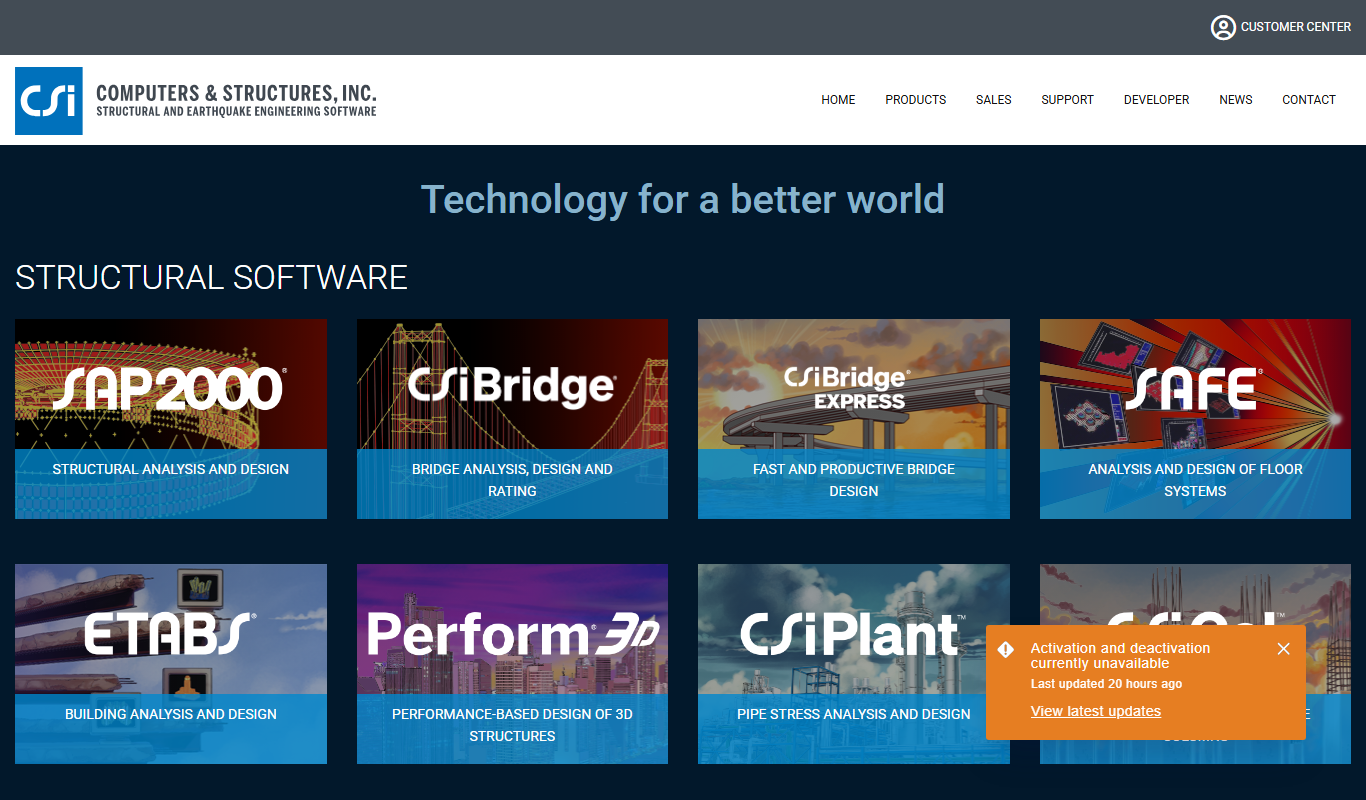
ETABS is a comprehensive structural analysis and design software developed by Computers and Structures, Inc. (CSI) specifically for building systems. It integrates modeling, analysis, and design in a single interface, enabling engineers to efficiently create complex building models and perform detailed structural assessments. ETABS supports a wide range of building types and materials, offering tools for seismic, wind, and dynamic analysis to ensure safety and compliance with international standards.
Key features of ETABS
ETABS offers a unified platform combining intuitive modeling tools, powerful analysis engines, and automated design features. Key capabilities include 3D modeling, finite element analysis, dynamic response simulation, code-based design checks, and detailed reporting. Its user-friendly interface and visualization tools help engineers streamline workflows from conceptual design through final documentation.
Integrated Modeling and Analysis
Seamlessly combine modeling, analysis, and design in one environment.
Advanced Seismic and Wind Analysis
Perform response spectrum and time history analyses for earthquake and wind loads.
Code-Based Design
Supports multiple international design codes for steel, concrete, and composite structures.
Automated Load Assignments
Automatically generate load combinations and assign loads based on building codes.
Detailed Visualization and Reporting
Graphical displays of results and customizable reports for clear communication.
Pros and cons of ETABS
Pros
- Comprehensive all-in-one structural analysis and design solution
- Robust seismic and dynamic analysis capabilities
- Supports multiple international design codes
- User-friendly graphical interface with powerful visualization
- Strong technical support and documentation
Cons
- Desktop-only software limits mobility
- Pricing details require direct contact with vendor
- Steep learning curve for beginners without structural engineering background
Key use cases for ETABS
Structural Modeling
Create detailed 3D models of buildings and structures to analyze their behavior under various loads.
Seismic Analysis
Perform advanced seismic and dynamic analysis to ensure building safety in earthquake-prone areas.
Design Optimization
Optimize structural designs for steel, concrete, and composite materials according to international codes.
Load Simulation
Simulate different load conditions including wind, gravity, and live loads to assess structural performance.
Code Compliance
Automatically check designs against multiple building codes and standards worldwide.
How ETABS works
- 1
Model Creation
Use ETABS’ graphical interface to build a 3D model of the structure, defining geometry, materials, and load cases.
- 2
Analysis Setup
Assign loads such as dead, live, wind, and seismic forces, and configure analysis parameters.
- 3
Run Structural Analysis
Execute linear or nonlinear static and dynamic analyses to evaluate structural responses.
- 4
Design and Optimization
Apply design codes to optimize member sizes and reinforcements automatically.
- 5
Review Results and Reporting
Visualize analysis results, generate detailed reports, and export data for documentation.
Who is using ETABS
Structural engineers
Civil engineering firms
Architectural design companies
Construction project managers
Engineering consultants
ETABS pricing
Standard License
Contact for pricing
Full-featured ETABS license with access to all modeling, analysis, and design tools.
Subscription License
Contact for pricing
Flexible subscription-based access with updates and technical support.
Plans and prices are as published by the vendor and can change. Check the official site before you buy. Open the pricing page (opens in a new tab)
Frequently asked questions about ETABS
ETABS is designed primarily for building structures including residential, commercial, and industrial buildings.
Yes, ETABS supports a wide range of international codes for steel, concrete, and composite design.
Absolutely, ETABS includes advanced seismic analysis tools such as response spectrum and time history methods.
ETABS is a desktop application available for Windows operating systems.
This tool is designed to help users accomplish its core tasks more efficiently. It is typically used by individuals or teams looking to improve productivity and workflow.
Yes, it can help with that use case depending on how you configure it and what features are available. You’ll get the best results with clear inputs and a defined goal.
It depends on your specific needs and how you plan to use the tool. The official website and documentation are the best sources for the latest details.
It depends on your specific needs and how you plan to use the tool. The official website and documentation are the best sources for the latest details.
Sign in to review this tool.
Sign In to ReviewNo reviews yet
Be the first to share how this tool worked for you.
Ask about pricing, limits, or how it compares — or answer someone else.
Sign In to AskNo questions yet
Have a question about using or paying for this tool? Be the first to ask.
Featured on TiorAI



Alternative Tools
Explore similar AI tools that might fit your needs

Enterprise Licensing
STAAD.Pro
STAAD.Pro is a structural analysis and design software by Bentley Systems used by civil engineers to model, analyze, and design buildings and infrastructure according to international codes.
More AI Developer Tools tools
Other tools in the same category, for when this one is not quite the fit.

Freemium
Amadeus Travel API
Amadeus Travel API is a developer platform offering RESTful APIs to access global flight, hotel, and travel data for building travel booking and itinerary management applications.

Freemium
Zyte
Zyte is a web scraping platform that enables businesses and developers to extract structured data from websites using smart crawlers, proxy rotation, and API integration to automate data collection at scale.

Enterprise License
NiceLabel
NiceLabel is an enterprise label design and management software that enables businesses to create, manage, and automate barcode and RFID label printing with compliance and integration capabilities.
Perpetual License
Geomagic Design X
Geomagic Design X is a reverse engineering software that converts 3D scan data into editable CAD models, enabling precise product design and manufacturing workflows.
Free
Changelog Generator
GitHub Changelog Generator is a free, open-source Ruby-based CLI tool that automates the creation of changelogs by extracting data from GitHub issues, pull requests, and commits to streamline release note management.

Free
UnoCSS
UnoCSS is an open-source, utility-first atomic CSS engine that generates CSS on-demand based on the classes used in your code, optimizing performance by minimizing CSS bundle size.

Enterprise
CockroachDB
CockroachDB is a distributed SQL database designed for cloud-native applications that require strong consistency, high availability, and horizontal scalability across multiple regions.
Subscription
VividCortex
VividCortex is a cloud-based database monitoring platform that provides real-time insights into SQL query performance and resource usage to help optimize and troubleshoot relational databases.