

Cosine - Coding Models and Agents for Secure Environments
Cosine trains AI models and specialised coding agents for organisations that need frontier capability within secure environments.
- Best for
- Coding in regulated environments
- Key capability
- Lumen coding models
Save Cosine, follow its updates and vote on it — everything stays in your account.
Sign in or create a free account
What is Cosine?
Cosine trains AI models and specialised coding agents for organisations that need frontier capability within secure environments. Its Lumen models are trained on production code for writing software, including legacy and niche languages, and are used through the Cosine CLI in the terminal or Cosine Cloud, with dedicated-tenant and fully air-gapped deployments for regulated organisations.
Key features of Cosine
Cosine offers the Lumen family of coding models, a terminal-native CLI with MCP tool access and multi-agent orchestration, Cosine Cloud for parallel coding tasks and shared projects, and deployment in public cloud, a dedicated tenant or fully air-gapped.
Lumen coding models
Models trained exclusively on real production code with a single objective: better code.
Cosine CLI
A terminal-native interface with local-to-remote execution, tool access via MCP and multi-agent orchestration.
Cosine Cloud
Run multiple coding tasks in parallel, plan large changes and collaborate in a shared project.
Private and air-gapped deployment
Move from Cosine Cloud to a dedicated tenant or a fully air-gapped deployment when compliance requires it.
Niche and legacy languages
Post-trained for enterprise and niche languages including COBOL, Fortran, Verilog, Rust and complex SQL.
Pros and cons of Cosine
Pros
- Fully air-gapped deployment available
- Model-agnostic CLI with a full model menu
- Checkpointing makes every agent change undoable
Cons
- No free plan; plans start with the paid Starter tier
- Enterprise and private deployment pricing is scoped with sales
- Some advanced features require subscription
Key use cases for Cosine
Coding in regulated environments
An AI software engineer for environments behind strict firewalls in finance, healthcare and defence.
Legacy and niche codebases
Reason across complex architectures, legacy infrastructure and long-lived codebases.
Parallel team coding tasks
Run multiple coding tasks in parallel and collaborate across engineers, PMs and stakeholders.
Text Expansion and Refinement
Expand short prompts into detailed paragraphs or refine existing text for clarity and style.
How Cosine works
- 1
Install the CLI
Install Cosine with brew install CosineAI/tap/cos.
- 2
Work with the agent in your terminal
Each agent turn is a lightweight git commit that can be undone instantly.
- 3
Hand longer work to the cloud
Keep the interface local while long-running work runs in a Cosine cloud workspace.
- 4
Export or Save
Save your generated content within the platform or export it for use in your projects.
Who is using Cosine
Cosine pricing
Starter
From $19/month
4M credits per month; $6.50 per 1M add-on credits; for solo developers and side projects.
Team
$199/month
47M credits per month; $5.00 per 1M add-on credits; for growing teams.
Enterprise
$999/month
240M credits per month; $4.50 per 1M add-on credits; for highly-regulated industries.
Plans and prices are as published by the vendor and can change. Check the official site before you buy. Open the pricing page (opens in a new tab)
Frequently asked questions about Cosine
Cosine trains AI models and specialised coding agents for organisations that need frontier capability within secure environments.
Lumen Scout is post-trained from Devstral 123B for low-cost work, Lumen Outpost from Kimi K2.6 for everyday production tasks, and Lumen Sovereign is coming soon.
Yes. A fully air-gapped option runs Cosine entirely inside your own security perimeter.
Credits represent usage across agent work, model calls and cloud execution.
All tiers can buy add-on credits at any time.
Conclusion
Specialised coding models and agents for secure environments are what Cosine builds, rather than general-purpose assistants. Its Lumen models are trained on real production code, post-trained for niche languages such as COBOL and Fortran, and designed for legacy, long-lived codebases. Developers reach them through a terminal-native CLI with MCP tool access and multi-agent orchestration, or through Cosine Cloud for parallel tasks.
Organisations in finance, healthcare and defence that work behind strict firewalls are a core audience, which is why deployments range from public cloud to a dedicated tenant or a fully air-gapped setup. Usage is measured in credits covering agent work, model calls and cloud execution. No free plan exists, since the entry Starter tier is paid, and private deployment pricing is scoped with sales.
Sources
Sign in to review this tool.
Sign In to ReviewNo reviews yet
Be the first to share how this tool worked for you.
Ask about pricing, limits, or how it compares — or answer someone else.
Sign In to AskNo questions yet
Have a question about using or paying for this tool? Be the first to ask.
Featured on TiorAI



More AI Code Assistant tools
Other tools in the same category, for when this one is not quite the fit.

Refraction
Refraction is an AI tool for developers that refactors code, generates documentation and unit tests, detects bugs and converts code between languages.
RoboCoder
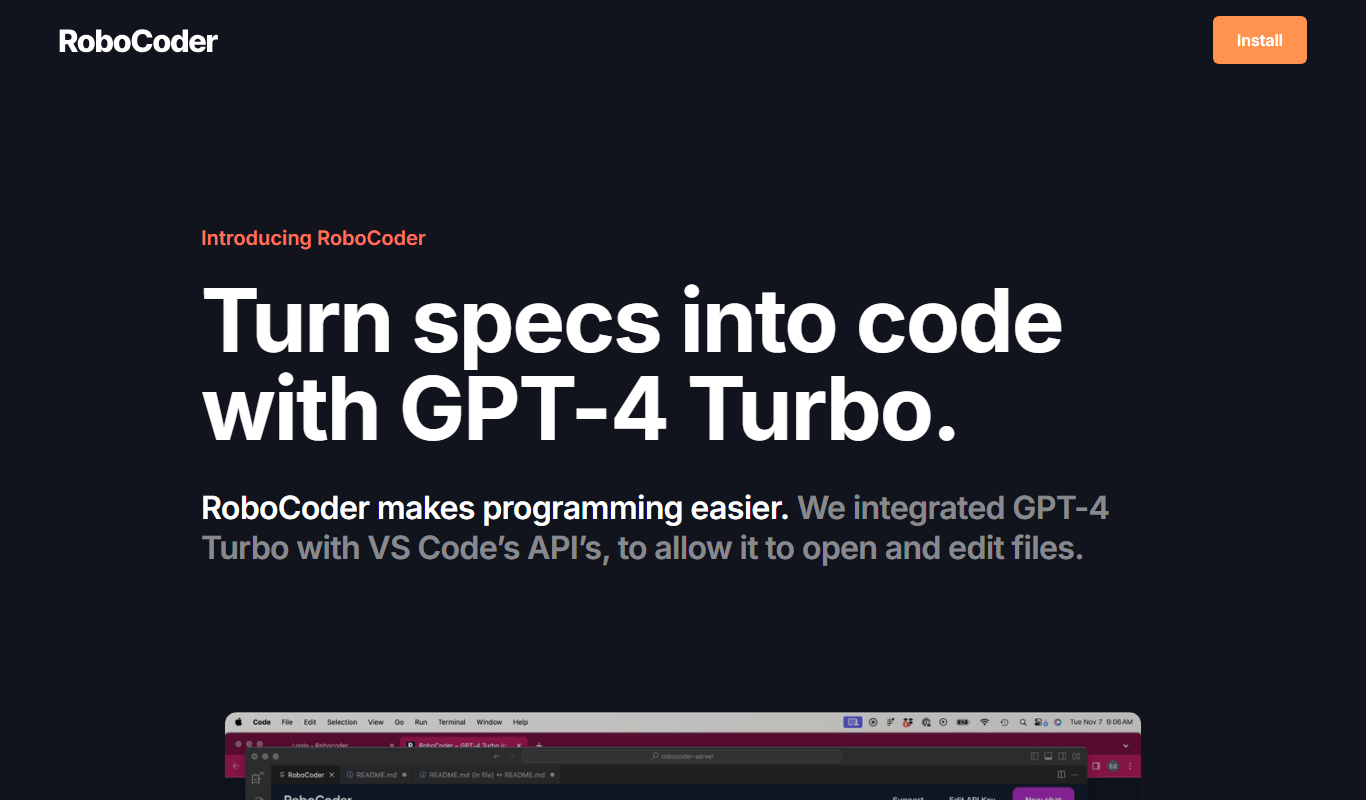
RoboCoder is a VS Code extension that lets GPT-4o open and edit files, navigate your codebase and propose patches, using your own OpenAI API key.

Trae
TRAE is a development tool deeply integrated with AI, where you code in an IDE or delegate complex tasks to AI agents, on desktop, web and mobile.

WhatTheDiff
What the Diff is an AI code review assistant for GitHub and GitLab that automates pull request descriptions and simplifies team updates.

Code Fundi
Code Fundi turns any repository into a searchable, blast-radius-aware codebase map for AI agents and engineering teams.

Butterfish Shell
Butterfish Shell adds AI prompting to bash and zsh with OpenAI or compatible APIs: prompt with a capital letter and the AI sees your shell history.
CodeMate AI
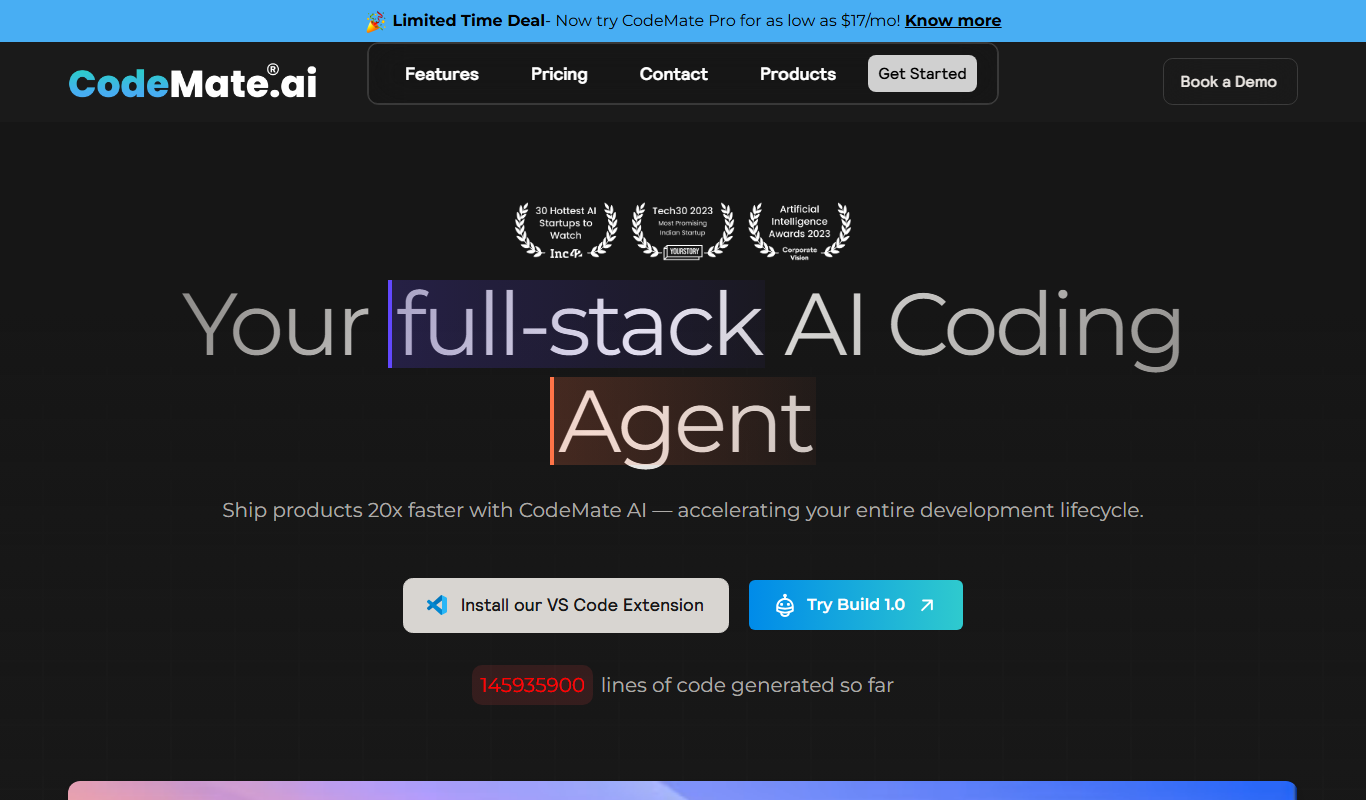
CodeMate AI is a sovereign AI pair programmer and developer assistant with private, self-hosted code completion, automated code reviews, debugging and terminal workflows.

GitCase.dev
GitCase.dev lets developers confidentially showcase code from GitHub in a portfolio, using AI-powered transformations to protect sensitive information.