

ChatTTS Text to Speech AI Tool for Natural Voice Generation Online
ChatTTS is a text-to-speech model built for conversational scenarios such as LLM assistant dialogue and conversational video introductions, supporting Chinese and English.
- Best for
- Content Creation
- Key capability
- Natural Voice Quality
Save ChatTTS, follow its updates and vote on it — everything stays in your account.
Sign in or create a free account
What is ChatTTS?
ChatTTS is a text-to-speech voice generation model designed for conversational scenarios, such as dialogue tasks for large language model (LLM) assistants and conversational audio and video introductions. It supports Chinese and English, and its code is published on GitHub at 2noise/chattts.
Key features of ChatTTS
ChatTTS requires only text as input and generates corresponding voice files. It is optimized for natural, conversational text-to-speech, can be downloaded from GitHub and installed with pip, and is offered free online on the official site.
Natural Voice Quality
Produces clear and human-like speech that sounds natural and engaging.
Multiple Voice Options
Offers a variety of voices to choose from, catering to different tones and accents.
Adjustable Speech Speed
Allows users to control the pace of the spoken audio for better comprehension.
Text-Only Input
Requires only text as input and generates corresponding voice files.
Audio Download
Enables users to download generated speech files in common audio formats.
Pros and cons of ChatTTS
Pros
- Optimized for natural, conversational text-to-speech
- Natural and clear voice synthesis
- Affordable subscription plan
- Quick generation and download of audio
Cons
- Speech quality may vary with the complexity and length of the input text
- Limited voice variety compared to some competitors
- No mobile app available
Key use cases for ChatTTS
Content Creation
Convert written content into natural-sounding speech for videos, podcasts, or presentations.
Accessibility Enhancement
Provide audio versions of text to assist visually impaired users or those with reading difficulties.
Language Learning
Help learners improve pronunciation and listening skills by hearing text read aloud clearly.
Customer Support Automation
Generate voice responses for chatbots or automated phone systems to improve user interaction.
How ChatTTS works
- 1
Download from GitHub
Type or paste the text you want to convert into speech in the input box.
- 2
Install Dependencies
Install the torch and ChatTTS packages with pip.
- 3
Initialize ChatTTS
Create an instance of the ChatTTS class, load the pre-trained models and define the text to convert.
- 4
Generate Speech
Use the infer method to generate speech from the text, then play the generated audio.
Who is using ChatTTS
ChatTTS pricing
Free
$0
Free online version of ChatTTS on the official site, with examples to try.
Pro
$9.99/month
Increased character limits, access to premium voices, and faster processing.
Plans and prices are as published by the vendor and can change. Check the official site before you buy. Open the pricing page (opens in a new tab)
Frequently asked questions about ChatTTS
Yes, the Pro plan includes commercial usage rights. Check the terms for details.
ChatTTS supports both Chinese and English.
The Free plan has daily character limits, while the Pro plan offers higher limits.
Yes, all generated speech can be downloaded in MP3 format.
It depends on your specific needs and how you plan to use the tool. The official website and documentation are the best sources for the latest details.
It depends on your specific needs and how you plan to use the tool. The official website and documentation are the best sources for the latest details.
Some tools offer a free plan or trial with limited features. Availability can vary, so confirm on the official website.
Yes, it can help with that use case depending on how you configure it and what features are available. You’ll get the best results with clear inputs and a defined goal.
Conclusion
Conversation is the design target here: the model generates speech for the dialogue tasks of large language model assistants and for conversational audio and video introductions. It needs only text as input and returns the corresponding voice files. Chinese and English are both supported, and training used approximately 100,000 hours of data in the two languages.
Running it locally means downloading the code from GitHub, installing torch and the ChatTTS package with pip and calling the infer method on the prepared text. The official site also hosts a free online version with examples to try. Developers can fine-tune the model on their own datasets for particular use cases or unique voice profiles.
The site notes that output quality may vary with the complexity and length of the input text, and that real-time generation of high-quality speech may require significant processing power.
Sources
Sign in to review this tool.
Sign In to ReviewNo reviews yet
Be the first to share how this tool worked for you.
Ask about pricing, limits, or how it compares — or answer someone else.
Sign In to AskNo questions yet
Have a question about using or paying for this tool? Be the first to ask.
Featured on TiorAI



Alternative Tools
Explore similar AI tools that might fit your needs
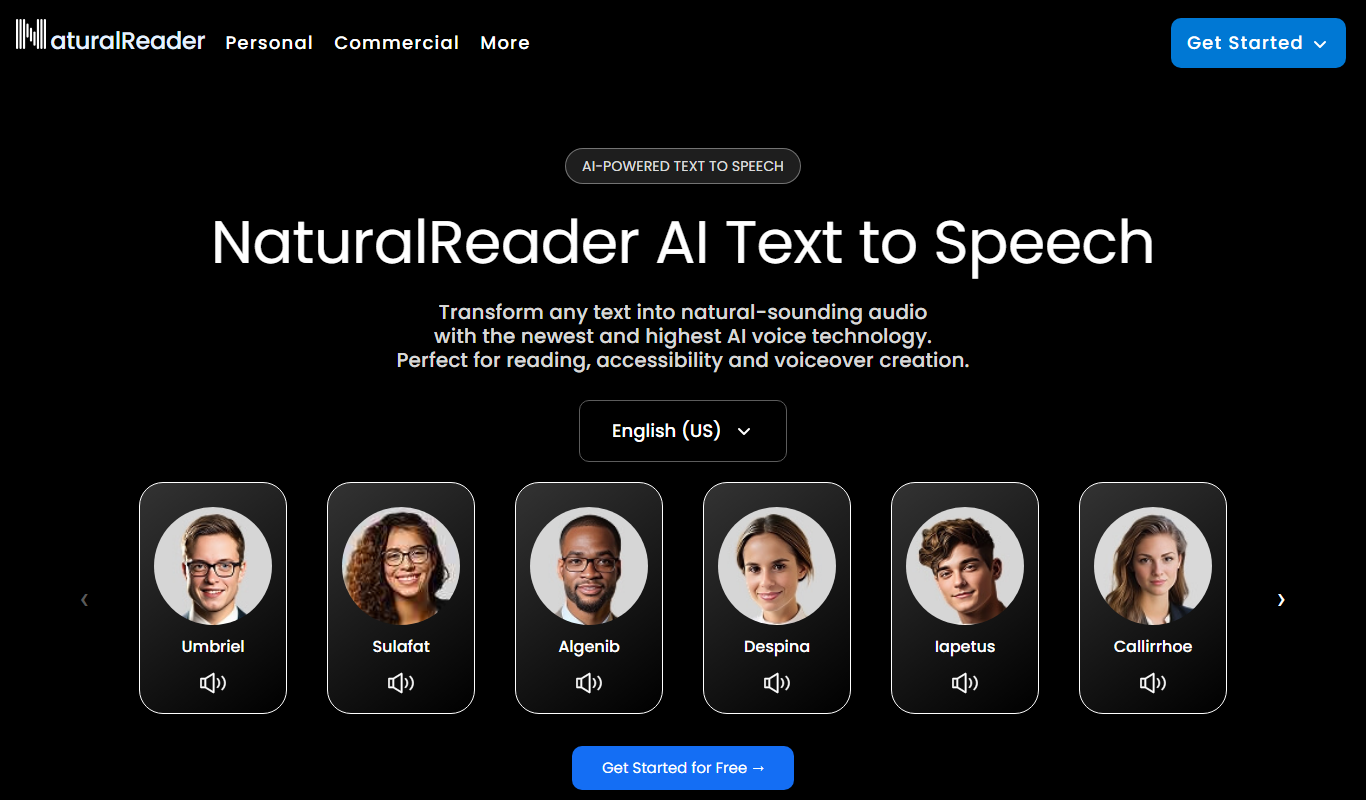
Natural Reader
Natural Reader is a text-to-speech software that converts written text into natural, human-like speech across multiple languages and platforms, supporting accessibility and content consumption.
More AI Accessibility Tools tools
Other tools in the same category, for when this one is not quite the fit.

Image Describer
Image Describer is an online AI tool that generates detailed descriptions, captions and extracted text from uploaded images.

ForVoyez
ForVoyez generates SEO-optimized alt text, titles and captions for images with AI, through an API and a WordPress plugin.

ImageComply
ImageComply is an alt text generator that automatically writes alt tags for website images through a plugin, for accessibility and SEO.

Butter Reader
Butter Reader converts blog posts into an on-brand audio player with natural AI narration, embedded on WordPress or any site with one snippet.

Sign AI
Sign AI is building real-time, bi-directional sign language interpretation with AI, led by a Deaf team, for businesses, institutions and developers.

Read Easy.ai
Read Easy.ai makes text easier to read for people with low literacy skills through Microsoft Word and Outlook add-ins, a Chrome extension and a Developer API, in multiple languages.

EyeGestures
EyeGestures is an open-source gaze tracking project that makes eye tracking accessible for everyone using just a webcam.

WhisperUI – Text to Speech
WhisperUI is a transcription workspace for web and desktop that also offers a text to speech tool for turning typed text into speech.