
From my experience with Rhasspy, I found it excels at providing a fully offline, privacy-focused voice assistant platform that can be tailored extensively for smart home automation. Setting it up requires some technical know-how, but the modular design and open-source nature allow for deep customization and integration with popular home automation systems like Home Assistant. While it may not match the out-of-the-box ease of commercial assistants, Rhasspy is ideal for users who prioritize data privacy and want full control over their voice assistant environment.
Open-Source Offline Voice Assistant Platform for Custom Smart Home Automation
Rhasspy is an open-source, offline voice assistant platform that enables users to build custom voice-controlled smart home systems with privacy and multilingual support.
Tech Stack:
Docker
Python
What is Rhasspy?
Rhasspy is an open-source, fully offline voice assistant toolkit designed to enable users to build custom voice-controlled applications and smart home automation systems. It processes speech recognition, intent recognition, and speech synthesis locally without requiring internet connectivity, ensuring privacy and control over data. Rhasspy supports multiple languages and can be deployed on various platforms including Raspberry Pi and Docker containers.
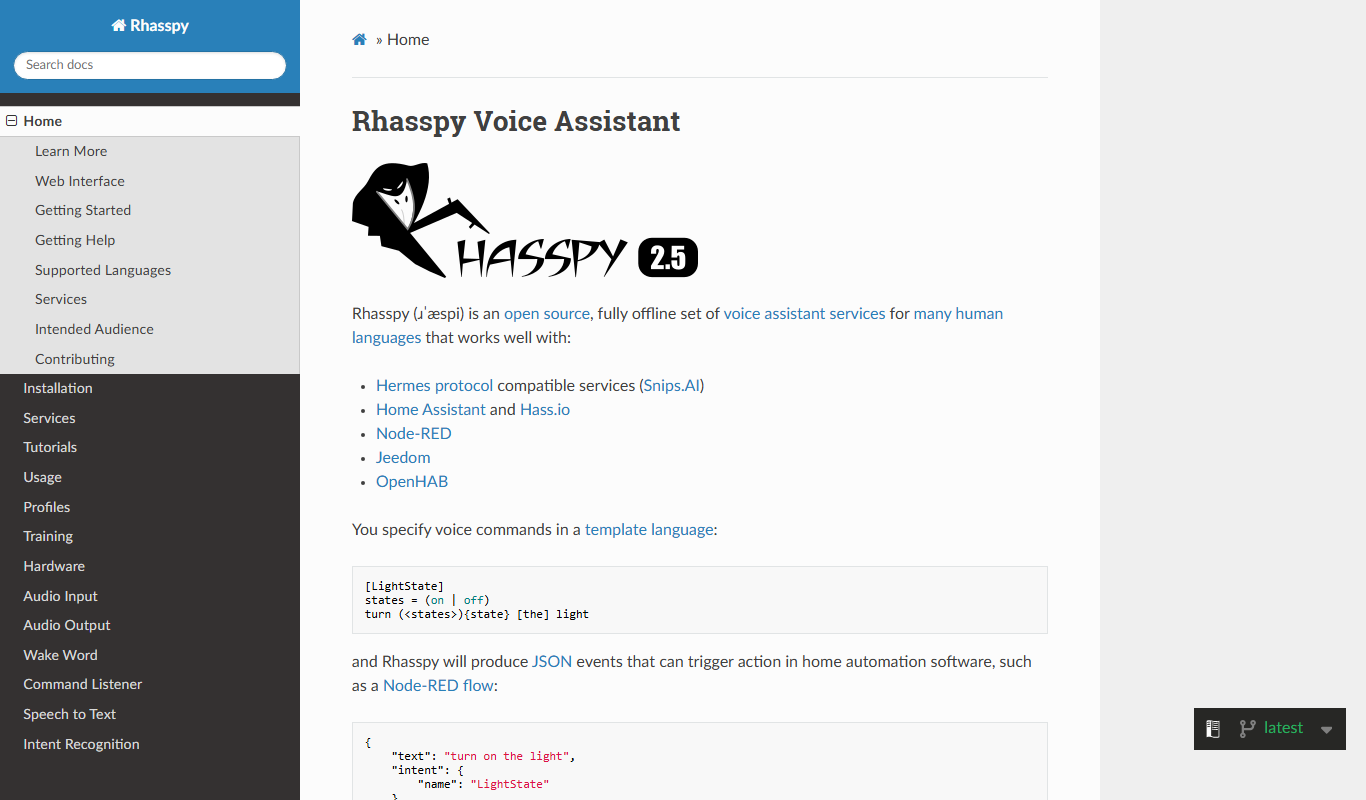
Key Features of Rhasspy
Offline Speech Recognition
Processes voice commands locally without sending data to external servers, enhancing privacy.
Custom Wake Word Support
Allows users to define personalized wake words for activating the assistant.
Multilingual Support
Supports multiple languages including English, German, French, Spanish, and Italian.
Modular Architecture
Flexible components for speech-to-text, intent recognition, and text-to-speech synthesis.
Home Automation Integration
Seamlessly connects with platforms like Home Assistant using MQTT or HTTP APIs.
Pros and Cons of Rhasspy
Pros
- Fully offline operation ensures privacy
- Open-source with active community support
- Highly customizable for various use cases
- Supports multiple languages
- Integrates well with popular home automation systems
Cons
- Requires technical knowledge to set up and configure
- Limited commercial support compared to proprietary assistants
- Voice recognition accuracy depends on training quality
Key Use Cases for Rhasspy
Custom Smart Home Control
Use Rhasspy to create personalized voice commands for controlling smart home devices without relying on cloud services.
Offline Voice Assistant
Deploy a fully offline voice assistant that processes speech locally to enhance privacy and reduce latency.
Voice Command Recognition
Implement voice command recognition for various IoT projects and automation workflows.
Multilingual Voice Interaction
Support multiple languages for voice interaction, enabling users to communicate with their devices in their preferred language.
Integration with Home Automation Systems
Integrate Rhasspy with popular home automation platforms like Home Assistant using MQTT or HTTP APIs.
How Rhasspy Works
-
1
Install and Configure
Set up Rhasspy on your preferred platform such as Raspberry Pi or Docker and configure language and microphone settings.
-
2
Train Your Voice Model
Use Rhasspy’s training tools to create custom speech and intent recognition models tailored to your commands.
-
3
Define Intents and Slots
Create intent definitions and slot values that map voice commands to specific actions or queries.
-
4
Integrate with Automation
Connect Rhasspy to your home automation system via MQTT or HTTP to execute commands triggered by voice.
-
5
Use Offline Voice Assistant
Interact with your voice assistant locally without internet dependency, ensuring privacy and responsiveness.
Who's Using Rhasspy
Home automation enthusiasts
Privacy-conscious users
Developers building custom voice assistants
IoT hobbyists
Open-source advocates
Rhasspy Pricing
Free
$0
Open-source and free to use with full features and community support.
Frequently Asked Questions About Rhasspy
Yes, Rhasspy is designed to run fully offline without requiring internet connectivity.
Rhasspy supports Raspberry Pi, Docker containers, and desktop environments.
Yes, Rhasspy allows you to define and train your own wake words.
Yes, it supports several languages including English, German, French, Spanish, and Italian.
It depends on your specific needs and how you plan to use the tool. The official website and documentation are the best sources for the latest details.
Integration support depends on the tool and its available connectors or API. Check the official documentation or integrations page to confirm what is supported.
Yes, it can help with that use case depending on how you configure it and what features are available. You’ll get the best results with clear inputs and a defined goal.
Some tools offer a free plan or trial with limited features. Availability can vary, so confirm on the official website.
Share your review
Reviews are limited to one per logged-in user and are published after moderation.
You need an account to review this tool.
0.0
★
★
★
★
★
0 reviews
5 star
0
4 star
0
3 star
0
2 star
0
1 star
0
No reviews yet
Be the first to share how this tool worked for you.
Questions from the community
Read questions and answers about this tool, or ask your own.
No questions yet
Start the conversation by asking the first question about this tool.
Is this tool helpful?
Alternative Tools
Explore similar AI tools that might fit your needs
Free
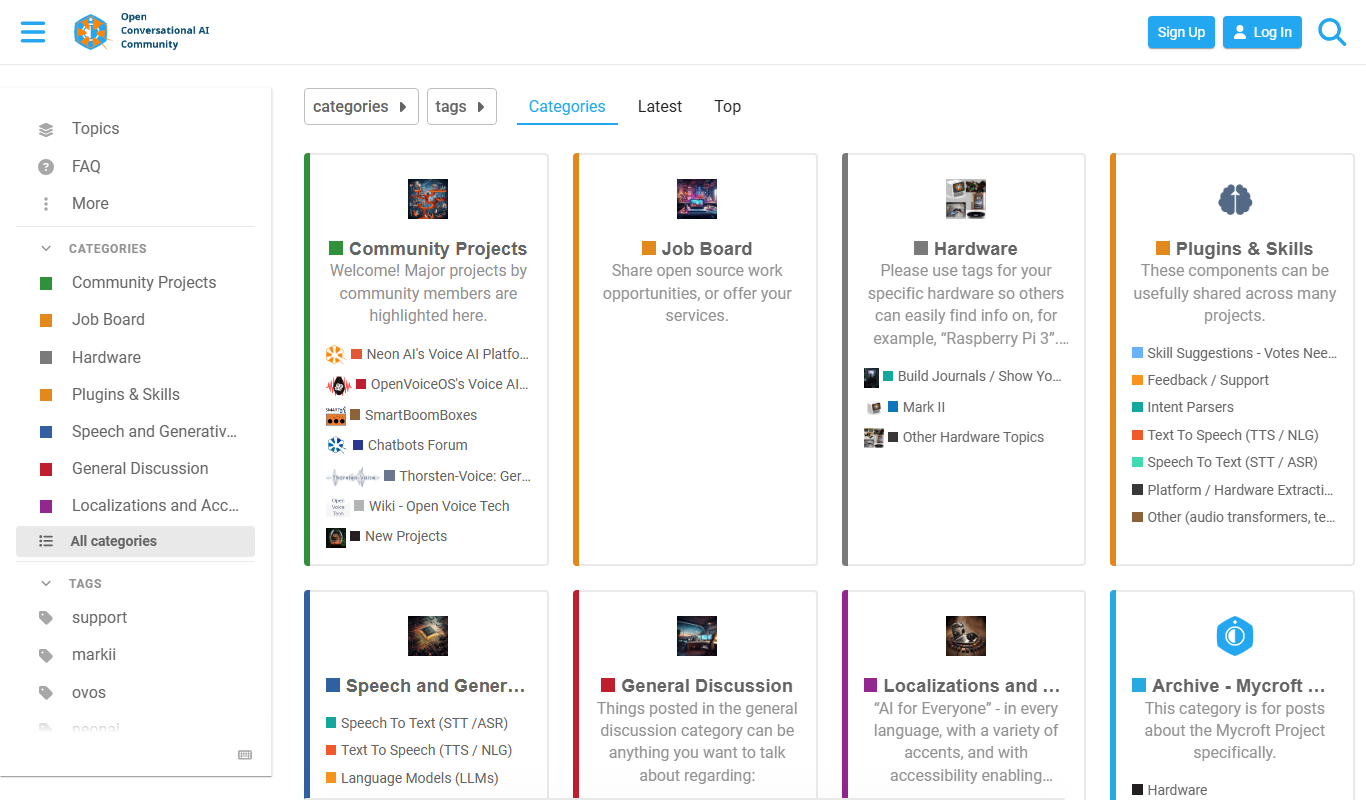
Mycroft AI
Mycroft AI is an open-source voice assistant platform that offers customizable, privacy-conscious voice interaction capabilities across multiple devices.

Freemium
Vocol.AI
Vocol.AI is an AI voice cloning platform that generates realistic synthetic voices from minimal audio samples, enabling natural text-to-speech conversion with emotion control.

Enterprise
Picovoice
Picovoice is an on-device voice AI platform that enables offline speech recognition, custom wake word detection, and speech-to-intent processing for embedded and mobile applications, prioritizing privacy and low latency.

Freemium
Mondly VR
Mondly VR is a virtual reality language learning app that uses immersive scenarios and speech recognition to help users practice and improve their language skills in a realistic environment.

Free
TTSReader
TTSReader is a free online text-to-speech tool that converts written text into natural sounding speech with multi-language support and audio export options.
Free
Speeko
Speeko is an AI-powered speech coaching tool that analyzes your voice recordings to provide personalized feedback on public speaking and communication skills, helping you improve pace, tone, and clarity.

Free
Siri
Siri is Apple's AI voice assistant integrated into iOS and macOS devices, enabling users to control devices, get information, and manage smart home devices using natural voice commands.
Freemium
Tactus Therapy
Tactus Therapy is a mobile app designed to help children with speech delays improve their articulation through interactive exercises and progress tracking.
Free
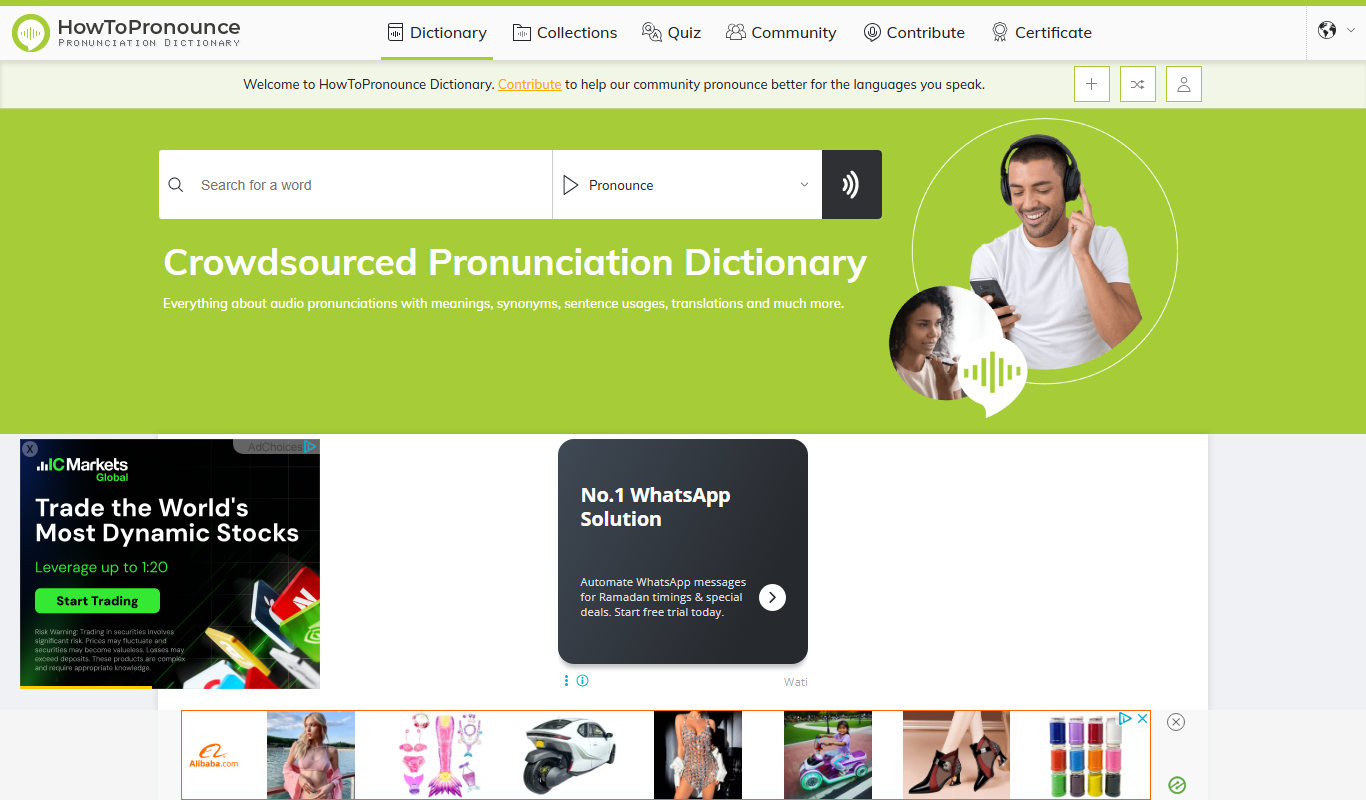
HowToPronounce
HowToPronounce is a free online tool that provides audio pronunciations and phonetic spellings for words in multiple languages, helping users learn correct pronunciation through native and expert recordings.