

From my experience with Unity, I found it excels at providing a versatile and powerful platform for creating interactive 2D and 3D content across a wide range of devices. Its real-time rendering and extensive platform support make it a top choice for game developers and AR/VR creators alike. However, beginners may face a learning curve, especially without prior programming knowledge, and subscription costs can add up for larger teams. Overall, if you need a robust, industry-standard engine for game or interactive content development, Unity delivers comprehensive tools and a supportive ecosystem.
Unity Game Engine and Development Platform for 2D & 3D Interactive Content
Unity is a powerful cross-platform game engine and development platform used to create 2D, 3D, AR, and VR interactive content with real-time rendering and extensive deployment options.
- Best for
- Game Development
- Key capability
- Cross-Platform Support
Do you recommend this tool?
What is Unity?
Unity is a comprehensive real-time 3D development platform widely used for creating games, simulations, and interactive experiences. It provides a powerful editor, a rich asset pipeline, and supports deployment across multiple platforms including mobile, desktop, consoles, and AR/VR devices. Unity combines a user-friendly interface with advanced scripting capabilities, enabling developers and creators to build visually rich and performant applications.
Key features of Unity
Unity offers a versatile editor, real-time rendering, physics simulation, animation tools, multi-platform deployment, and extensive asset store integration. It supports C# scripting and provides tools for collaboration, debugging, and performance optimization.
Cross-Platform Support
Deploy projects to over 25 platforms including mobile, desktop, consoles, and AR/VR.
Real-Time Rendering
High-fidelity graphics with physically based rendering and global illumination.
Visual Editor
Intuitive scene editor with drag-and-drop asset management and live preview.
C# Scripting
Robust scripting API for game logic, AI, and custom behaviors.
Asset Store
Access a vast marketplace of assets, tools, and plugins to accelerate development.
AR/VR Integration
Built-in support for ARKit, ARCore, Oculus, HTC Vive, and other immersive platforms.
Pros and cons of Unity
Pros
- Supports a wide range of platforms and devices
- Large community and extensive learning resources
- Powerful real-time rendering and physics engine
- Flexible and extensible with a rich asset store
- Free tier available for beginners and small teams
Cons
- Steep learning curve for beginners without programming experience
- Subscription pricing can be costly for larger teams
- Performance optimization can be complex for large projects
Key use cases for Unity
Game Development
Create 2D and 3D games for multiple platforms including mobile, desktop, consoles, and VR.
Augmented and Virtual Reality
Develop immersive AR and VR experiences with integrated tools and platform support.
Simulations and Training
Build interactive simulations for education, training, and industrial applications.
Film and Animation
Produce real-time cinematic content and animations using Unity’s rendering capabilities.
Architectural Visualization
Create interactive 3D visualizations for architecture and design presentations.
How Unity works
- 1
Download and Install
Get the Unity Hub and install the Unity Editor version suitable for your project.
- 2
Create a New Project
Start a new 2D, 3D, or AR/VR project using customizable templates.
- 3
Develop Your Content
Use the editor to design scenes, import assets, write scripts, and configure game logic.
- 4
Test and Iterate
Playtest your project within the editor and refine gameplay or interactions.
- 5
Build and Deploy
Export your project to supported platforms such as iOS, Android, Windows, consoles, or VR devices.
Who is using Unity
Indie game developers
Professional game studios
AR/VR content creators
Simulation and training developers
Architects and designers
Film and animation producers
Unity pricing
Personal
Free
Free for individuals and small businesses with revenue or funding under $100K.
Plus
$399/year
For professionals and small teams with revenue or funding under $200K, includes additional features.
Pro
$1,800/year
Full feature set for larger businesses with no revenue cap and priority support.
Enterprise
Custom pricing
Tailored solutions and support for large organizations.
Plans and prices are as published by the vendor and can change. Check the official site before you buy. Open the pricing page (opens in a new tab)
Frequently asked questions about Unity
Unity offers a free Personal plan for individuals and small businesses with revenue or funding under $100,000.
Unity primarily uses C# for scripting game logic and behaviors.
Yes, Unity supports deployment to iOS, Android, and other mobile platforms.
Yes, Unity has built-in support for major VR and AR platforms including Oculus, HTC Vive, ARKit, and ARCore.
This tool is designed to help users accomplish its core tasks more efficiently. It is typically used by individuals or teams looking to improve productivity and workflow.
It depends on your specific needs and how you plan to use the tool. The official website and documentation are the best sources for the latest details.
Yes, it can help with that use case depending on how you configure it and what features are available. You’ll get the best results with clear inputs and a defined goal.
Yes, it can help with that use case depending on how you configure it and what features are available. You’ll get the best results with clear inputs and a defined goal.
Sign in to review this tool.
Sign In to ReviewNo reviews yet
Be the first to share how this tool worked for you.
Ask about pricing, limits, or how it compares — or answer someone else.
Sign In to AskNo questions yet
Have a question about using or paying for this tool? Be the first to ask.
Featured on TiorAI



More AI App Builder tools
Other tools in the same category, for when this one is not quite the fit.

Pay As You Go
RenderStreet
RenderStreet is a cloud rendering service that accelerates 3D animation and image rendering by providing scalable GPU and CPU resources accessible via a web platform, primarily supporting Blender projects.

Free
Heroku
Heroku is a cloud platform as a service (PaaS) that enables developers to deploy, manage, and scale applications easily without managing infrastructure.

Free
8thWall
8thWall is a WebAR development platform that allows users to create augmented reality experiences accessible directly through mobile web browsers without app downloads.

Free
UI Bakery
UI Bakery is a no-code platform that lets you visually build web applications and internal tools by dragging and dropping UI components, connecting data sources, and deploying apps without coding.

Freemium
Wikitude
Wikitude is an augmented reality SDK that enables developers to create AR apps with image recognition, 3D object tracking, and location-based AR for iOS, Android, Unity, and Unreal Engine.

Enterprise
Streamlit
Streamlit is an open-source Python framework that enables data scientists and developers to quickly create and share interactive web applications for data visualization and machine learning without needing frontend development skills.

Free
Gradio
Gradio is an open-source tool that lets you quickly create interactive web interfaces for machine learning models using Python, enabling easy sharing and testing without front-end development.
Free
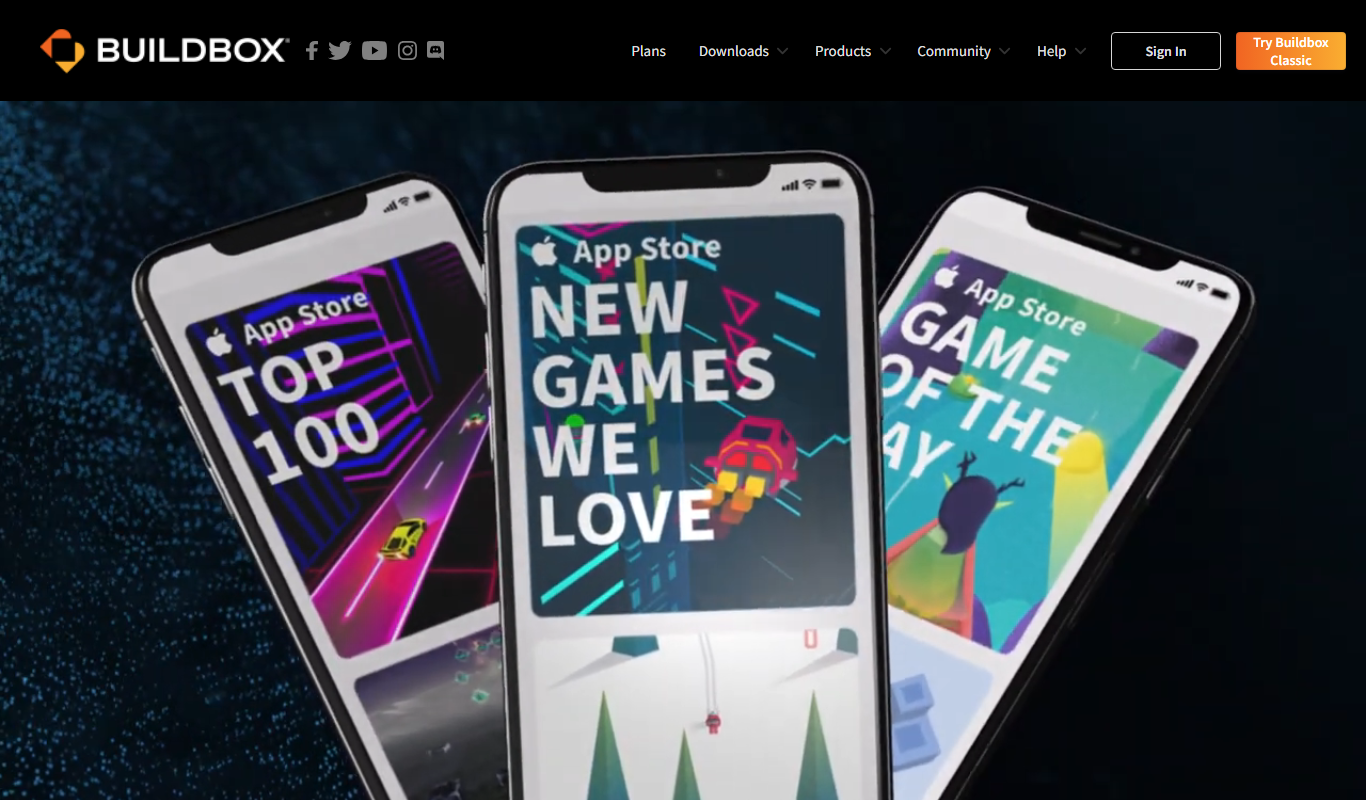
Buildbox
Buildbox is a no-code game development platform that enables users to create and publish 2D and 3D mobile games without programming by using drag-and-drop tools and pre-built assets.