

From my experience with Spatial.io, I found it excels at creating immersive and engaging virtual collaboration spaces that go beyond traditional video conferencing. The realistic 3D avatars and spatial audio significantly enhance the sense of presence, making remote meetings feel more natural. After spending time with the platform, I can say it’s particularly well-suited for remote teams, designers, and educators looking for interactive and spatially rich environments. However, there is a learning curve for users unfamiliar with VR, and some advanced features require paid subscriptions. Overall, if you need a versatile VR workspace for remote collaboration, Spatial.io delivers solid results.
Spatial.io Virtual Reality Platform for Remote Collaboration and 3D Meetings
Spatial.io is a virtual reality and augmented reality platform that enables remote teams to collaborate in immersive 3D workspaces using customizable avatars and spatial audio, accessible via VR headsets, mobile devices, and web browsers.
- Best for
- Remote Team Collaboration
- Key capability
- Cross-Platform Access

Do you recommend this tool?
What is Spatial.io?
Spatial.io is a virtual reality and augmented reality platform designed to create immersive 3D workspaces for remote collaboration. It enables users to meet, share ideas, and work together in virtual environments using customizable avatars. The platform supports VR headsets, mobile devices, and web browsers, making it accessible for teams worldwide to connect beyond traditional video calls.
Key features of Spatial.io
Spatial.io offers features such as realistic 3D avatars, spatial audio, multi-device support, integration with productivity tools, and customizable virtual rooms. These features combine to create an engaging and interactive remote collaboration experience that mimics in-person meetings.
Cross-Platform Access
Supports VR headsets, mobile devices, and web browsers for flexible participation.
Realistic 3D Avatars
Generates lifelike avatars from user photos to enhance presence and engagement.
Spatial Audio
Provides directional audio that mimics real-life conversations in virtual environments.
Integration with Productivity Tools
Connects with apps like Slack, Google Drive, and Microsoft Teams to streamline workflows.
Customizable Virtual Rooms
Allows users to design and personalize meeting spaces to fit different collaboration scenarios.
Pros and cons of Spatial.io
Pros
- Immersive 3D collaboration enhances remote team engagement
- Cross-platform support increases accessibility
- Customizable avatars improve presence and interaction
- Integrations streamline workflow
- Flexible virtual room design
Cons
- Requires stable internet connection for smooth experience
- Learning curve for users new to VR environments
- Advanced features locked behind paid plans
Key use cases for Spatial.io
Remote Team Collaboration
Enables distributed teams to meet and collaborate in immersive 3D virtual workspaces, improving engagement and communication.
Virtual Conferences and Events
Hosts interactive virtual events and conferences with customizable 3D environments and avatar-based networking.
Design and Prototyping
Allows designers and engineers to visualize and manipulate 3D models collaboratively in real-time.
Education and Training
Facilitates immersive learning experiences and remote training sessions using spatial computing.
Creative Brainstorming
Supports creative teams in ideation sessions with spatial tools and shared virtual canvases.
How Spatial.io works
-
1
Create an Account
Sign up on Spatial.io using email or social login to access the platform.
-
2
Set Up Your Avatar
Customize your 3D avatar using photos or built-in options to represent yourself in virtual spaces.
-
3
Join or Create a Space
Enter existing virtual rooms or create new ones tailored to your meeting or collaboration needs.
-
4
Collaborate in 3D
Use spatial audio, shared whiteboards, 3D model viewing, and other tools to interact with team members.
Who is using Spatial.io
Remote teams and distributed workforces
Event organizers and virtual conference hosts
Designers and engineers collaborating on 3D projects
Educators and trainers using immersive learning
Creative professionals conducting brainstorming sessions
Spatial.io pricing
Free
$0/month
Basic access with limited features and up to 3 participants per room.
Pro
$20/month
Expanded features including larger room capacity, advanced integrations, and priority support.
Enterprise
Custom pricing
Tailored solutions with dedicated support, security features, and custom branding.
Plans and prices are as published by the vendor and can change. Check the official site before you buy. Open the pricing page (opens in a new tab)
Frequently asked questions about Spatial.io
Spatial.io supports VR headsets like Oculus Quest, AR devices like HoloLens, as well as iOS, Android, and web browsers.
Yes, you can join meetings via mobile apps or web browsers without VR hardware.
The platform supports various room sizes, with larger capacities available on paid plans.
Yes, it integrates with popular tools such as Slack, Google Drive, and Microsoft Teams.
It depends on your specific needs and how you plan to use the tool. The official website and documentation are the best sources for the latest details.
Yes, it can help with that use case depending on how you configure it and what features are available. You’ll get the best results with clear inputs and a defined goal.
Some tools offer a free plan or trial with limited features. Availability can vary, so confirm on the official website.
Integration support depends on the tool and its available connectors or API. Check the official documentation or integrations page to confirm what is supported.
Sign in to review this tool.
Sign In to ReviewNo reviews yet
Be the first to share how this tool worked for you.
Ask about pricing, limits, or how it compares — or answer someone else.
Sign In to AskNo questions yet
Have a question about using or paying for this tool? Be the first to ask.
Featured on TiorAI



Alternative Tools
Explore similar AI tools that might fit your needs

Custom Pricing
Virbela
Virbela is a virtual worlds platform that enables remote teams and organizations to collaborate, host events, and engage socially through customizable 3D avatars and immersive virtual environments accessible via web and desktop.
More AI Avatar Generator tools
Other tools in the same category, for when this one is not quite the fit.

Free
SoulGen AI
SoulGen AI is a web-based platform that uses artificial intelligence to generate realistic and artistic digital avatars from text prompts or images, ideal for social media and creative projects.

Free
Viveport
Viveport is HTC's virtual reality content platform providing access to VR games and experiences, including a subscription service called Viveport Infinity for unlimited VR content.
Freemium
HeadshotsPro
HeadshotsPro is an AI-based online tool that converts selfies into professional-quality headshots with customizable backgrounds and styles, ideal for business and social media profiles.

Freemium
Portrait AI
Portrait AI is a web-based AI avatar generator that creates realistic and artistic digital portraits from user photos using advanced AI technology.
Free
ThisPersonDoesNotExist
ThisPersonDoesNotExist is a free web tool that uses AI to generate photorealistic human faces that do not belong to real people, useful for creative and privacy-conscious applications.

Freemium
DeepAR SDK
DeepAR SDK is a cross-platform augmented reality development kit that enables real-time face tracking, AI avatar creation, and 3D AR effects for mobile apps, games, and live streaming.
Custom Pricing
Banuba SDK
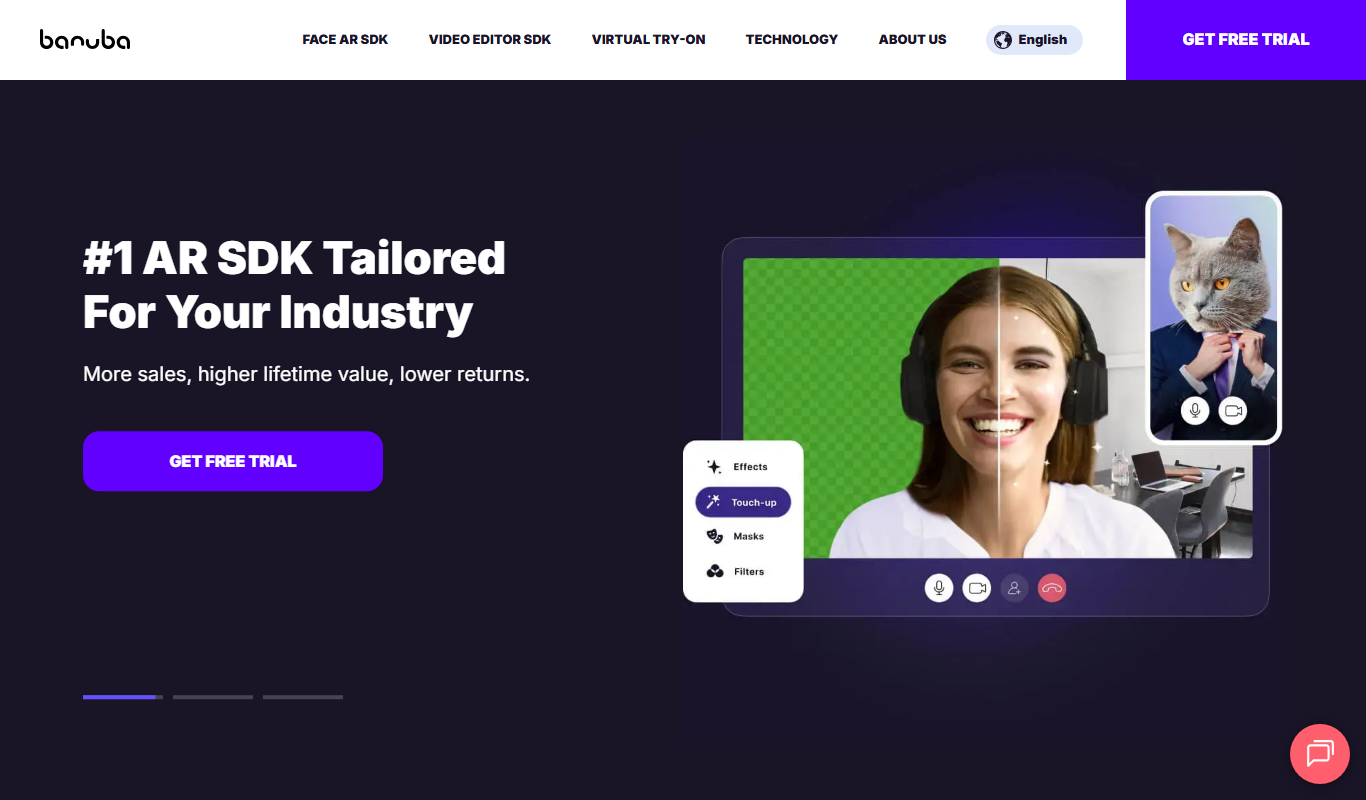
Banuba SDK is an AI-powered augmented reality software development kit that enables developers to integrate real-time face tracking, 3D masks, beauty filters, and avatar effects into mobile and desktop applications.

Custom Pricing
FaceTec
FaceTec is an AI-driven biometric authentication platform specializing in 3D facial recognition and liveness detection to securely verify user identities and prevent fraud.