


Free
Mind Tracker
Mind Tracker is an app on the App Store and Google Play.
Every AI tool we track, with pricing, platform and category on each entry. Filter down to a shortlist, then open the ones worth a closer look.
Filter 8,929 AI tools by pricing, category, platform and language.
Mind Tracker is an app on the App Store and Google Play.

NawaCares is an AI-powered therapy and journaling app that provides conversational emotional support, mood tracking, and personalized self-care recommendations to help users manage their mental health.
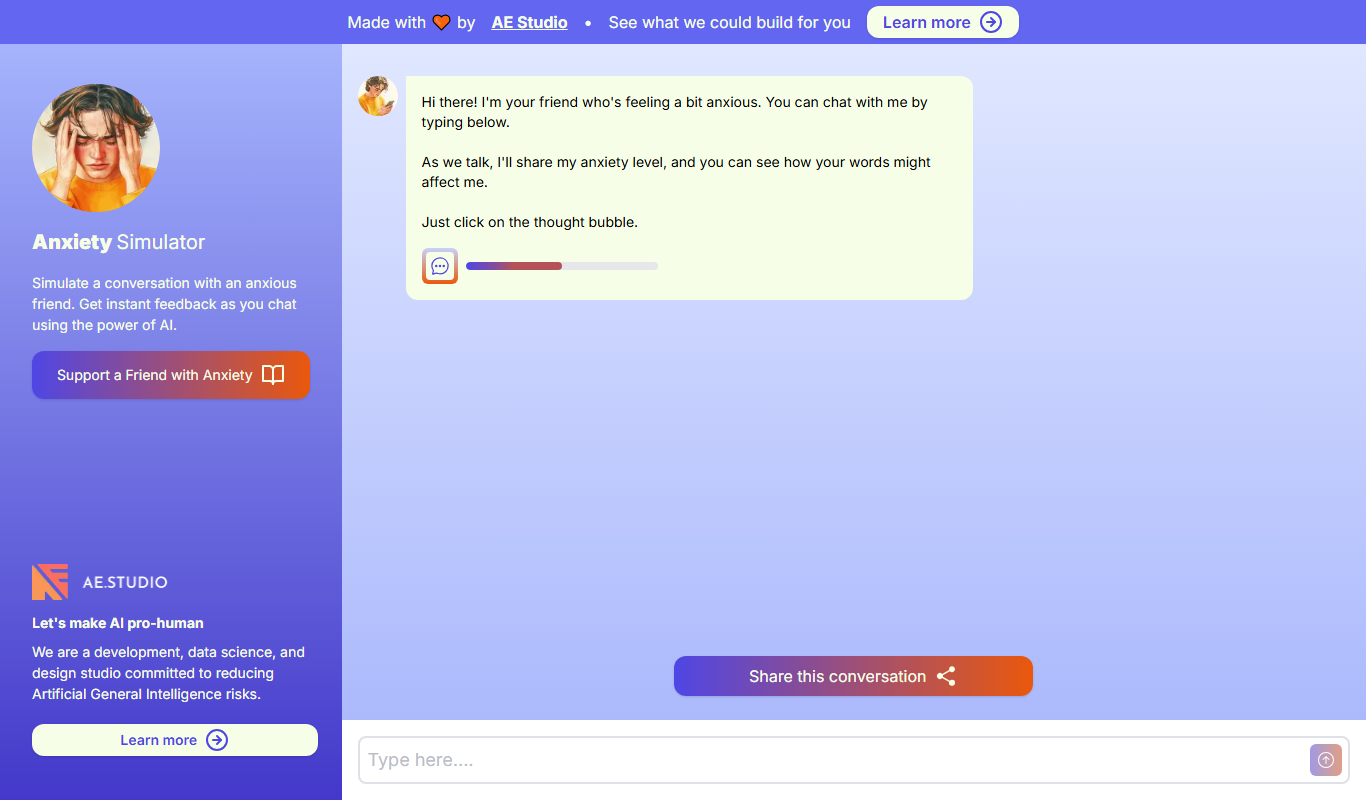
Anxiety Simulator by AE Studio lets you chat with an AI friend who has anxiety and gives instant feedback on your messages, to learn how to support a friend with anxiety.

Horoscope Oracle lets you chat with a personal AI horoscope and receive daily, weekly and monthly horoscopes through Telegram, on a monthly subscription.

Alya is an AI therapist app. The site lists 22 languages and more than 100 AI models, with downloads on the App Store and Google Play.

HeartDialog is an AI therapy chatbot providing empathetic mental health support and personalized therapeutic exercises accessible 24/7 via web and mobile platforms.

Stamina AI is an expert-backed AI therapy companion, a 24/7 mental health ally with personalized, evidence-based therapy based on CBT.

Moodset is a mood tracker that uses valence and arousal and music analysis from Spotify, on Android.

SiteForge is an AI wireframe generator that creates sitemaps, custom wireframes and branded SEO content for websites in minutes.

Plan Quest helps users break ambitions into milestones, place them on a living timeline and keep progress moving with notes, priorities and reflection.

ModelFusion is a free LLM toolkit with cost calculators, a prompt library, a tokenizer and model comparison tools for GPT-4, Claude, Gemini and more.

Neural Network Tutorial by LeapAI is a free web-based platform offering interactive lessons and practical exercises to learn neural networks and deep learning concepts.
Page 164 of 263
Ten tools per shortlist, ranked, for when a category is still too many results.
Still deciding
Pricing, supported platforms and what each one is actually good at, laid out in one table. 764 comparisons are written and ready.
Browse comparisonsComparable tools for the products people already use.
Every one of the 8,929 entries here carries the same fields: what the tool does, what it costs, which platforms it runs on, and which categories it belongs to. That is what makes filtering across the whole catalogue possible rather than decorative.
The catalogue is not the point on its own; competitors list the same tools. What is worth your time is what sits on top of it: comparisons that commit to a recommendation, alternative sets that are genuinely comparable, and entries that get corrected when a vendor changes its pricing.
Start from a category rather than the full list: the category index above jumps straight into the twelve largest ones. From there, use the pricing shortcuts to drop anything outside your budget, then open the three or four entries that look closest and compare them side by side.
Free means there is a usable tier at no cost with no time limit. Freemium means a free tier exists but the useful features sit behind a paid plan. Free trial means paid-only after a fixed evaluation window. Subscription means recurring billing with no free tier. Labels come from the vendor and are re-checked when a listing is updated.
Yes. Category, pricing, tech stack, language and platform stack together, and every combination has its own URL, so a filtered view can be bookmarked or shared. Active filters appear above the results and can be removed one at a time.
Around 8% of entries have no captured screenshot, usually because the tool sits behind a login or the site blocks automated capture. Those entries show the tool's initial instead. It is not a signal about the tool's quality.
Newest first, so the front of the directory reflects what has recently shipped. Switch the sort to Top Rated for the highest-scoring entries, or Most Popular to order by real visitor interest across views and outbound clicks.
An alternatives page answers "what else does this job?" and lists comparable tools for one product. A comparison page takes two named tools and works through pricing, capability and fit to reach a recommendation. Both are linked from every tool entry.