

MLflow Open Source Platform for Managing Machine Learning Lifecycle
MLflow is an open source platform that manages the machine learning lifecycle by providing tools for experiment tracking, model packaging, registry, and deployment.
- Best for
- Experiment Tracking
- Key capability
- Experiment Tracking
Save MLflow, follow its updates and vote on it — everything stays in your account.
Sign in or create a free account
What is MLflow?
MLflow is an open source platform designed to manage the complete machine learning lifecycle. It provides tools to track experiments, package code into reproducible runs, manage and version models, and deploy them to production environments. MLflow aims to simplify MLOps by offering a unified interface and APIs for data scientists and engineers.
Key features of MLflow
MLflow’s main features include experiment tracking, model packaging with MLflow Projects, a centralized model registry for version control, and flexible deployment options. It supports multiple ML frameworks and integrates with popular cloud platforms.
Experiment Tracking
Track and compare multiple runs with detailed logging of parameters, metrics, and artifacts.
MLflow Projects
Package data science code in a reusable and reproducible format to share with others.
Model Registry
Centralized store for managing model lifecycle stages such as staging, production, and archiving.
Flexible Deployment
Deploy models to various platforms including local servers, cloud services, and edge devices.
Multi-Framework Support
Compatible with popular ML frameworks like TensorFlow, PyTorch, Scikit-learn, and more.
Pros and cons of MLflow
Pros
- Open source and free to use
- Comprehensive lifecycle management for ML projects
- Supports multiple ML frameworks
- Flexible deployment options
- Strong community and documentation
Cons
- Requires setup and infrastructure management
- User interface can be basic compared to commercial tools
- Limited built-in automation for complex workflows
Key use cases for MLflow
Experiment Tracking
Track and log machine learning experiments to compare parameters, code versions, and results.
Model Packaging
Package machine learning models in a reusable and reproducible format for deployment.
Model Registry
Manage and version machine learning models with a centralized model registry.
Model Deployment
Deploy machine learning models to various serving environments including cloud and edge.
Collaboration
Facilitate collaboration among data scientists and engineers by sharing experiments and models.
How MLflow works
- 1
Set Up MLflow
Install MLflow and configure your environment to start tracking machine learning experiments.
- 2
Log Experiments
Use MLflow APIs to log parameters, metrics, and artifacts during model training.
- 3
Register Models
Save trained models to the MLflow Model Registry to manage versions and stages.
- 4
Deploy Models
Deploy models to production using MLflow’s deployment tools or export to other serving platforms.
Who is using MLflow
MLflow pricing
Open Source
$0
Free to use with full access to MLflow features under Apache 2.0 license.
Plans and prices are as published by the vendor and can change. Check the official site before you buy. Open the pricing page (opens in a new tab)
Frequently asked questions about MLflow
Yes, MLflow is an open source project available for free under the Apache 2.0 license.
MLflow primarily supports Python but also has APIs for Java and REST for other languages.
Yes, MLflow integrates with cloud services like AWS, Azure, and Google Cloud for model deployment and storage.
MLflow enables collaboration by sharing experiment results and models through its tracking server and model registry.
This tool is designed to help users accomplish its core tasks more efficiently. It is typically used by individuals or teams looking to improve productivity and workflow.
Some tools offer a free plan or trial with limited features. Availability can vary, so confirm on the official website.
It depends on your specific needs and how you plan to use the tool. The official website and documentation are the best sources for the latest details.
Yes, it can help with that use case depending on how you configure it and what features are available. You’ll get the best results with clear inputs and a defined goal.
Conclusion
After installation, the MLflow APIs are called from training code to log parameters, metrics and artifacts for each run. Runs can be tracked and compared, code can be packaged in a reusable and reproducible format as MLflow Projects, and trained models are saved to the Model Registry to manage versions and stages. Models are then deployed with MLflow’s own tools or exported to other serving platforms.
It works with frameworks such as TensorFlow, PyTorch and Scikit-learn, and while Python is the main language, Java and REST APIs cover others. Its intended users are data scientists, machine learning engineers, MLOps teams and AI researchers. The project is open source under the Apache 2.0 license and free to use. Running it does require setup and infrastructure management.
Sources
Sign in to review this tool.
Sign In to ReviewNo reviews yet
Be the first to share how this tool worked for you.
Ask about pricing, limits, or how it compares — or answer someone else.
Sign In to AskNo questions yet
Have a question about using or paying for this tool? Be the first to ask.
Featured on TiorAI



Alternative Tools
Explore similar AI tools that might fit your needs
Weights & Biases
Weights & Biases is a machine learning platform that helps data scientists track experiments, version datasets and models, collaborate with teams, and monitor models in production.
Comet.ml
Comet offers Opik, a GenAI observability and evaluation platform, and MLOps tools for experiment tracking, dataset management, model versioning and model production monitoring.
More AI Developer Tools tools
Other tools in the same category, for when this one is not quite the fit.
TestLabs
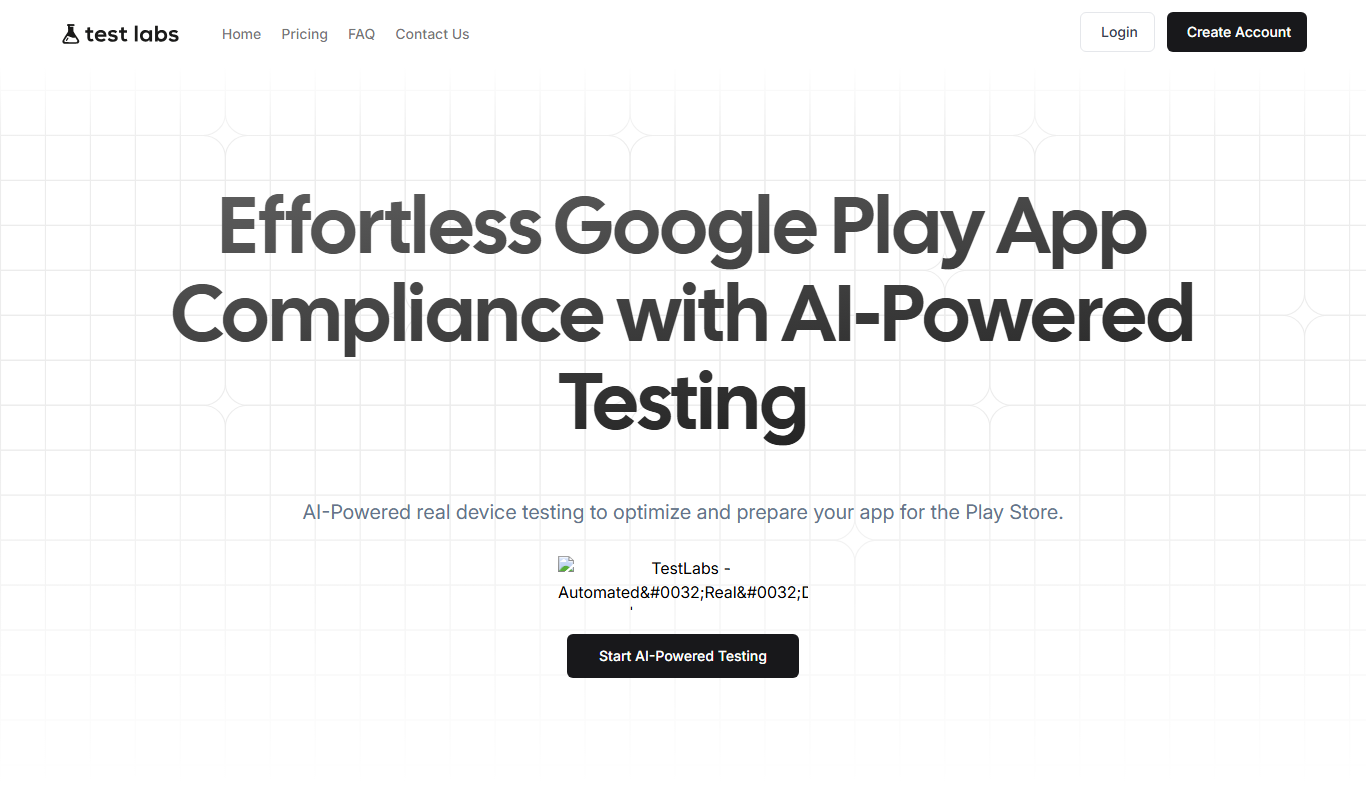
TestLabs tests your app on 20 real devices for 14 days to meet the Google Play testing policy, with daily reports, device logs and screenshots.

Modly
Modly.ai trains, fine-tunes and hosts custom large language models on your business data, delivered as a managed service with API access.

modl.ai
modl.ai automates game testing and QA with AI agents that play your build and analysts that report bugs, glitches and performance issues, with no SDKs or code needed.

Mirascope
Mirascope is The LLM Anti-Framework: open-source Python and TypeScript SDKs with one API for OpenAI, Anthropic and Google, plus tools, tracing and versioning.

Myple
Myple is a developer platform to build, deploy and secure AI applications such as AI agents and RAG chatbots, with SDKs, a CLI and a free Hacker plan.

Momentic
Momentic is an AI testing platform where agents run and maintain plain-English end-to-end tests for web, iOS and Android apps, locally or in CI.

Intuition Machines
Intuition Machines builds privacy-preserving AI/ML platforms: the hCaptcha Security Suite against fraud and abuse, and the IM Perception Platform for training, deploying and improving ML models.

GiteAI
GiteAI uses AI to analyze code changes and generate standardized commit messages automatically, with custom message patterns, commit history and insights.