

From my experience with LLaMA, I found it excels at providing a highly efficient and accessible large language model for AI researchers and developers. Its range of model sizes allows for flexibility depending on computational resources, and its open research approach encourages innovation. However, access is limited to approved research use, which means it is not immediately available for commercial deployment or casual users. Overall, if you are involved in AI research or developing advanced NLP applications, LLaMA offers a powerful foundation to build upon.
LLaMA AI Language Model by Meta for Advanced Natural Language Processing
LLaMA is Meta's advanced large language model designed for natural language processing tasks, available for research use with multiple model sizes and fine-tuning capabilities.
- Best for
- Natural Language Understanding
- Key capability
- Multiple Model Sizes
Your actions
Save LLaMA, follow its updates and vote on it — everything stays in your account.
Sign in or create a free account
What is LLaMA?
LLaMA (Large Language Model Meta AI) is a state-of-the-art foundational large language model developed by Meta. It is designed to perform a wide range of natural language processing tasks by understanding and generating human-like text. LLaMA is available as an open research model, enabling AI researchers and developers to experiment, fine-tune, and build advanced language-based applications.
Key features of LLaMA
LLaMA offers multiple model sizes optimized for efficiency and performance, supports fine-tuning on custom datasets, and is built using PyTorch for flexibility. It excels in text generation, comprehension, and code-related tasks, making it a versatile tool for AI research and development.
Multiple Model Sizes
LLaMA offers models ranging from 7B to 65B parameters, balancing performance and resource requirements.
Open Research Access
Meta provides LLaMA weights to researchers, promoting transparency and innovation in AI.
Efficient Architecture
Designed for efficiency, LLaMA achieves competitive results with fewer parameters compared to larger models.
Versatile NLP Capabilities
Supports a wide range of tasks including text generation, summarization, translation, and code assistance.
Pros and cons of LLaMA
Pros
- High performance with efficient parameter sizes
- Open access promotes research and innovation
- Supports fine-tuning for custom applications
Cons
- Access requires approval and is limited to research
- Not a turnkey commercial product
- Limited language support primarily English-focused
Key use cases for LLaMA
Natural Language Understanding
LLaMA can be used to comprehend and generate human-like text for various NLP tasks.
AI Research and Development
Researchers use LLaMA as a foundational model to develop new AI applications and improve language models.
Code Generation and Assistance
LLaMA can assist developers by generating code snippets and explaining programming concepts.
Content Generation
It supports generating coherent and contextually relevant written content for diverse applications.
Language Model Fine-tuning
Organizations can fine-tune LLaMA on domain-specific data to create customized AI solutions.
How LLaMA works
- 1
Request Access
Researchers and developers apply for access to LLaMA models through Meta’s official channels.
- 2
Download Model Weights
Upon approval, users download pre-trained model weights for local use or integration.
- 3
Integrate with Frameworks
LLaMA models are integrated into AI workflows using PyTorch or compatible frameworks.
- 4
Fine-tune and Deploy
Users fine-tune the model on specific datasets and deploy it for their NLP or code generation tasks.
Who is using LLaMA
AI researchers
Machine learning engineers
NLP developers
Academic institutions
Tech companies developing AI applications
LLaMA pricing
Free
$0
Open access for research purposes with application required.
Plans and prices are as published by the vendor and can change. Check the official site before you buy. Open the pricing page (opens in a new tab)
Compare similar tools
How LLaMA lines up against the tools people weigh it against.
 DeepSeek
LLaMA
DeepSeek vs Llama: Pricing Plans, Models & Feature Access
Frequently asked questions about LLaMA
LLaMA is used for natural language processing tasks such as text generation, understanding, and AI research.
Access is granted to researchers and developers upon application through Meta’s official AI research platform.
LLaMA model weights are available for research use but the full codebase is not fully open source.
LLaMA is primarily used with Python and PyTorch frameworks.
This tool is designed to help users accomplish its core tasks more efficiently. It is typically used by individuals or teams looking to improve productivity and workflow.
It depends on your specific needs and how you plan to use the tool. The official website and documentation are the best sources for the latest details.
It depends on your specific needs and how you plan to use the tool. The official website and documentation are the best sources for the latest details.
Sign in to review this tool.
Sign In to ReviewNo reviews yet
Be the first to share how this tool worked for you.
Ask about pricing, limits, or how it compares — or answer someone else.
Sign In to AskNo questions yet
Have a question about using or paying for this tool? Be the first to ask.
Featured on TiorAI



More AI Code Assistant tools
Other tools in the same category, for when this one is not quite the fit.

Free Trial
Tuple
Tuple is a remote pair programming tool for macOS and Windows that lets developers collaborate in real time with low-latency screen sharing, integrated audio and video and multi-user sessions.
Free Trial
Testim
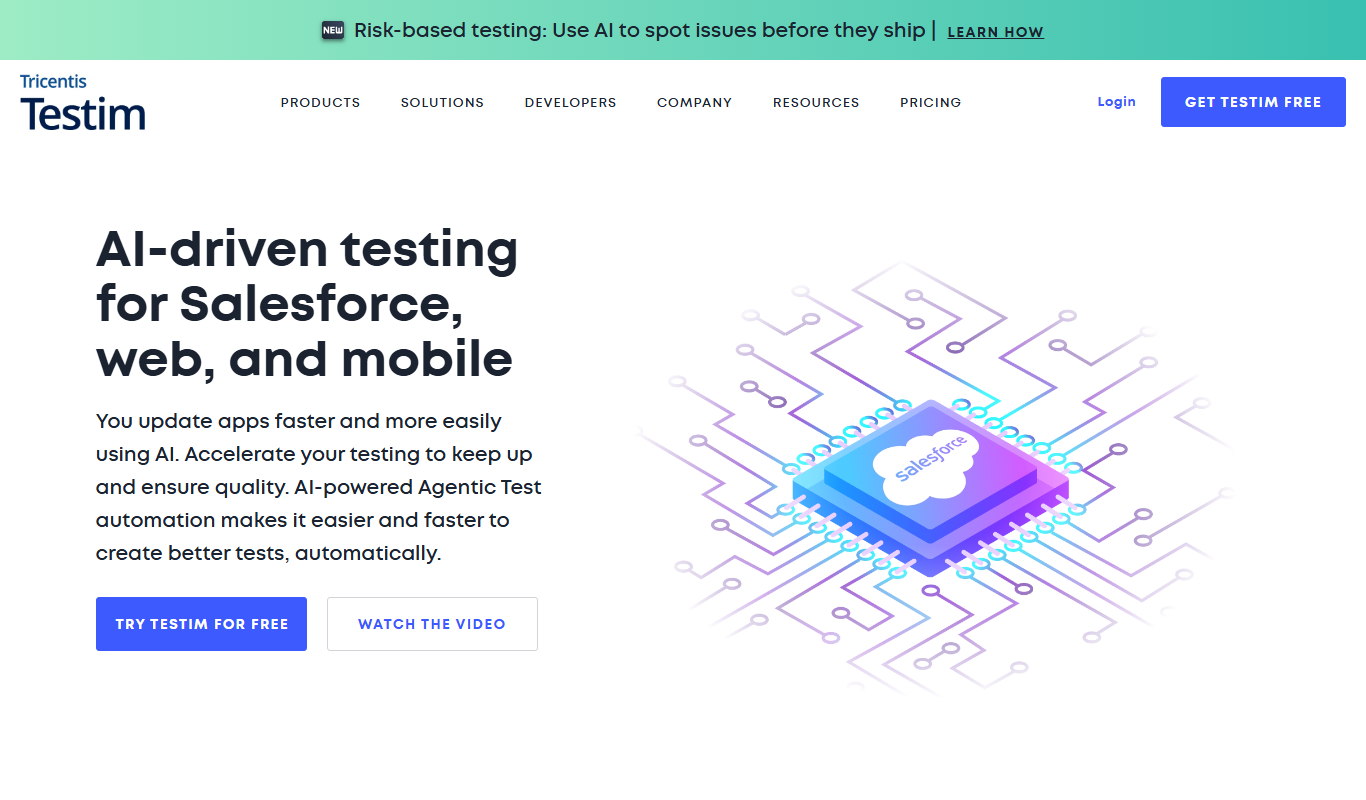
Testim is an AI-driven test automation platform that enables codeless test creation, self-healing tests, and seamless integration with CI/CD pipelines to improve software quality and reduce testing time.

Free
JSONLint
JSONLint is a free online tool that validates and formats JSON data, helping developers identify syntax errors and improve readability.

Free
Bootstrap
Bootstrap is a free, open-source front-end framework that helps developers build responsive, mobile-first websites quickly using a grid system, pre-styled UI components, and JavaScript plugins.

Free
UnoCSS
UnoCSS is an open-source, utility-first atomic CSS engine that generates CSS on-demand based on the classes used in your code, optimizing performance by minimizing CSS bundle size.

Free
Rectangle
Rectangle is an AI code assistant that generates, explains, and helps debug code using natural language inputs, designed to accelerate software development.

Free
CodinGame
CodinGame is an online platform providing coding challenges, multiplayer contests, and recruitment tools to help developers improve skills and companies assess candidates.

Free
Godot
Godot is a free, open-source game engine for creating 2D and 3D games, featuring a flexible scene system, multiple scripting languages, and cross-platform export capabilities.