

From my experience with Expo, I found it excels at simplifying the complexities of React Native app development, especially for developers who prefer focusing on JavaScript without diving into native code. The instant preview capability via the Expo Go app and the ability to push over-the-air updates significantly speed up development and deployment cycles. However, the managed workflow does limit access to some advanced native features unless you eject, which can add complexity. Overall, if you want to build cross-platform mobile apps quickly with minimal native setup, Expo delivers a robust and developer-friendly solution.
Expo Dev Platform for Building React Native Apps with Easy Deployment
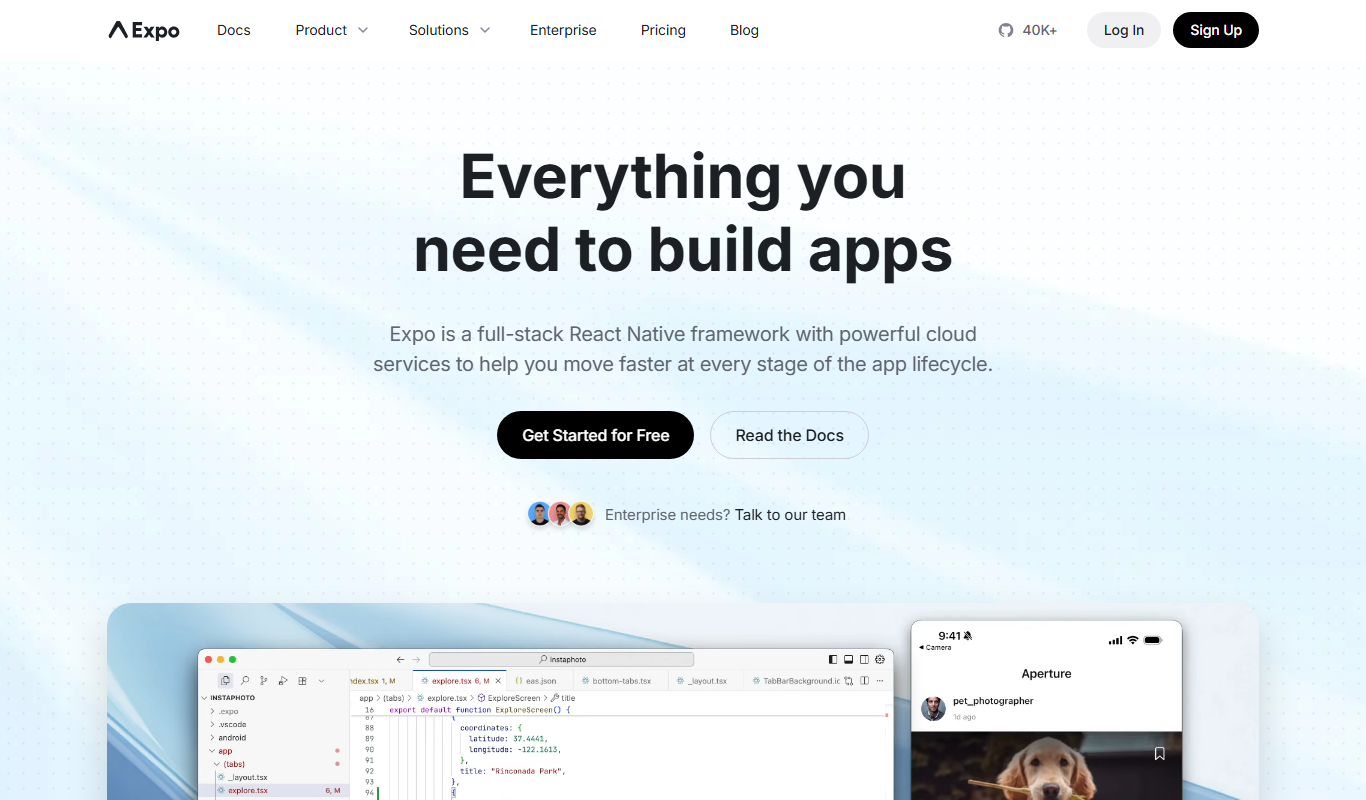
Expo is an open-source platform that simplifies building and deploying React Native mobile apps using JavaScript, offering managed workflows, cloud builds, and over-the-air updates.
- Best for
- Cross-Platform Mobile App Development
- Key capability
- Managed Workflow
Do you recommend this tool?
What is Expo?
Expo is an open-source platform and set of tools designed to simplify the development, building, and deployment of React Native mobile applications. It provides a managed workflow that abstracts native code complexities, enabling developers to write apps in JavaScript or TypeScript that run natively on iOS and Android devices. Expo includes a rich SDK with access to native device capabilities and cloud services for building and updating apps seamlessly.
Key features of Expo
Expo offers a comprehensive suite of features including a managed app development workflow, instant app preview on devices, over-the-air updates, cloud build services, and a rich set of native APIs. These features streamline mobile app development and deployment, reducing the need for native development expertise.
Managed Workflow
Abstracts native code complexities, allowing developers to focus on JavaScript/TypeScript.
Expo SDK
Provides access to native device features like camera, sensors, notifications, and more.
Expo Go App
Enables instant app preview on iOS and Android devices without building binaries.
Over-the-Air Updates
Push app updates directly to users without app store resubmissions.
Cloud Build Service
Build native app binaries in the cloud without local native development environment setup.
Pros and cons of Expo
Pros
- Simplifies React Native app development with managed workflow
- Instant app preview on real devices via Expo Go
- Supports over-the-air updates for fast deployment
- Cloud build services remove need for native build setup
- Rich SDK with access to many native device features
Cons
- Limited ability to add custom native modules in managed workflow
- Cloud build service may have queue times on free tier
- Some advanced native features require ejecting from managed workflow
Key use cases for Expo
Cross-Platform Mobile App Development
Build native iOS and Android apps using a single JavaScript/TypeScript codebase with React Native.
Rapid Prototyping and Testing
Quickly prototype mobile apps and preview changes instantly on physical devices or simulators.
Over-the-Air Updates
Deploy app updates instantly to users without going through app store review processes.
Simplified Build and Deployment
Use Expo’s cloud services to build app binaries and publish apps easily without complex native tooling.
Integration with Native APIs
Access device features like camera, location, sensors, and notifications through Expo’s managed APIs.
How Expo works
- 1
Install Expo CLI
Set up the Expo command-line interface to create and manage projects.
- 2
Create a New Project
Initialize a new React Native app using Expo’s managed workflow.
- 3
Develop and Test
Write your app code and preview it instantly on physical devices or simulators using the Expo Go app.
- 4
Build and Publish
Use Expo’s cloud build services to generate app binaries and publish updates over-the-air.
Who is using Expo
Mobile app developers
Startups building cross-platform apps
React Native beginners
Product teams needing rapid prototyping
Enterprises seeking streamlined app deployment
Expo pricing
Free
$0/month
Access to Expo CLI, Expo Go app, and basic cloud build services with usage limits.
Priority
$29/month
Faster build queues, increased build concurrency, and priority support.
Enterprise
Custom pricing
Tailored solutions with dedicated support, SLAs, and advanced features for organizations.
Plans and prices are as published by the vendor and can change. Check the official site before you buy. Open the pricing page (opens in a new tab)
Frequently asked questions about Expo
Yes, Expo’s managed workflow allows you to build fully functional apps using only JavaScript or TypeScript.
Yes, Expo enables cross-platform development targeting both iOS and Android devices.
Expo allows you to push JavaScript and asset updates directly to users’ devices without app store approval.
Expo offers a free tier with essential features; paid plans provide enhanced build speeds and support.
This tool is designed to help users accomplish its core tasks more efficiently. It is typically used by individuals or teams looking to improve productivity and workflow.
It depends on your specific needs and how you plan to use the tool. The official website and documentation are the best sources for the latest details.
Yes, it can help with that use case depending on how you configure it and what features are available. You’ll get the best results with clear inputs and a defined goal.
It depends on your specific needs and how you plan to use the tool. The official website and documentation are the best sources for the latest details.
Sign in to review this tool.
Sign In to ReviewNo reviews yet
Be the first to share how this tool worked for you.
Ask about pricing, limits, or how it compares — or answer someone else.
Sign In to AskNo questions yet
Have a question about using or paying for this tool? Be the first to ask.
Featured on TiorAI



Alternative Tools
Explore similar AI tools that might fit your needs

Free
Flutter
Flutter is an open-source UI toolkit by Google that allows developers to build native mobile, web, and desktop applications from a single Dart codebase with high performance and expressive UIs.

Free
Ionic Framework
Ionic Framework is an open-source SDK that allows developers to build cross-platform mobile applications using web technologies such as HTML, CSS, and JavaScript, supporting Angular, React, and Vue frameworks, and enabling native device access through Capacitor.
More AI App Builder tools
Other tools in the same category, for when this one is not quite the fit.

Pay As You Go
RenderStreet
RenderStreet is a cloud rendering service that accelerates 3D animation and image rendering by providing scalable GPU and CPU resources accessible via a web platform, primarily supporting Blender projects.

Free
Heroku
Heroku is a cloud platform as a service (PaaS) that enables developers to deploy, manage, and scale applications easily without managing infrastructure.

Free
8thWall
8thWall is a WebAR development platform that allows users to create augmented reality experiences accessible directly through mobile web browsers without app downloads.

Free
UI Bakery
UI Bakery is a no-code platform that lets you visually build web applications and internal tools by dragging and dropping UI components, connecting data sources, and deploying apps without coding.

Freemium
Wikitude
Wikitude is an augmented reality SDK that enables developers to create AR apps with image recognition, 3D object tracking, and location-based AR for iOS, Android, Unity, and Unreal Engine.

Enterprise
Streamlit
Streamlit is an open-source Python framework that enables data scientists and developers to quickly create and share interactive web applications for data visualization and machine learning without needing frontend development skills.

Free
Gradio
Gradio is an open-source tool that lets you quickly create interactive web interfaces for machine learning models using Python, enabling easy sharing and testing without front-end development.
Free
Buildbox
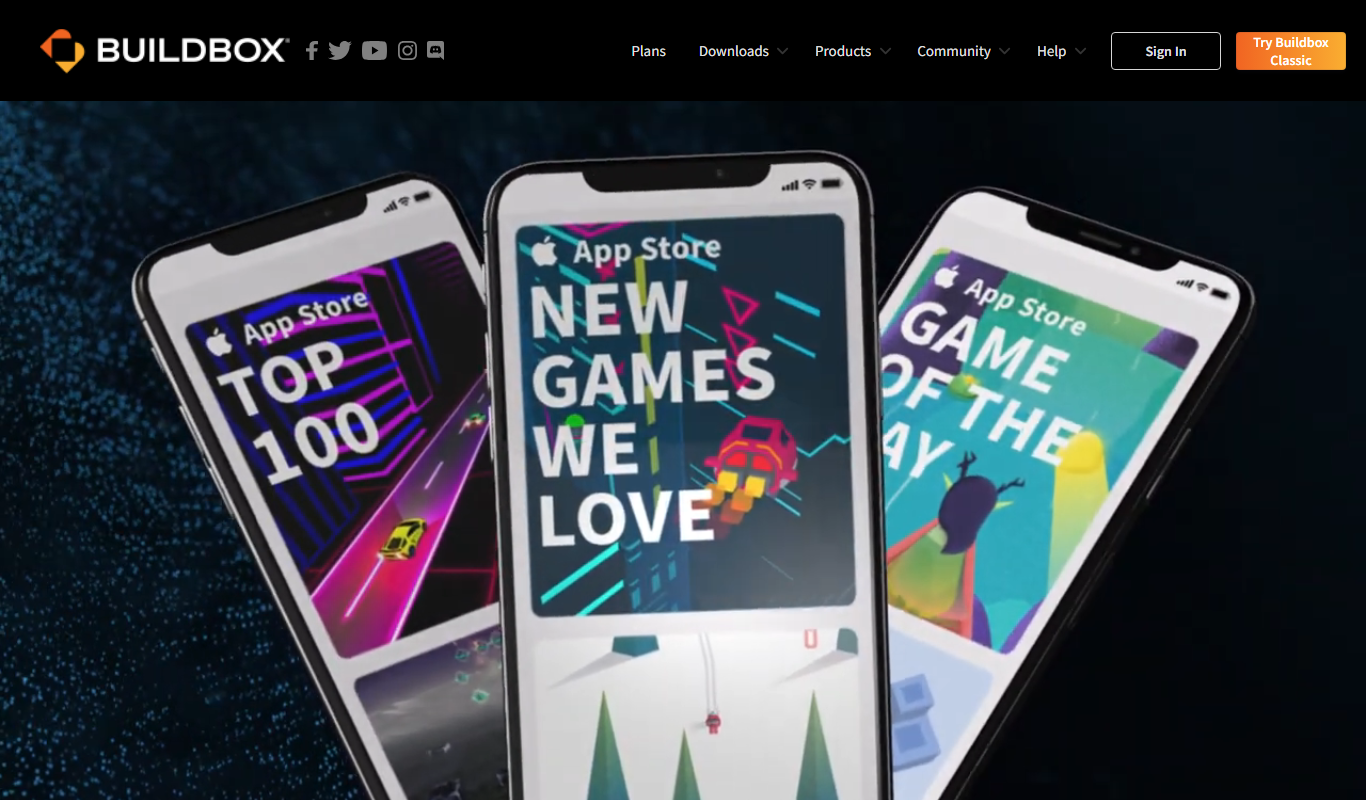
Buildbox is a no-code game development platform that enables users to create and publish 2D and 3D mobile games without programming by using drag-and-drop tools and pre-built assets.