

HTML Code Generator
HTML code generation is the process of automatically creating HTML markup, which defines the structure and content of web pages. Instead of writing HTML tags manually, a code generator produces this markup based on user input or templates. This is especially useful for users who…
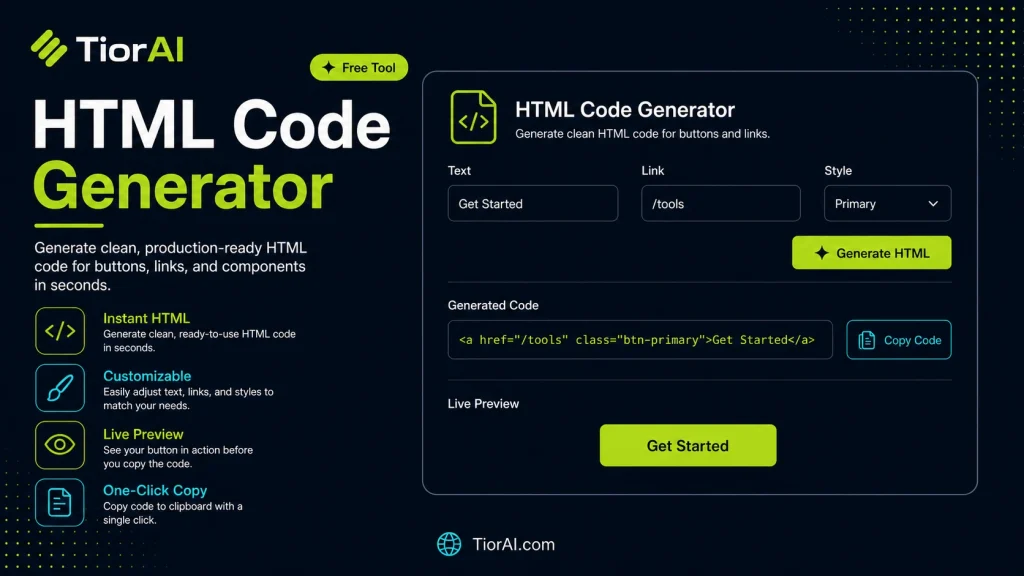
How to use it
- Paste or Enter Your Input Paste your code, text, or data into the input field. The tool supports large inputs without performance issues.
- Process and Analyze Click the action button or let the tool auto-process your input. Results appear in real time with highlighted details.
- Copy or Download the Output Review the results and copy the output to clipboard or download as a file for use in your project.
Tip Keyboard shortcut: Ctrl+V to paste input, then Ctrl+C to copy output - saves time in repetitive workflows.
Understanding HTML Code Generation
HTML code generation involves creating the markup language that structures web pages. HTML (HyperText Markup Language) defines elements like headings, paragraphs, links, images, and more, which browsers interpret to display content. An HTML code generator automates this process by converting user input or other data into valid HTML code.
Why is HTML generation important? Writing HTML manually can be time-consuming and error-prone, especially for beginners or when dealing with repetitive structures. Automated generators simplify this by producing clean, standardized code quickly.
Common use cases include:
- Converting text or design elements into HTML markup without coding knowledge.
- Generating boilerplate code for web projects to speed up development.
- Transforming content from other formats (like Markdown or plain text) into HTML.
- Creating snippets of HTML for embedding in emails, blogs, or CMS platforms.
Overall, HTML code generators help bridge the gap between content creation and web development, making it easier to produce web-ready code efficiently.
What is HTML Code Generation?
HTML code generation is the process of automatically creating HTML markup, which defines the structure and content of web pages. Instead of writing HTML tags manually, a code generator produces this markup based on user input or templates. This is especially useful for users who want to quickly convert text or design elements into web-ready code without deep coding knowledge.
When to Use an HTML Code Generator
- When you need to convert plain text or simple content into valid HTML quickly.
- If you are new to web development and want to create basic page structures without coding.
- To generate reusable HTML snippets for embedding in emails, blogs, or content management systems.
- For prototyping simple web pages or email templates where manual coding would be time-consuming.
Common Mistakes to Avoid
- Assuming the generated HTML is always semantically correct without reviewing it. Generated code may need adjustments for accessibility or SEO.
- Expecting the tool to handle complex layouts, styling, or interactivity. HTML generators typically produce markup only; CSS and JavaScript must be added separately.
Using an HTML code generator can save time and reduce errors in creating web markup. However, understanding the basics of HTML and reviewing the output ensures the generated code fits your project’s needs effectively.
Frequently asked questions
Reviews and questions
Whether this tool gave people the answer they needed, and what they asked about it.
Sign in to review this tool.
Sign In to ReviewNo reviews yet
Be the first to say whether this tool gave you what you needed.
Ask how to read the result, or what the tool does with an edge case — or answer someone else.
Sign In to AskNo questions yet
Not sure how to read a result? Be the first to ask.
AI tools related to this topic
Tools from the TiorAI directory that work on the same kind of job.

ChatGPT
ChatGPT is an AI chatbot by OpenAI powered by GPT-4o. It handles writing, coding, research, data analysis, and natural conversation. Free tier available, Plus at $20/month.