

Herb Converter
Convert between fresh and dried herb quantities. Perfect for when you need to substitute dried herbs for fresh in recipes.
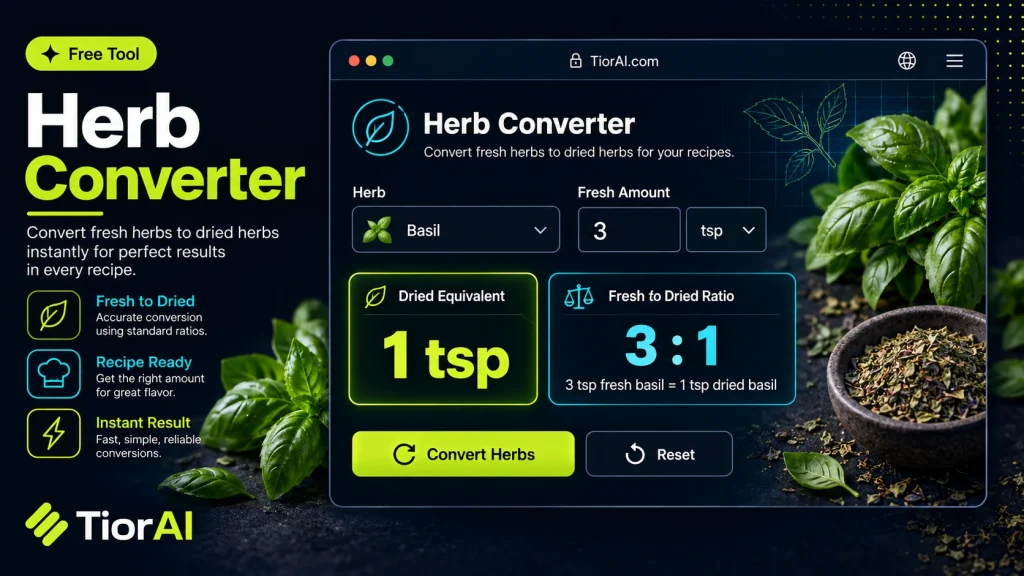
Herb Converter
Dried Amount
Conversion Ratio
All Equivalents
Note
How to use it
- Enter Your Values Input your numbers or parameters into the Herb Converter. Fill in all required fields for an accurate calculation.
- Calculate Results Click the calculate button to process your inputs. The Herb Converter delivers instant, accurate results.
- Review and Use Review your calculated results, explore the breakdown, and copy or share the output for your needs.
Tip Use the Herb Converter on mobile devices too — it's fully responsive and works perfectly on any screen size.
About Herb Converter
Herb conversion is the process of translating quantities between fresh and dried herbs in cooking. Fresh herbs and dried herbs differ significantly in flavor intensity, moisture content, and volume, so direct substitution without adjustment can lead to unbalanced dishes. Typically, dried herbs are more concentrated because the drying process removes water, intensifying their flavor.
Why is herb conversion important?
- Recipes often specify either fresh or dried herbs, but you may only have one form available.
- Using the wrong amount can overpower or under-flavor a dish.
- Understanding conversion helps maintain the intended taste and aroma.
Common conversion ratios: A standard guideline is that dried herbs are about three times as potent as fresh herbs. This means 1 tablespoon of fresh herbs usually equals 1 teaspoon of dried herbs. However, this can vary depending on the herb type and freshness.
Herb conversion is essential in recipe adaptation, meal prep, and when substituting ingredients due to availability or preference. It ensures consistent flavor outcomes and helps cooks avoid waste or disappointing results.
Understanding Herb Conversion
Herb conversion is the process of adjusting quantities when substituting fresh herbs with dried herbs or vice versa. Because drying removes moisture and concentrates flavor, dried herbs are more potent than fresh ones. This difference means you cannot simply swap equal volumes without affecting the taste of your dish.
Typically, dried herbs are about three times stronger than fresh herbs. For example, if a recipe calls for 3 tablespoons of fresh basil, you would use 1 tablespoon of dried basil to achieve a similar flavor intensity. This conversion helps maintain the balance and aroma intended by the recipe.
When to Use an Herb Converter
- If you only have dried herbs but the recipe requires fresh herbs.
- When scaling recipes up or down and needing precise herb measurements.
- When substituting herbs in sauces, marinades, or dressings where flavor balance is critical.
- When adapting recipes based on ingredient availability or storage preferences.
Common Mistakes to Avoid
- Using equal amounts of fresh and dried herbs without adjusting for potency, which can lead to overpowering or bland dishes.
- Adding dried herbs at the same time as fresh herbs without considering that dried herbs release flavor more slowly and may require longer cooking times.
Understanding these principles ensures your cooking remains flavorful and consistent, regardless of the herb form you use.
Frequently asked questions
Reviews and questions
Whether this tool gave people the answer they needed, and what they asked about it.
Sign in to review this tool.
Sign In to ReviewNo reviews yet
Be the first to say whether this tool gave you what you needed.
Ask how to read the result, or what the tool does with an edge case — or answer someone else.
Sign In to AskNo questions yet
Not sure how to read a result? Be the first to ask.
AI tools related to this topic
Tools from the TiorAI directory that work on the same kind of job.

Any Video Converter
Any Video Converter is a multimedia software that converts video files between numerous formats, downloads online videos, and offers basic editing and DVD burning features.

Bank Statement Converter
Bank Statement Converter is an online tool that converts PDF bank statements into Excel and CSV formats, enabling easy data extraction and financial management.

Code Language Converter
Code Language Converter is an online tool that translates code between 30+ programming languages with AI-powered conversion, with a free plan and a paid PRO plan.

HD Photo Converter
HD Photo Converter is an online AI image enhancer that converts low-quality images to high resolution, up to 4x the original size.