

Cooking Measurement Converter
Cooking measurement conversion is the process of changing ingredient quantities from one unit of measurement to another. This is necessary because recipes often use different systems—such as metric units like grams and milliliters or imperial units like cups and ounces. Accurate conversions ensure that the…
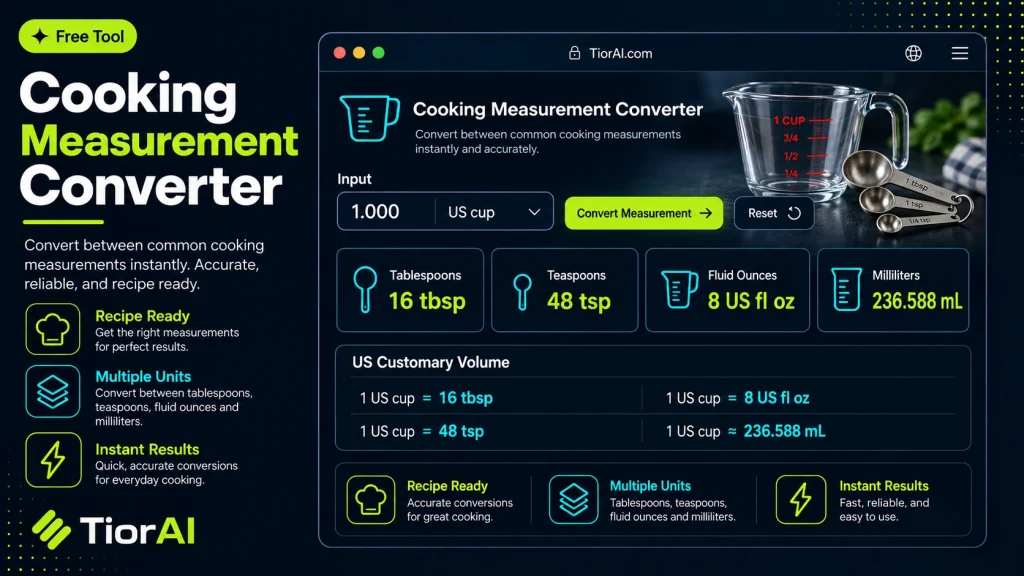
How to use it
- Enter Your Values Input your numbers or parameters into the Cooking Measurement Converter. Fill in all required fields for an accurate calculation.
- Calculate Results Click the calculate button to process your inputs. The Cooking Measurement Converter delivers instant, accurate results.
- Review and Use Review your calculated results, explore the breakdown, and copy or share the output for your needs.
Tip Share your Cooking Measurement Converter results by copying the output — great for reports, homework, or team discussions.
Understanding Cooking Measurement Conversion
Cooking measurement conversion involves changing quantities from one unit to another to ensure accurate ingredient amounts in recipes. This is essential because recipes often use different measurement systems—such as metric (grams, milliliters) and imperial (cups, ounces)—depending on their origin or target audience.
Why is this important? Precise measurements affect the texture, flavor, and outcome of dishes. For example, baking requires exact ingredient ratios, so converting between volume and weight units correctly is critical.
Common situations for conversions include:
- Adjusting recipes from one country’s measurement system to another.
- Scaling recipes up or down while maintaining ingredient proportions.
- Substituting ingredients that are measured differently (e.g., converting tablespoons of oil to grams).
Conversions can be complex because some ingredients have different densities, so volume-to-weight conversions vary by ingredient. Cooking measurement converters often include databases or formulas to handle these differences accurately.
What is Cooking Measurement Conversion?
Cooking measurement conversion is the process of changing ingredient quantities from one unit of measurement to another. This is necessary because recipes often use different systems—such as metric units like grams and milliliters or imperial units like cups and ounces. Accurate conversions ensure that the proportions of ingredients remain consistent, which is crucial for the success of many dishes, especially baked goods.
When Should You Use a Cooking Measurement Converter?
- When you have a recipe that uses units different from what you have available, such as converting cups to grams.
- When scaling a recipe up or down and needing to adjust ingredient amounts precisely.
- When substituting ingredients that require converting between volume and weight.
- When working with international recipes that use unfamiliar measurement units.
Common Mistakes to Avoid
- Assuming all ingredients convert the same way between volume and weight, ignoring differences in density.
- Mixing up fluid ounces (a measure of volume) with ounces (a measure of weight), which can cause errors.
- Using approximate conversions for recipes that require precision, such as baking, which can affect the final result.
Understanding these concepts helps you use cooking measurement converters effectively, ensuring your recipes turn out as intended regardless of the units used.
Frequently asked questions
Reviews and questions
Whether this tool gave people the answer they needed, and what they asked about it.
Sign in to review this tool.
Sign In to ReviewNo reviews yet
Be the first to say whether this tool gave you what you needed.
Ask how to read the result, or what the tool does with an edge case — or answer someone else.
Sign In to AskNo questions yet
Not sure how to read a result? Be the first to ask.
AI tools related to this topic
Tools from the TiorAI directory that work on the same kind of job.

Any Video Converter
Any Video Converter is a multimedia software that converts video files between numerous formats, downloads online videos, and offers basic editing and DVD burning features.

Bank Statement Converter
Bank Statement Converter is an online tool that converts PDF bank statements into Excel and CSV formats, enabling easy data extraction and financial management.

Code Language Converter
Code Language Converter is an online tool that translates code between 30+ programming languages with AI-powered conversion, with a free plan and a paid PRO plan.

HD Photo Converter
HD Photo Converter is an online AI image enhancer that converts low-quality images to high resolution, up to 4x the original size.