

Average Calculator
Calculate mean, median, mode, range, and sum from a list of numbers.

| Statistic | Value |
|---|---|
| Count | 0 |
| Sum | 0 |
| Mean | 0 |
| Median | 0 |
| Mode | — |
| Range | 0 |
How to use it
- Enter Your Values Input your numbers or parameters into the Average Calculator. Fill in all required fields for an accurate calculation.
- Calculate Results Click the calculate button to process your inputs. The Average Calculator delivers instant, accurate results.
- Review and Use Review your calculated results, explore the breakdown, and copy or share the output for your needs.
Tip Try different input values with the Average Calculator to compare scenarios side by side before making decisions.
Understanding Averages and Their Calculation
An average is a single value that represents a set of numbers, providing a summary measure of the data. It helps to understand the central tendency or typical value within a dataset. The most common type of average is the arithmetic mean, calculated by adding all numbers together and dividing by the count of numbers.
Why calculate averages? Averages simplify complex data sets, making it easier to compare and analyze information. For example, averages are used in education to determine a student’s overall grade, in finance to analyze stock performance, and in everyday life to assess typical expenses.
Common types of averages include:
Mean: The sum of all values divided by the number of values.Median: The middle value when data is ordered from smallest to largest.Mode: The most frequently occurring value in the dataset.
Calculating averages manually can be time-consuming and error-prone, especially with large datasets. Online average calculators automate this process, ensuring quick and accurate results. They are essential tools for students, professionals, and anyone working with numerical data.
What is an Average?
An average is a way to summarize a set of numbers with a single representative value. The most common average is the arithmetic mean, which you get by adding all numbers together and dividing by how many numbers there are. This helps you understand the typical value in your data.
When to Use an Average Calculator
- When you want a quick summary of data like test scores or expenses.
- To compare performance metrics across different groups or time periods.
- When dealing with large datasets where manual calculation is impractical.
- To avoid errors in arithmetic when calculating averages by hand.
Common Mistakes to Avoid
- Entering non-numeric values or leaving inputs blank, which can cause incorrect results.
- Mixing up different types of averages, such as confusing mean with median or mode.
Technical Context
Average calculators automate the process of computing central tendency measures. They typically accept a list of numbers and perform calculations instantly, reducing human error. While the arithmetic mean is the default, some calculators also provide median and mode options to better suit different data distributions. Understanding which average to use is important for accurate data interpretation.
Frequently asked questions
Reviews and questions
Whether this tool gave people the answer they needed, and what they asked about it.
Sign in to review this tool.
Sign In to ReviewNo reviews yet
Be the first to say whether this tool gave you what you needed.
Ask how to read the result, or what the tool does with an edge case — or answer someone else.
Sign In to AskNo questions yet
Not sure how to read a result? Be the first to ask.
AI tools related to this topic
Tools from the TiorAI directory that work on the same kind of job.

Math.now: Free Math AI Solver powered by math GPT
Math.now is a free web-based AI math solver that uses GPT technology to provide instant, detailed solutions and explanations for a wide range of math problems.

AI Math Solver Powered by Math GPT Free Online
AI Math Solver Powered by Math GPT is a free online tool that instantly solves math problems across various topics with detailed step-by-step explanations, accessible via web browser without registration.
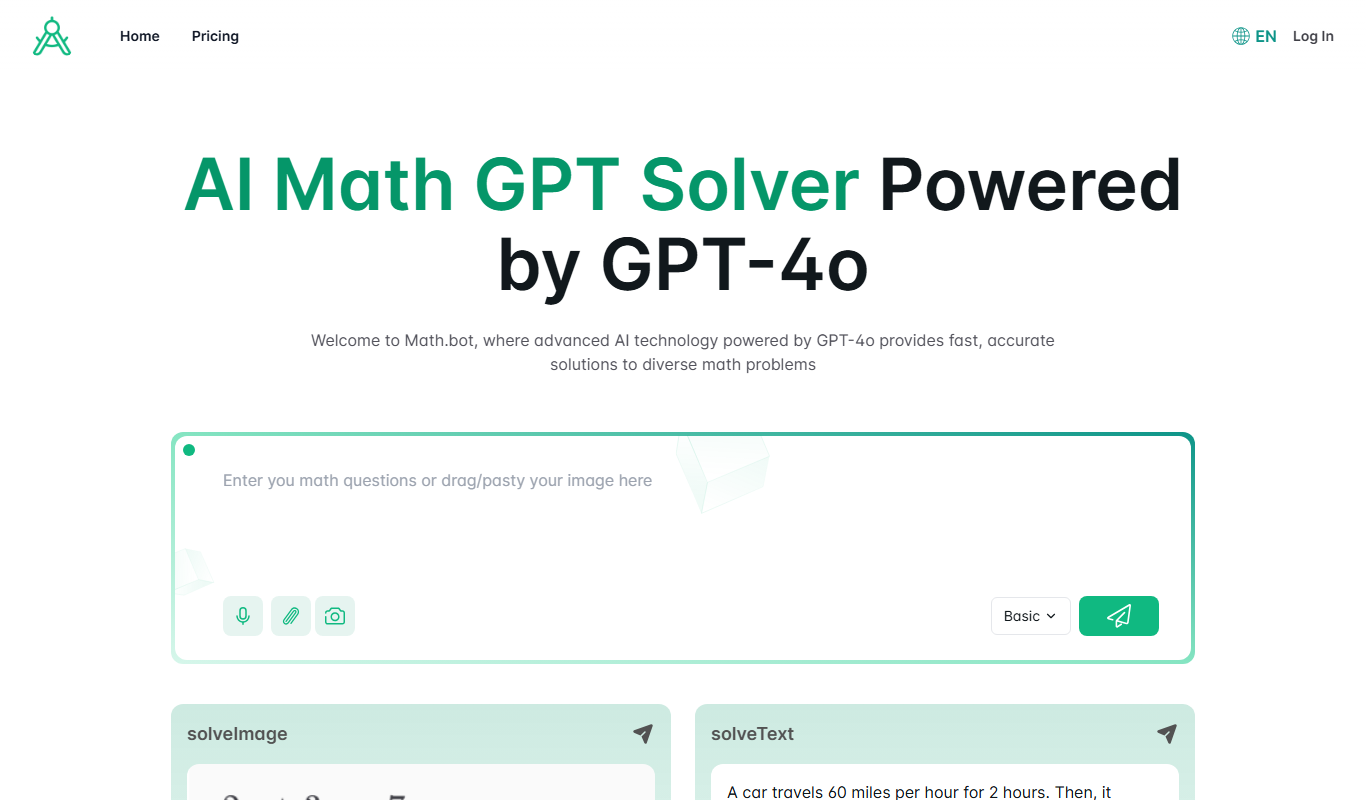
Math.bot: AI Math Solver by GPT-4o
Math.bot is an AI-powered math solver using GPT-4o that provides detailed step-by-step solutions to a wide range of math problems via a web interface.

Bearaby Weighted Blanket
Bearaby Weighted Blanket is a hand-knit organic cotton blanket designed to improve sleep and reduce anxiety through gentle, evenly distributed pressure.