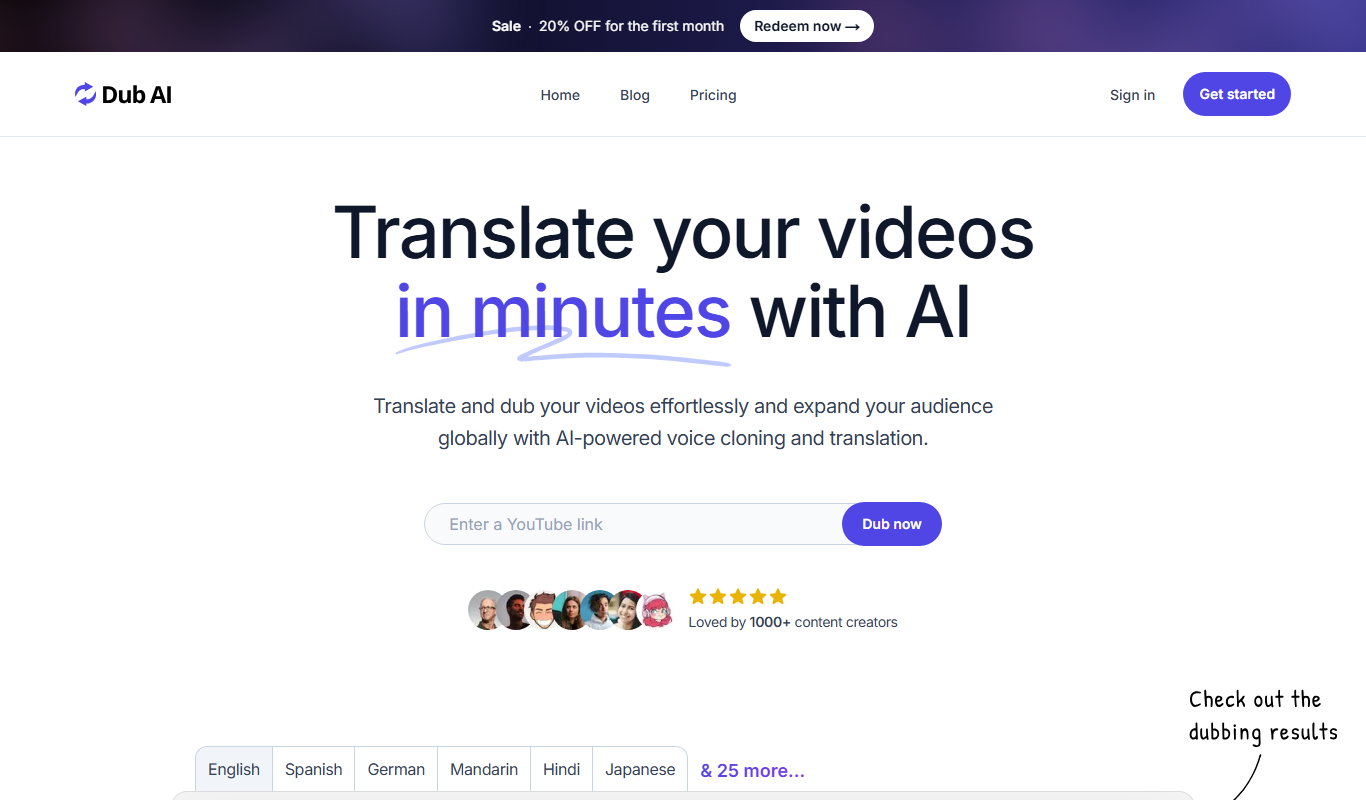
What Is AI Dubbing?
AI dubbing involves leveraging machine learning algorithms and natural language processing to convert spoken dialogue in videos into multiple languages with synchronized lip movements and natural-sounding voices. Unlike traditional dubbing, which requires human voice actors and extensive studio work, AI dubbing automates the process, making it faster and more scalable. It combines speech recognition, translation, and voice synthesis to produce localized video content that feels authentic and engaging.
Why Is AI Dubbing Important?
AI dubbing plays a crucial role in expanding the reach of multimedia content across global markets by breaking down language barriers efficiently. It enables brands, media companies, and content creators to deliver personalized experiences to diverse audiences without the high costs and time delays of manual dubbing. Additionally, AI dubbing supports accessibility by providing voiceovers in multiple languages, helping businesses tap into new demographics and improve user engagement worldwide.
- Accelerates video localization for global audiences.
- Reduces production costs compared to traditional dubbing.
- Enhances viewer experience with natural and synchronized voiceovers.
Key Characteristics of AI Dubbing
- Automation: Uses AI models to perform speech-to-text, translation, and text-to-speech without manual intervention.
- Language Versatility: Supports multiple languages and dialects for diverse localization needs.
- Synchronization: Aligns dubbed audio with lip movements and timing of original video for natural viewing.
How AI Dubbing Works (Step-by-Step)
- Audio Extraction: The original video’s spoken audio is extracted and converted into text using speech recognition.
- Translation: The transcribed text is translated into the target language by AI translation engines.
- Voice Synthesis and Lip Sync: The translated text is converted into speech using AI voice synthesis, synchronized with the video’s lip movements for realism.
Real-World Examples of AI Dubbing
- Streaming Platforms: Services like Netflix use AI dubbing to quickly offer shows in multiple languages, enhancing global accessibility.
- Corporate Training Videos: Companies deploy AI dubbing to localize training content efficiently across international offices.
AI Dubbing in SEO, Marketing, or Business Context
In digital marketing and SEO, AI dubbing helps create multilingual video content that can rank in various language-specific search results, increasing organic reach and engagement. For businesses, localized videos improve brand trust and customer connection in new markets, driving conversions and expanding global footprint with minimal delay and cost.
Common Mistakes or Misunderstandings About AI Dubbing
- Assuming AI dubbing completely replaces human voice actors; in many cases, human oversight is still needed to ensure quality.
- Believing AI dubbing guarantees perfect translations without context review, which can lead to inaccuracies or awkward phrasing.
Related Terms
- Speech Recognition
- Video Localization
- Text-to-Speech (TTS)
FAQs About AI Dubbing
AI dubbing automates translation and voiceover creation, enabling faster and more cost-effective adaptation of videos into multiple languages.
Yes, modern AI dubbing uses advanced voice synthesis to create realistic and expressive voices that closely mimic human speech.
Summary
AI dubbing revolutionizes the way video content is localized by automating the translation and voiceover process with artificial intelligence. It enhances global reach, reduces costs, and improves viewer experience by delivering natural, synchronized voiceovers in multiple languages. While it complements traditional dubbing methods, AI dubbing is an essential tool for marketers, content creators, and businesses aiming to engage international audiences efficiently and effectively.