

OpenFaaS Serverless Framework for Kubernetes and Cloud Functions
OpenFaaS is an open-source serverless framework that enables developers to deploy, manage, and scale functions on Kubernetes and other container platforms easily.
- Best for
- Serverless Function Deployment
- Key capability
- Kubernetes Native
Save OpenFaaS, follow its updates and vote on it — everything stays in your account.
Sign in or create a free account
What is OpenFaaS?
OpenFaaS (Functions as a Service) is an open-source serverless framework that enables developers to deploy event-driven functions and microservices on Kubernetes and other container orchestrators. It simplifies the process of packaging code as functions, managing their lifecycle, and scaling automatically based on demand. OpenFaaS supports multiple programming languages and integrates with existing DevOps workflows.
Key features of OpenFaaS
OpenFaaS offers easy function deployment, auto-scaling, a web UI and CLI for management, multi-cloud support, and extensibility through templates and plugins. It abstracts away complex Kubernetes configurations, allowing developers to focus on writing code.
Kubernetes Native
Built to run on Kubernetes, leveraging its scalability and reliability.
Multi-language Support
Supports any language that can be compiled into a container image.
Auto-scaling
Functions scale automatically based on demand, optimizing resource usage.
Simple UI and CLI
Manage functions easily with an intuitive web interface and command-line tools.
Extensible Templates
Use or create templates for rapid function development in various languages.
Pros and cons of OpenFaaS
Pros
- Open-source with active community support
- Easy to deploy and manage serverless functions
- Supports multiple languages and runtimes
- Scales functions automatically based on demand
- Works on any Kubernetes cluster for cloud portability
Cons
- Requires Kubernetes knowledge for setup and management
- Self-hosted, so infrastructure maintenance is user responsibility
- Limited built-in monitoring compared to some managed services
Key use cases for OpenFaaS
Serverless Function Deployment
Deploy and manage serverless functions on Kubernetes clusters or cloud environments with ease.
Microservices Architecture
Build scalable microservices by packaging business logic into independent functions.
DevOps Automation
Automate CI/CD pipelines and infrastructure management using OpenFaaS CLI and API.
Event-driven Applications
Create event-driven workflows that respond to HTTP requests, queues, or other triggers.
Cloud Portability
Run functions on any cloud or on-premises Kubernetes cluster without vendor lock-in.
How OpenFaaS works
- 1
Install OpenFaaS
Deploy OpenFaaS on a Kubernetes cluster using Helm charts or other installation methods.
- 2
Create Functions
Use OpenFaaS templates to write functions in your preferred language and package them as Docker containers.
- 3
Deploy Functions
Deploy your functions to the OpenFaaS gateway via CLI or UI, making them accessible via HTTP endpoints.
- 4
Invoke and Scale
Invoke functions on demand; OpenFaaS automatically scales them based on traffic and resource usage.
- 5
Monitor and Manage
Use the OpenFaaS dashboard or CLI to monitor function performance, logs, and manage lifecycle.
Who is using OpenFaaS
OpenFaaS pricing
Community Edition
$0
Free for personal use, with a 60-day limit on commercial use.
OpenFaaS Standard
$1250/month
Paid commercial plan.
Enterprise
Paid commercial plan.
Plans and prices are as published by the vendor and can change. Check the official site before you buy. Open the pricing page (opens in a new tab)
Frequently asked questions about OpenFaaS
OpenFaaS is used to deploy and manage serverless functions and microservices on Kubernetes and other container platforms.
The Community Edition is free for personal use with a 60-day limit on commercial use; commercial plans include OpenFaaS Standard and Enterprise.
OpenFaaS supports any language that can be packaged into a Docker container, including Go, Python, Node.js, Java, and more.
Yes, OpenFaaS can run on any Kubernetes cluster, including those hosted on AWS, Azure, Google Cloud, or on-premises.
The best alternative depends on your workflow, features you need, and budget. Compare plans, integrations, and output quality to choose the closest fit.
Yes, it can help with that use case depending on how you configure it and what features are available. You’ll get the best results with clear inputs and a defined goal.
Conclusion
Functions are written from templates in any language that can be packaged into a Docker container, then deployed to the OpenFaaS gateway through the CLI or UI. Each function is reachable as an HTTP endpoint and scales automatically based on traffic and resource usage. Installation uses Helm charts on a Kubernetes cluster, which can be hosted on AWS, Azure, Google Cloud or on-premises.
That setup requires Kubernetes knowledge, and infrastructure maintenance is the user’s responsibility. Cloud-native developers, DevOps engineers and software architects building microservices are its intended users. Free use has limits: the Community Edition is free for personal use with a 60-day limit on commercial use, while OpenFaaS Standard costs $1250/month and an Enterprise plan is also offered.
Sources
Sign in to review this tool.
Sign In to ReviewNo reviews yet
Be the first to share how this tool worked for you.
Ask about pricing, limits, or how it compares — or answer someone else.
Sign In to AskNo questions yet
Have a question about using or paying for this tool? Be the first to ask.
Featured on TiorAI



More AI API tools
Other tools in the same category, for when this one is not quite the fit.

Myple
Myple is a developer platform to build, deploy and secure AI applications such as AI agents and RAG chatbots, with SDKs, a CLI and a free Hacker plan.
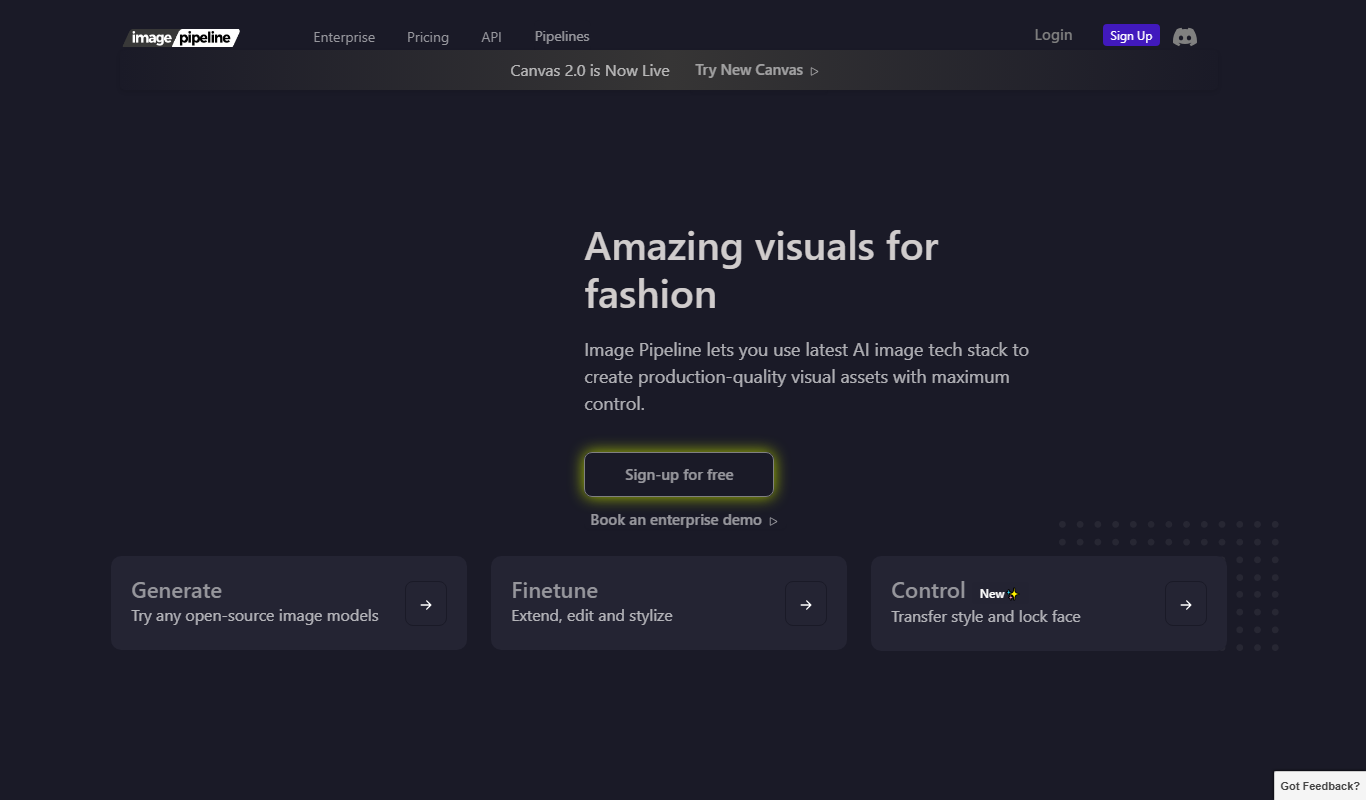
Image Pipeline
ImagePipeline is the image AI API for ecommerce and fashion teams: on-model imagery, virtual try-on, background and relight, and ad creative from one API key.

KawniX
Kawnix is a protocol for agent-to-agent commerce: discover verified agent endpoints, lock escrow and settle tasks with signed receipts.

SpamCheck.ai
SpamCheckAI is a spam detection API for free-form JSON and form submissions, with IP filtering, email validation and content analysis; it powers Basin.

FlexAI
FlexAI offers managed inference on 30+ open models behind one OpenAI-compatible API, with dedicated GPUs, fine-tuning and private cloud on one account.

Productify.ai
Productify.ai is an API-first platform for transforming unstructured product content into structured, compliant, reusable product data at eCommerce scale.

APIPark
APIPark is a one-stop AI model and API unified gateway with a single API key, access approval, quotas, billing and monitoring, available as open source and as a commercial edition.

Llongterm
Llongterm is a plug-and-play memory layer for AI developers that gives AI apps and agents long-term memory of past conversations.