

From my experience with APIPark, I found it excels at simplifying API integration for users without coding skills. The no-code interface and workflow automation tools make it accessible for developers and business users alike. After spending time with the platform, I can say it’s particularly well-suited for small to medium businesses and startups looking to connect multiple APIs quickly. However, there is a trade-off in advanced customization compared to traditional code-based solutions. Overall, if you need to automate API workflows without programming, APIPark delivers solid and user-friendly results.
APIPark API Integration Platform for Developers and Businesses
APIPark is a no-code platform that enables users to integrate multiple APIs, automate workflows, and manage API-driven applications without programming skills.
- Best for
- API Integration
- Key capability
- No-Code API Integration


Do you recommend this tool?
What is APIPark?
APIPark is a no-code API integration platform designed to simplify connecting, managing, and automating APIs for developers and businesses. It enables users to combine multiple APIs into a single interface, automate workflows, and build API-driven applications without writing code.
Key features of APIPark
APIPark offers features such as multi-API integration, workflow automation, data aggregation, API testing, and a user-friendly no-code interface that accelerates development and operational efficiency.
No-Code API Integration
Easily connect multiple APIs without programming knowledge.
Workflow Automation
Automate complex sequences of API calls and data handling.
Multi-API Aggregation
Combine data from various sources into unified outputs.
API Testing Tools
Built-in tools to test and debug APIs efficiently.
User-Friendly Dashboard
Intuitive interface for managing integrations and monitoring usage.
Pros and cons of APIPark
Pros
- No coding required for API integration
- Supports multiple APIs in one platform
- User-friendly interface for workflow automation
- Built-in API testing and debugging tools
- Flexible pricing plans including a free tier
Cons
- Limited advanced customization compared to code-based solutions
- Pricing details for enterprise plans require direct contact
Key use cases for APIPark
API Integration
Connect and integrate multiple APIs into a single unified interface without coding.
Automation
Automate workflows by orchestrating API calls and data processing across services.
Data Aggregation
Aggregate data from various APIs to create consolidated reports or dashboards.
Rapid Prototyping
Quickly build and test API-driven applications or services using no-code tools.
API Testing
Test and debug APIs through an easy-to-use interface to ensure reliability.
How APIPark works
- 1
Sign Up
Create an account on APIPark’s web platform to access the dashboard.
- 2
Connect APIs
Add and configure the APIs you want to integrate using built-in connectors or custom endpoints.
- 3
Build Workflows
Use the no-code interface to design workflows that automate API calls and data processing.
- 4
Test and Deploy
Test your integrations and workflows within the platform before deploying them.
- 5
Monitor and Manage
Track API usage, monitor performance, and manage integrations through the dashboard.
Who is using APIPark
Developers seeking no-code API solutions
Small to medium businesses automating workflows
Product managers integrating multiple services
Startups building API-driven applications
Data analysts aggregating API data
APIPark pricing
Free
$0/month
Basic API integration features with limited API calls and workflows.
Pro
$29/month
Advanced features, higher API call limits, and priority support.
Enterprise
Custom pricing
Tailored solutions with dedicated support and enhanced capabilities.
Plans and prices are as published by the vendor and can change. Check the official site before you buy. Open the pricing page (opens in a new tab)
Frequently asked questions about APIPark
APIPark supports most RESTful APIs and offers tools to connect custom APIs.
No, APIPark is designed as a no-code platform, enabling users to integrate APIs without programming.
Yes, there is a free plan with limited features suitable for basic API integrations.
Yes, APIPark allows you to build automated workflows that orchestrate multiple API calls.
This tool is designed to help users accomplish its core tasks more efficiently. It is typically used by individuals or teams looking to improve productivity and workflow.
Integration support depends on the tool and its available connectors or API. Check the official documentation or integrations page to confirm what is supported.
Integration support depends on the tool and its available connectors or API. Check the official documentation or integrations page to confirm what is supported.
Some tools offer a free plan or trial with limited features. Availability can vary, so confirm on the official website.
Sign in to review this tool.
Sign In to ReviewNo reviews yet
Be the first to share how this tool worked for you.
Ask about pricing, limits, or how it compares — or answer someone else.
Sign In to AskNo questions yet
Have a question about using or paying for this tool? Be the first to ask.
Featured on TiorAI



Alternative Tools
Explore similar AI tools that might fit your needs
Free
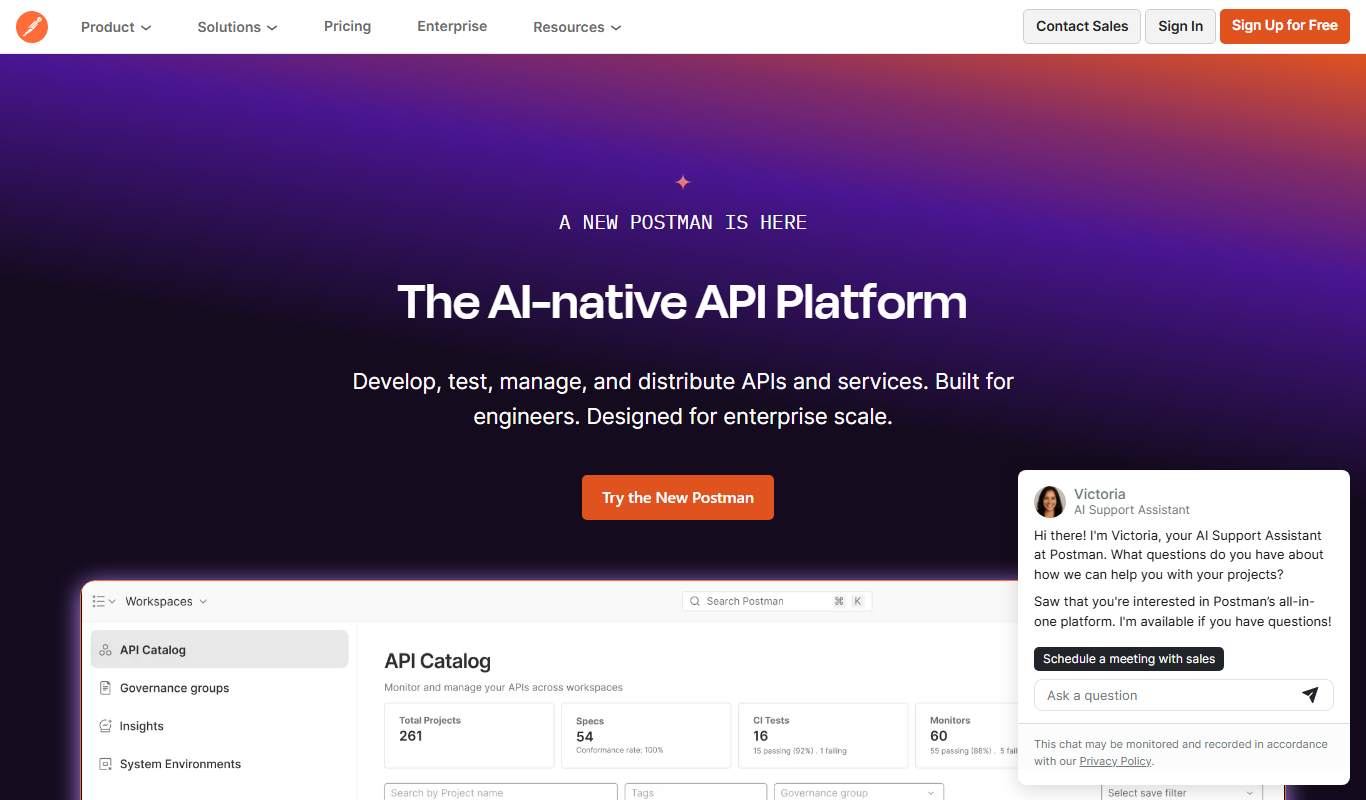
Postman
Postman is a comprehensive API platform that helps developers design, test, automate, document, and monitor APIs efficiently with collaboration tools.
More AI Automation & Workflow Tools tools
Other tools in the same category, for when this one is not quite the fit.
Free Trial
Journeai
Journeai is an AI-powered software that automatically maps customer journeys across multiple marketing channels, providing real-time analytics and insights to optimize marketing strategies.

Freemium
Meoweler
Meoweler is an AI chatbot platform that helps businesses automate customer support and engagement through no-code chatbot creation and natural language processing.

Free
Momo
Momo is an AI-powered assistant that automates workflows, manages tasks, and enhances team collaboration by integrating with popular productivity tools.

Contact for pricing
QUINETICS
Quinetics is an AI platform that provides businesses with advanced data analytics, workflow automation, and custom machine learning model development to optimize operations and decision-making.
Free Trial
RobotaLife
RobotaLife is an AI chatbot platform that enables businesses to automate customer interactions, generate leads, and improve support efficiency through customizable conversational agents.
Freemium
Ai & Stuff
Ai & Stuff is a web platform providing multiple AI-powered tools for generating text and images, automating content tasks, and assisting creative workflows.

Freemium
Saleswise | AI Tools for Real Estate Agents
Saleswise is an AI-driven sales assistant platform designed for real estate agents to automate lead qualification, follow-ups, and pipeline management, improving sales efficiency.

Free
ChatGBT
ChatGBT is an AI chatbot platform that helps businesses automate customer support and engagement through customizable chatbots integrated on websites.