

DataHub Open-Source Data Catalog for Discovery and Governance
DataHub is an open-source metadata platform that helps organizations discover, manage, and govern their data assets by providing a centralized catalog with rich metadata, lineage visualization, and access controls.
- Best for
- Data Discovery
- Key capability
- Unified Metadata Store
Save DataHub, follow its updates and vote on it — everything stays in your account.
Sign in or create a free accountWhat is DataHub?
DataHub is an open-source metadata platform and data catalog that helps teams discover, understand and govern their data assets, offered as the self-managed open source DataHub Core or the fully managed DataHub Cloud.
Key features of DataHub
DataHub offers rich metadata ingestion, powerful search and discovery, data lineage visualization, access control management, and integration with popular data tools. Its extensible architecture supports custom metadata models and scalable ingestion pipelines.
Unified Metadata Store
Aggregates metadata from multiple sources into a single platform for comprehensive data visibility.
Data Lineage Visualization
Visualizes the flow and transformation of data across systems to understand dependencies.
Powerful Search and Filtering
Enables users to quickly locate datasets using advanced search capabilities.
Extensible Metadata Model
Supports custom metadata types and schemas to fit organizational needs.
Access Control and Ownership
Manages dataset ownership and permissions to enforce data governance policies.
Pros and cons of DataHub
Pros
- Open-source and free to use
- Extensible and customizable metadata model
- Strong data lineage visualization
- Integrates with many data sources
- Active community and LinkedIn backing
Cons
- Requires technical expertise to deploy and maintain
- Self-hosting needed; no official managed service
- User interface can be complex for beginners
Key use cases for DataHub
Data Discovery
Easily find and explore datasets across an organization or public repositories using rich metadata and search capabilities.
Metadata Management
Centralize and manage metadata for datasets, including schema, ownership, lineage, and usage statistics.
Data Governance
Implement data governance policies by tracking dataset ownership, access controls, and compliance information.
Data Collaboration
Enable teams to collaborate on data assets by sharing insights, annotations, and documentation within the platform.
Integration with Data Ecosystem
Connect with various data sources and tools through APIs and ingestion pipelines to keep metadata up to date.
How DataHub works
- 1
Metadata Ingestion
Connect DataHub to your data sources to automatically ingest metadata such as schemas, lineage, and usage.
- 2
Cataloging and Indexing
DataHub indexes the ingested metadata to create a searchable catalog of datasets and data assets.
- 3
Search and Discovery
Users can search for datasets using keywords, filters, and facets to quickly find relevant data.
- 4
Collaboration and Governance
Teams can annotate datasets, assign ownership, and manage access permissions to ensure data governance.
Who is using DataHub
DataHub pricing
DataHub Core
$0
Free open source edition; your team handles the install, configuration and upgrades.
DataHub Cloud
Contact sales for pricing
Fully managed by DataHub engineers with SLA-backed 99.5% availability.
Plans and prices are as published by the vendor and can change. Check the official site before you buy. Open the pricing page (opens in a new tab)
Frequently asked questions about DataHub
Yes. DataHub Core is free and open source; DataHub Cloud is a managed edition priced through sales.
DataHub supports ingestion from various sources including databases, data warehouses, data lakes, and messaging systems via connectors.
Yes, DataHub provides interactive lineage graphs to track data flow and transformations.
Yes, it allows managing dataset ownership and access permissions to support governance.
This tool is designed to help users accomplish its core tasks more efficiently. It is typically used by individuals or teams looking to improve productivity and workflow.
Some tools offer a free plan or trial with limited features. Availability can vary, so confirm on the official website.
Data handling and security practices vary by provider. Review the official privacy policy to understand how your data is stored and used.
Data handling and security practices vary by provider. Review the official privacy policy to understand how your data is stored and used.
Conclusion
Metadata is the raw material: the platform ingests schemas, lineage and usage from connected data sources and indexes them into a searchable catalog. Teams can search dashboards, datasets and ML models across the data ecosystem, see where data comes from and how a change cascades, and define ownership and track PII. Ingestion runs through the UI or the CLI, and APIs and SDKs give programmatic control.
The platform is built for developers and data practitioners, including data engineers and governance teams. The site now also presents it as a context platform for AI agents, with MCP-native integration for tools such as Claude, Cursor and LangChain. DataHub Core is free and open source, but the team running it owns the install, configuration and upgrades. DataHub Cloud is the fully managed edition, run by DataHub engineers with SLA-backed availability and role-based access control, and its pricing comes from sales.
Sources
Sign in to review this tool.
Sign In to ReviewNo reviews yet
Be the first to share how this tool worked for you.
Ask about pricing, limits, or how it compares — or answer someone else.
Sign In to AskNo questions yet
Have a question about using or paying for this tool? Be the first to ask.
Featured on TiorAI



Alternative Tools
Explore similar AI tools that might fit your needs

Collibra
Collibra is a cloud-based data governance platform, now presented as an Enterprise AI Control Plane, that helps enterprises manage data quality, compliance and collaboration through a centralized data catalog.
More AI API tools
Other tools in the same category, for when this one is not quite the fit.

ReceiptUp
ReceiptUp is a receipt and invoice OCR API that converts receipt and invoice images into structured data through a JSON REST API.

Myple
Myple is a developer platform to build, deploy and secure AI applications such as AI agents and RAG chatbots, with SDKs, a CLI and a free Hacker plan.
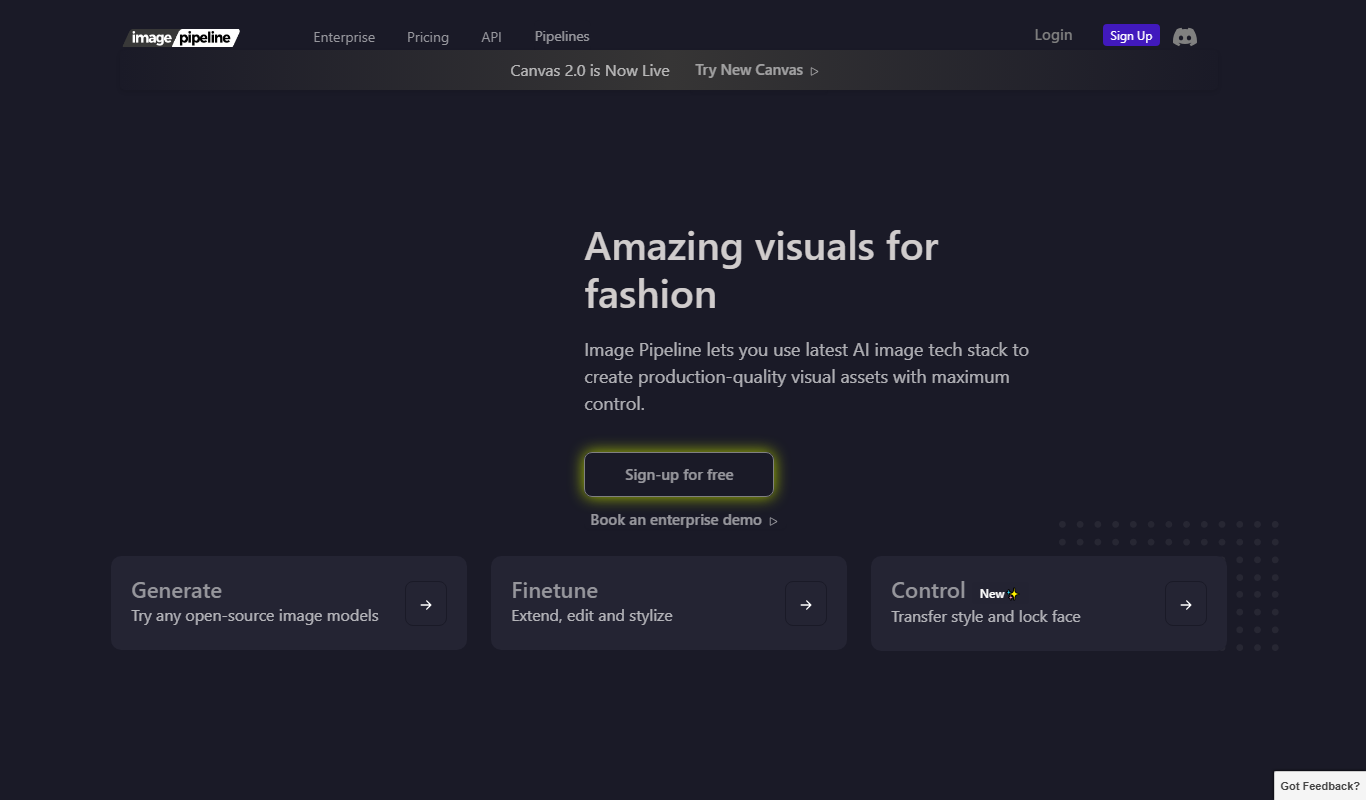
Image Pipeline
ImagePipeline is the image AI API for ecommerce and fashion teams: on-model imagery, virtual try-on, background and relight, and ad creative from one API key.

KawniX
Kawnix is a protocol for agent-to-agent commerce: discover verified agent endpoints, lock escrow and settle tasks with signed receipts.

SpamCheck.ai
SpamCheckAI is a spam detection API for free-form JSON and form submissions, with IP filtering, email validation and content analysis; it powers Basin.

FlexAI
FlexAI offers managed inference on 30+ open models behind one OpenAI-compatible API, with dedicated GPUs, fine-tuning and private cloud on one account.

Productify.ai
Productify.ai is an API-first platform for transforming unstructured product content into structured, compliant, reusable product data at eCommerce scale.

APIPark
APIPark is a one-stop AI model and API unified gateway with a single API key, access approval, quotas, billing and monitoring, available as open source and as a commercial edition.