

ThingSpeak IoT Analytics Platform for Data Visualization and Monitoring
ThingSpeak is a cloud-based IoT analytics platform that collects, visualizes, and analyzes sensor data in real time, with optional MATLAB integration for advanced processing.
- Best for
- IoT Data Collection
- Key capability
- Real-time Data Visualization
Save ThingSpeak, follow its updates and vote on it — everything stays in your account.
Sign in or create a free account
What is ThingSpeak?
ThingSpeak is an open-source Internet of Things (IoT) analytics platform that enables users to aggregate, visualize, and analyze live data streams from sensors and devices. It provides cloud-based data storage, real-time dashboards, and integration with MATLAB for advanced data processing. ThingSpeak is widely used for IoT prototyping, remote monitoring, and data-driven decision-making.
Key features of ThingSpeak
ThingSpeak offers real-time data collection, customizable visualizations, MATLAB analytics integration, RESTful APIs for device communication, and alerting mechanisms to monitor IoT systems effectively.
Real-time Data Visualization
Create live charts and dashboards to monitor sensor data streams instantly.
MATLAB Integration
Use MATLAB code to analyze, process, and model data directly within the ThingSpeak environment.
RESTful API Access
Send and retrieve data programmatically using ThingSpeak’s REST API for seamless device integration.
Data Storage and History
Store historical sensor data securely in the cloud for long-term analysis.
Alerts and Notifications
Set up automated alerts triggered by specific data conditions to monitor system health.
Pros and cons of ThingSpeak
Pros
- Easy to set up and use for IoT data collection
- Seamless integration with MATLAB for advanced analytics
- Supports multiple communication protocols like HTTP and MQTT
- Free option for non-commercial use
- Customizable real-time dashboards and alerts
Cons
- Limited free tier data points and update frequency
- Primarily web-based; no dedicated mobile app
- Advanced features require MATLAB knowledge
- Not designed for very large-scale industrial IoT deployments
Key use cases for ThingSpeak
IoT Data Collection
Collect sensor data from IoT devices and transmit it securely to the cloud for storage and analysis.
Real-time Data Visualization
Create customizable dashboards to visualize live data streams for monitoring and decision-making.
Remote Device Monitoring
Monitor the status and performance of remote devices and sensors through automated alerts and analytics.
Data Analysis and Processing
Leverage MATLAB integration to perform advanced data analysis, processing, and predictive modeling on collected data.
IoT Prototyping and Development
Rapidly prototype IoT applications using ThingSpeak’s APIs and MATLAB tools for testing and deployment.
How ThingSpeak works
- 1
Create an Account
Sign up on the ThingSpeak website to access the platform and create channels for data collection.
- 2
Set Up Data Channels
Configure channels to receive data from your IoT devices or sensors via HTTP, MQTT, or other supported protocols.
- 3
Send Data to ThingSpeak
Transmit sensor data to ThingSpeak channels using REST API calls or supported communication methods.
- 4
Visualize and Analyze Data
Use built-in dashboards or MATLAB integration to visualize live data and perform custom analytics.
- 5
Set Alerts and Automate
Configure alerts based on data thresholds and automate responses or notifications.
Who is using ThingSpeak
ThingSpeak pricing
Free
$0/month
Free for non-commercial use only.
Standard
$650/unit/year
Annual license priced per unit.
Home
$95/unit/year
Annual license priced per unit.
Plans and prices are as published by the vendor and can change. Check the official site before you buy. Open the pricing page (opens in a new tab)
Frequently asked questions about ThingSpeak
Any device capable of making HTTP or MQTT requests can send data to ThingSpeak, including Arduino, Raspberry Pi, and other microcontrollers.
No, MATLAB integration is optional. You can use ThingSpeak’s basic features without MATLAB, but MATLAB adds powerful data analysis capabilities.
Yes, through paid annual licenses such as Standard; the free option is for non-commercial use only.
ThingSpeak uses secure HTTPS connections and provides options for private channels to protect your data.
It depends on your specific needs and how you plan to use the tool. The official website and documentation are the best sources for the latest details.
Yes, it can help with that use case depending on how you configure it and what features are available. You’ll get the best results with clear inputs and a defined goal.
It depends on your specific needs and how you plan to use the tool. The official website and documentation are the best sources for the latest details.
Some tools offer a free plan or trial with limited features. Availability can vary, so confirm on the official website.
Conclusion
Sensor data reaches the platform through channels, with devices sending readings over HTTP, MQTT or REST API calls. Any device that can make HTTP or MQTT requests can send data, including Arduino and Raspberry Pi. Live charts and dashboards display the incoming streams, and alerts can be configured for data thresholds. MATLAB integration is optional and adds analysis, processing and modeling inside the ThingSpeak environment.
IoT developers and hobbyists, educational institutions teaching IoT and engineers who monitor remote devices are its intended users. The Free option is for non-commercial use only. Paid use runs on annual licenses priced per unit, with Standard at $650/unit/year and Home at $95/unit/year.
Sources
Sign in to review this tool.
Sign In to ReviewNo reviews yet
Be the first to share how this tool worked for you.
Ask about pricing, limits, or how it compares — or answer someone else.
Sign In to AskNo questions yet
Have a question about using or paying for this tool? Be the first to ask.
Featured on TiorAI



Alternative Tools
Explore similar AI tools that might fit your needs

Losant
Losant is an enterprise Internet of Things platform that enables users to build, deploy, and manage IoT applications with visual workflows, device management, and edge computing capabilities.
More AI API tools
Other tools in the same category, for when this one is not quite the fit.

ReceiptUp
ReceiptUp is a receipt and invoice OCR API that converts receipt and invoice images into structured data through a JSON REST API.

Myple
Myple is a developer platform to build, deploy and secure AI applications such as AI agents and RAG chatbots, with SDKs, a CLI and a free Hacker plan.
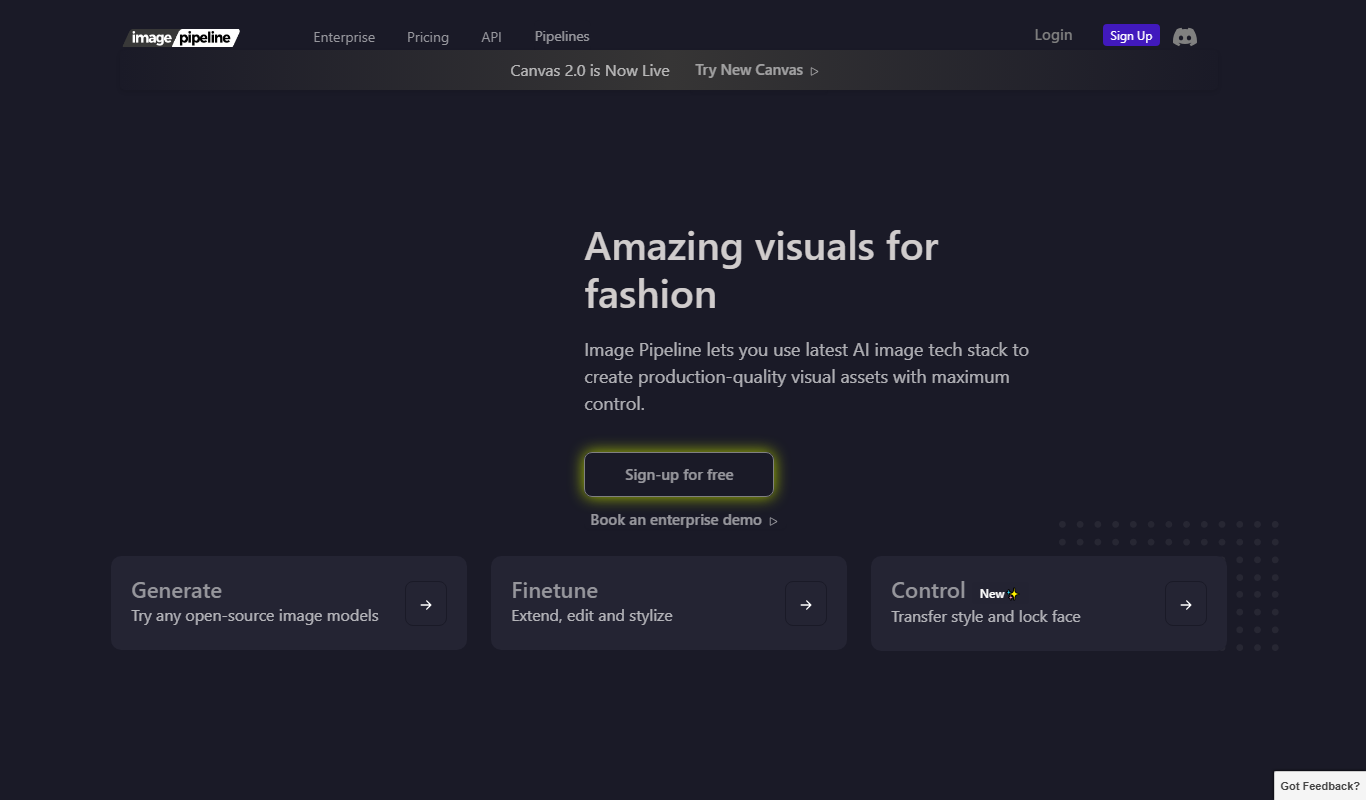
Image Pipeline
ImagePipeline is the image AI API for ecommerce and fashion teams: on-model imagery, virtual try-on, background and relight, and ad creative from one API key.

KawniX
Kawnix is a protocol for agent-to-agent commerce: discover verified agent endpoints, lock escrow and settle tasks with signed receipts.

SpamCheck.ai
SpamCheckAI is a spam detection API for free-form JSON and form submissions, with IP filtering, email validation and content analysis; it powers Basin.

FlexAI
FlexAI offers managed inference on 30+ open models behind one OpenAI-compatible API, with dedicated GPUs, fine-tuning and private cloud on one account.

Productify.ai
Productify.ai is an API-first platform for transforming unstructured product content into structured, compliant, reusable product data at eCommerce scale.

APIPark
APIPark is a one-stop AI model and API unified gateway with a single API key, access approval, quotas, billing and monitoring, available as open source and as a commercial edition.