

FAQ Schema Generator
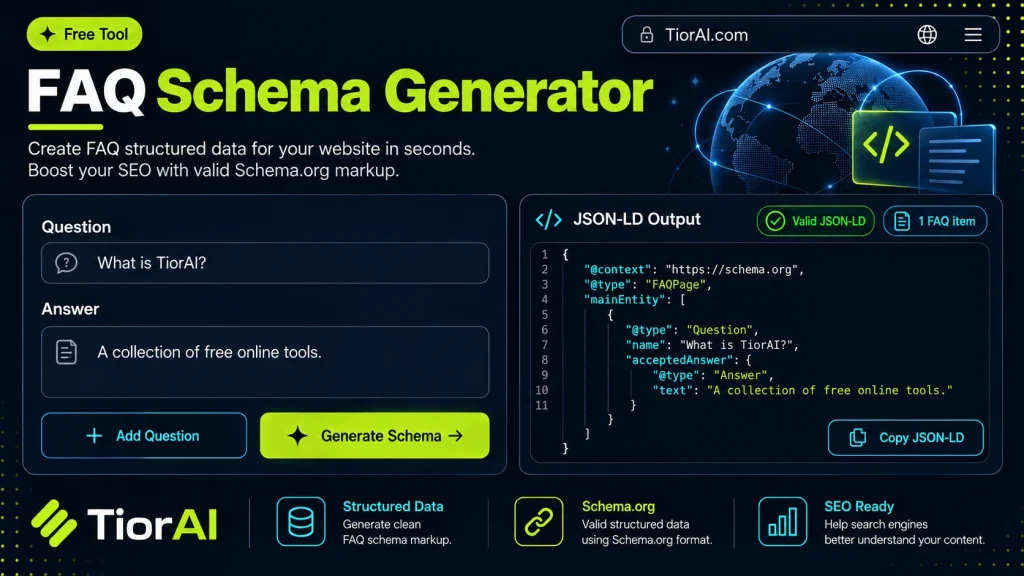
FAQ schema markup is structured data that helps search engines understand the questions and answers on your webpage. By adding this markup, you enable search engines to display your FAQ content as rich snippets in search results, making your listing more informative and attractive to…
How to use it
- Paste or Enter Your Input Paste your code, text, or data into the input field. The tool supports large inputs without performance issues.
- Process and Analyze Click the action button or let the tool auto-process your input. Results appear in real time with highlighted details.
- Copy or Download the Output Review the results and copy the output to clipboard or download as a file for use in your project.
Tip Keyboard shortcut: Ctrl+V to paste input, then Ctrl+C to copy output - saves time in repetitive workflows.
Understanding FAQ Schema Markup
FAQ schema markup is a type of structured data that webmasters add to their HTML to help search engines better understand the content of Frequently Asked Questions on a webpage. It uses JSON-LD or Microdata formats to define questions and their corresponding answers in a standardized way.
This markup enables search engines like Google to display rich results, such as expandable FAQ sections directly in search listings, improving visibility and user experience. By clearly signaling the Q&A content, FAQ schema helps search engines index and present relevant information more effectively.
Common use cases include product pages, support sections, and informational articles where users often seek quick answers. Implementing FAQ schema can reduce bounce rates by providing immediate answers and can increase click-through rates by making listings more attractive.
Because manually writing schema code can be complex and error-prone, FAQ Schema Generators automate the process by converting plain FAQ content into properly formatted structured data. This ensures compliance with schema.org standards and reduces the risk of markup errors that could prevent rich results from appearing.
What is FAQ Schema Markup?
FAQ schema markup is structured data that helps search engines understand the questions and answers on your webpage. By adding this markup, you enable search engines to display your FAQ content as rich snippets in search results, making your listing more informative and attractive to users.
When to Use FAQ Schema
Use FAQ schema when you have a set of frequently asked questions and answers relevant to your content. This is especially useful on product pages, support sections, or informational articles where users seek quick answers. It helps improve SEO by increasing the chances of rich results and enhancing user experience.
Common Mistakes to Avoid
- Adding FAQ schema without displaying the actual FAQ content on the page, which can lead to search engine penalties.
- Incorrectly formatting the JSON-LD or Microdata, causing the markup to be ignored.
- Using FAQ schema for content that is not in a question-and-answer format, which violates guidelines.
Technical Context
FAQ schema is typically implemented using JSON-LD, a JavaScript notation embedded in the page’s <head> or <body>. This format is preferred because it separates structured data from visible content, reducing the risk of errors. Proper implementation ensures that search engines can parse and index your FAQ content effectively, potentially leading to enhanced search listings.
Frequently asked questions
Reviews and questions
Whether this tool gave people the answer they needed, and what they asked about it.
Sign in to review this tool.
Sign In to ReviewNo reviews yet
Be the first to say whether this tool gave you what you needed.
Ask how to read the result, or what the tool does with an edge case — or answer someone else.
Sign In to AskNo questions yet
Not sure how to read a result? Be the first to ask.
AI tools related to this topic
Tools from the TiorAI directory that work on the same kind of job.

ChatGPT
ChatGPT is an AI chatbot by OpenAI powered by GPT-4o. It handles writing, coding, research, data analysis, and natural conversation. Free tier available, Plus at $20/month.