

Uniswap Decentralized Exchange Platform for Ethereum Token Swaps
Uniswap is a decentralized exchange protocol on Ethereum, Base, Arbitrum, Polygon, Unichain and other networks that lets users swap tokens directly from their wallets using liquidity pools and an automated market maker model.
- Best for
- Token Swapping
- Key capability
- Automated Market Maker (AMM)
Save Uniswap, follow its updates and vote on it — everything stays in your account.
Sign in or create a free account
What is Uniswap?
Uniswap is a decentralized exchange (DEX) protocol that enables users to swap tokens directly from their wallets without intermediaries, on Ethereum as well as Base, Arbitrum, Polygon, Unichain and other networks. It uses an automated market maker (AMM) model where liquidity providers supply tokens to liquidity pools and earn fees.
Key features of Uniswap
Uniswap offers instant token swaps, liquidity pool creation and management, fee earning for liquidity providers, decentralized governance, and integration APIs for developers. Its AMM model eliminates the need for order books, enabling continuous liquidity and permissionless trading.
Automated Market Maker (AMM)
Uses a constant product formula to price tokens and provide liquidity without order books.
Permissionless Liquidity Pools
Anyone can create or add liquidity to pools, earning fees from trades.
Decentralized Governance
UNI token holders can vote on protocol upgrades and changes.
Cross-Token Swaps
Supports swapping between any ERC-20 tokens available in liquidity pools.
Open Source Protocol
Uniswap’s smart contracts and interface are open source for transparency and integration.
Pros and cons of Uniswap
Pros
- Fully decentralized and permissionless
- No registration or KYC required
- Wide variety of ERC-20 tokens available
- Open source and transparent
- Earn fees by providing liquidity
Cons
- Users pay Ethereum gas fees which can be high
- Impermanent loss risk for liquidity providers
- No customer support due to decentralization
Key use cases for Uniswap
Token Swapping
Users can instantly swap ERC-20 tokens directly from their wallets without intermediaries.
Liquidity Provision
Users can provide liquidity to pools and earn fees from trades proportional to their share.
Decentralized Trading
Traders can access a fully decentralized exchange without relying on centralized order books.
Yield Farming
Liquidity providers can participate in yield farming programs to earn additional rewards.
Smart Contract Interaction
Developers can integrate Uniswap’s smart contracts into their decentralized applications.
How Uniswap works
- 1
Connect Wallet
Users connect their Ethereum-compatible wallet (e.g., MetaMask) to the Uniswap interface.
- 2
Select Tokens
Choose the tokens you want to swap or add to a liquidity pool.
- 3
Confirm Transaction
Approve the transaction in your wallet to execute the swap or liquidity provision.
- 4
Transaction Finalized
The smart contract processes the swap or liquidity addition, updating pool balances.
Who is using Uniswap
Uniswap pricing
Free
$0
Users pay network gas fees for transactions on Ethereum and the other supported networks, such as Base, Arbitrum, Polygon and Unichain.
Plans and prices are as published by the vendor and can change. Check the official site before you buy. Open the pricing page (opens in a new tab)
Frequently asked questions about Uniswap
Uniswap itself does not charge fees; liquidity providers earn a 0.3% fee on trades proportional to their pool share.
Uniswap’s smart contracts are open source and have been audited, but users should be cautious of impermanent loss and smart contract risks.
Popular Ethereum wallets like MetaMask, Coinbase Wallet, Trust Wallet, and others are compatible.
Yes, anyone can create a liquidity pool for any ERC-20 token without approval.
It depends on your specific needs and how you plan to use the tool. The official website and documentation are the best sources for the latest details.
It depends on your specific needs and how you plan to use the tool. The official website and documentation are the best sources for the latest details.
It depends on your specific needs and how you plan to use the tool. The official website and documentation are the best sources for the latest details.
It depends on your specific needs and how you plan to use the tool. The official website and documentation are the best sources for the latest details.
Conclusion
Swaps happen straight from a connected wallet such as MetaMask: the user selects tokens, approves the transaction and the smart contract updates the pool balances. Prices come from a constant product formula instead of order books.
Anyone can create or add liquidity to pools without approval, earning fees from trades. The protocol is no longer limited to Ethereum and also runs on Base, Arbitrum, Polygon, Unichain and other networks. UNI token holders can vote on protocol upgrades and changes.
Blockchain developers can integrate its smart contracts into their decentralized applications. Users pay network gas fees for transactions on each supported network, and impermanent loss is a documented risk for liquidity providers.
Sources
Sign in to review this tool.
Sign In to ReviewNo reviews yet
Be the first to share how this tool worked for you.
Ask about pricing, limits, or how it compares — or answer someone else.
Sign In to AskNo questions yet
Have a question about using or paying for this tool? Be the first to ask.
Featured on TiorAI



Alternative Tools
Explore similar AI tools that might fit your needs
SushiSwap
SushiSwap is a decentralized exchange platform that enables users to swap cryptocurrencies, provide liquidity, earn yield farming rewards, and participate in governance without intermediaries.
More Business Management tools
Other tools in the same category, for when this one is not quite the fit.

Contently
Contently is an enterprise content marketing platform that connects brands with freelance creatives and provides tools for content planning, production, and analytics to optimize marketing efforts.

AnswerConnect
AnswerConnect is a virtual receptionist service providing 24/7 live call answering, appointment scheduling, and lead capture to help businesses manage inbound calls professionally.

Ruby Receptionists
Ruby Receptionists is a virtual receptionist service providing live U.S.-based receptionists who answer calls, schedule appointments, and take messages to help businesses maintain professional communication without in-house staff.

Smith.ai
Smith.ai is a virtual receptionist service combining live agents and AI to handle calls, capture leads, and schedule appointments 24/7.

Deputy
Deputy is a cloud-based workforce management platform that simplifies employee scheduling, time tracking, task management, and compliance reporting for businesses.

When I Work
When I Work is a cloud-based platform that simplifies employee scheduling, time tracking, and team communication to help businesses manage their workforce efficiently.
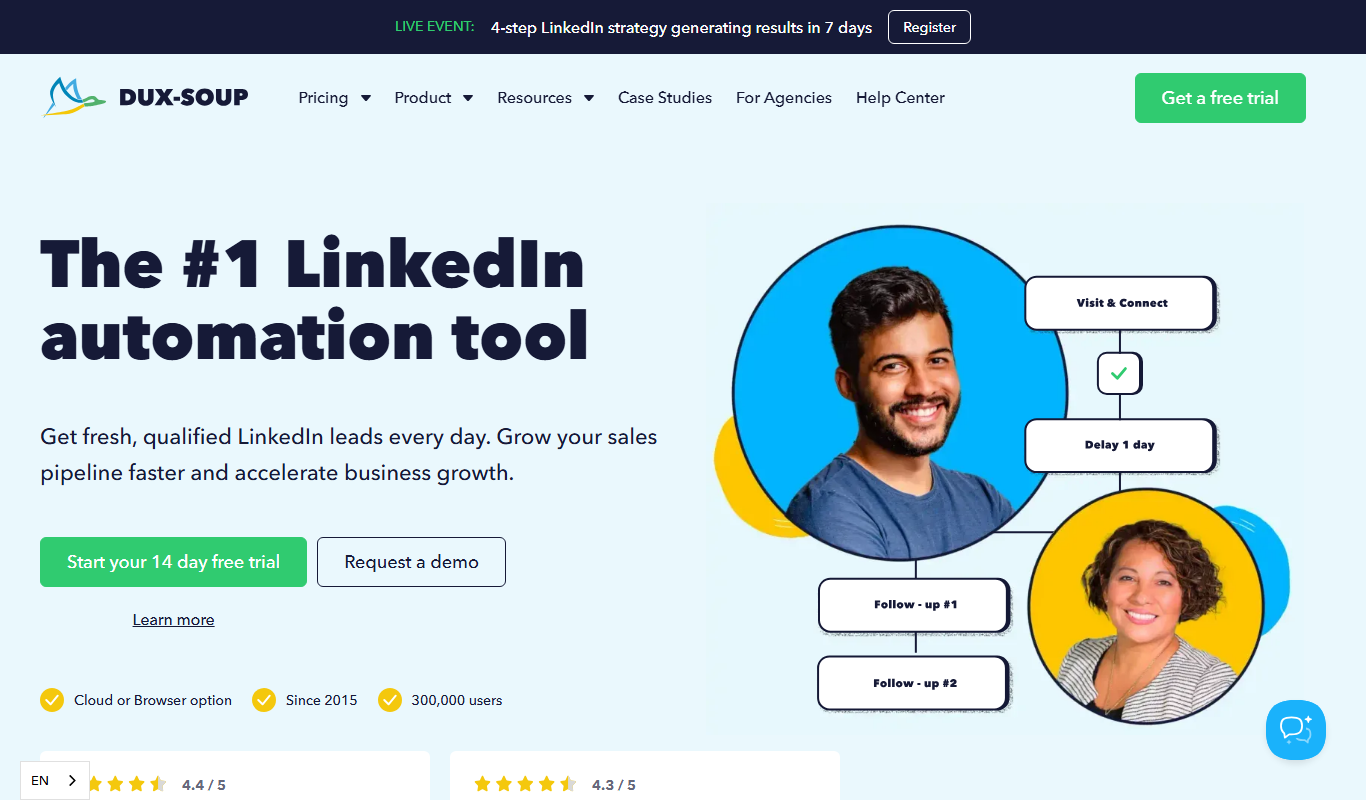
Dux-Soup
Dux-Soup is a LinkedIn automation tool that helps users automate profile visits, connection requests, and messaging to generate leads and streamline outreach.

Expandi
Expandi is a LinkedIn automation tool designed to automate personalized outreach and lead generation campaigns safely, helping sales and marketing teams scale their LinkedIn prospecting efforts.