

From my experience with SvectorDB, it stands out for its high-speed similarity search capabilities tailored for AI and machine learning applications. The platform’s scalable architecture and real-time data ingestion make it practical for projects that require handling large volumes of vector data efficiently. I found the API-first design particularly helpful for integrating with existing AI workflows. However, the pricing transparency could be improved, and currently, it supports only English, which might limit some international users. Overall, if you are building AI-driven search or recommendation systems, SvectorDB offers a robust and scalable solution.
SvectorDB Vector Database for Scalable AI and Machine Learning Applications
SvectorDB is a scalable vector database optimized for AI and machine learning workloads, providing fast similarity search, real-time data ingestion, and flexible APIs.
- Best for
- Semantic Search
- Key capability
- High-Performance Vector Search
Your actions
Save SvectorDB, follow its updates and vote on it — everything stays in your account.
Sign in or create a free account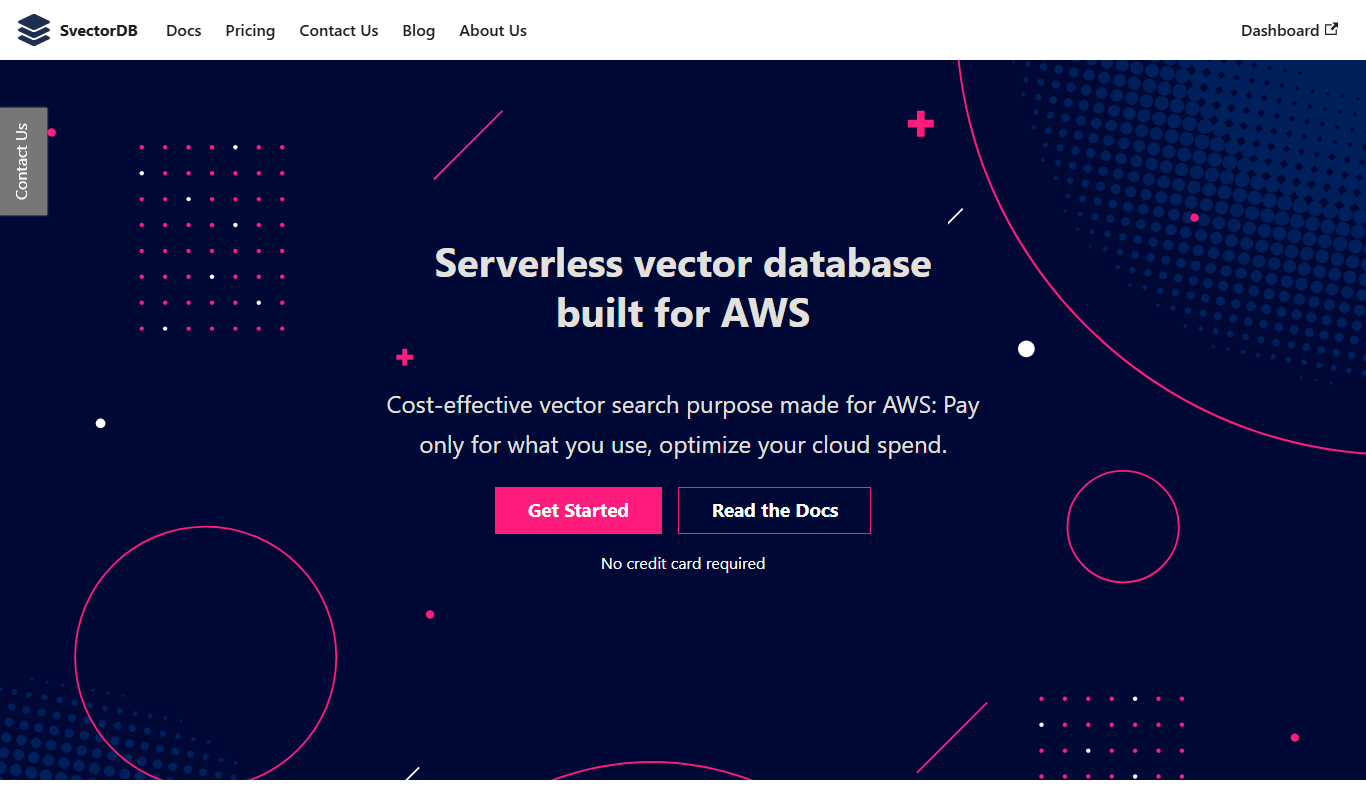
What is SvectorDB?
SvectorDB is a high-performance vector database designed to store, index, and search large-scale vector embeddings efficiently. It is optimized for AI and machine learning workloads that require similarity search, such as semantic search, recommendation systems, and content retrieval. The platform provides scalable infrastructure with low latency and high throughput, enabling developers and data scientists to build advanced AI applications with ease.
Key features of SvectorDB
SvectorDB offers fast vector similarity search, scalable distributed architecture, support for multiple distance metrics, real-time data ingestion, and seamless integration via APIs. It supports various embedding types and provides tools for managing vector data at scale.
High-Performance Vector Search
Optimized algorithms for fast nearest neighbor search on large vector datasets.
Scalable Distributed Architecture
Supports horizontal scaling to handle growing data volumes and query loads.
Multiple Distance Metrics
Offers cosine similarity, Euclidean distance, and other metrics for flexible search.
Real-Time Data Ingestion
Allows streaming and batch uploads with minimal latency.
API-First Design
Comprehensive RESTful APIs for easy integration and automation.
Pros and cons of SvectorDB
Pros
- High-speed similarity search optimized for AI workloads
- Scalable architecture suitable for growing datasets
- Flexible distance metrics for diverse use cases
- API-first approach simplifies integration
- Supports real-time data ingestion
Cons
- Pricing details are not fully transparent without contacting sales
- Limited language support currently (English only)
- No dedicated desktop client; primarily API and web-based
Key use cases for SvectorDB
Semantic Search
Enable fast and accurate semantic search across large datasets using vector embeddings.
Recommendation Systems
Build personalized recommendation engines by leveraging similarity search on vector data.
Natural Language Processing
Support NLP applications by storing and querying text embeddings efficiently.
Image and Video Retrieval
Facilitate content-based image and video retrieval using vector similarity.
Anomaly Detection
Detect anomalies in high-dimensional data through vector distance metrics.
How SvectorDB works
- 1
Create an Account
Sign up on the SvectorDB platform to access the dashboard and API keys.
- 2
Ingest Vector Data
Upload or stream your vector embeddings into the database using the provided API.
- 3
Index and Configure
Configure indexing parameters and distance metrics to optimize search performance.
- 4
Perform Similarity Search
Query the database with vector inputs to retrieve nearest neighbors or similar items.
- 5
Integrate with Applications
Use the API to integrate SvectorDB’s search capabilities into your AI or ML applications.
Who is using SvectorDB
AI developers
Machine learning engineers
Data scientists
Enterprises building recommendation systems
Research institutions working with embeddings
SvectorDB pricing
Free Trial
$0 for 14 days
Full feature access with limited usage for evaluation.
Standard
$99/month
Suitable for small to medium projects with moderate usage limits.
Enterprise
Custom pricing
Tailored solutions with dedicated support and high scalability.
Plans and prices are as published by the vendor and can change. Check the official site before you buy. Open the pricing page (opens in a new tab)
Frequently asked questions about SvectorDB
SvectorDB supports various vector embeddings including text, image, audio, and custom high-dimensional vectors.
Yes, SvectorDB provides APIs that can be integrated with popular AI and ML frameworks such as TensorFlow and PyTorch.
Storage limits depend on your subscription plan, with enterprise options supporting very large datasets.
Yes, it supports real-time data ingestion and updates with minimal latency.
This tool is designed to help users accomplish its core tasks more efficiently. It is typically used by individuals or teams looking to improve productivity and workflow.
Data handling and security practices vary by provider. Review the official privacy policy to understand how your data is stored and used.
Integration support depends on the tool and its available connectors or API. Check the official documentation or integrations page to confirm what is supported.
Sign in to review this tool.
Sign In to ReviewNo reviews yet
Be the first to share how this tool worked for you.
Ask about pricing, limits, or how it compares — or answer someone else.
Sign In to AskNo questions yet
Have a question about using or paying for this tool? Be the first to ask.
Featured on TiorAI



Alternative Tools
Explore similar AI tools that might fit your needs

Enterprise
Milvus
Milvus is an open-source vector database designed for efficient similarity search and management of large-scale unstructured data, widely used in AI and machine learning applications.
More AI Education & Learning Tools tools
Other tools in the same category, for when this one is not quite the fit.
Enterprise
FitMachine
FitMachine is an AI-driven predictive maintenance platform that monitors industrial equipment using IoT sensor data to detect anomalies and predict failures, helping reduce downtime and maintenance costs.

Freemium
ExamFul.ai
ExamFul.ai is an exam prep platform with past papers for AP, IB and A-level and an AI tutor, with free access.
One-time purchase
IELTS CHAMP
IELTS CHAMP is an online platform offering comprehensive IELTS exam preparation materials, including lessons, practice tests, and strategies to improve English skills and exam performance.

Free
TOEFL Practice
TOEFL Practice is an online platform offering realistic TOEFL exam simulations, section-specific exercises, instant scoring, and progress tracking to help students prepare effectively for the TOEFL test.
Freemium
Debatia
Debatia is an AI-driven platform that facilitates structured debates by generating balanced arguments and providing feedback to improve critical thinking and communication skills.
Free
DeepAI
DeepAI is an AI platform providing APIs and web tools for image generation, text analysis, and other machine learning tasks, suitable for developers and content creators.
Free
Gita GPT
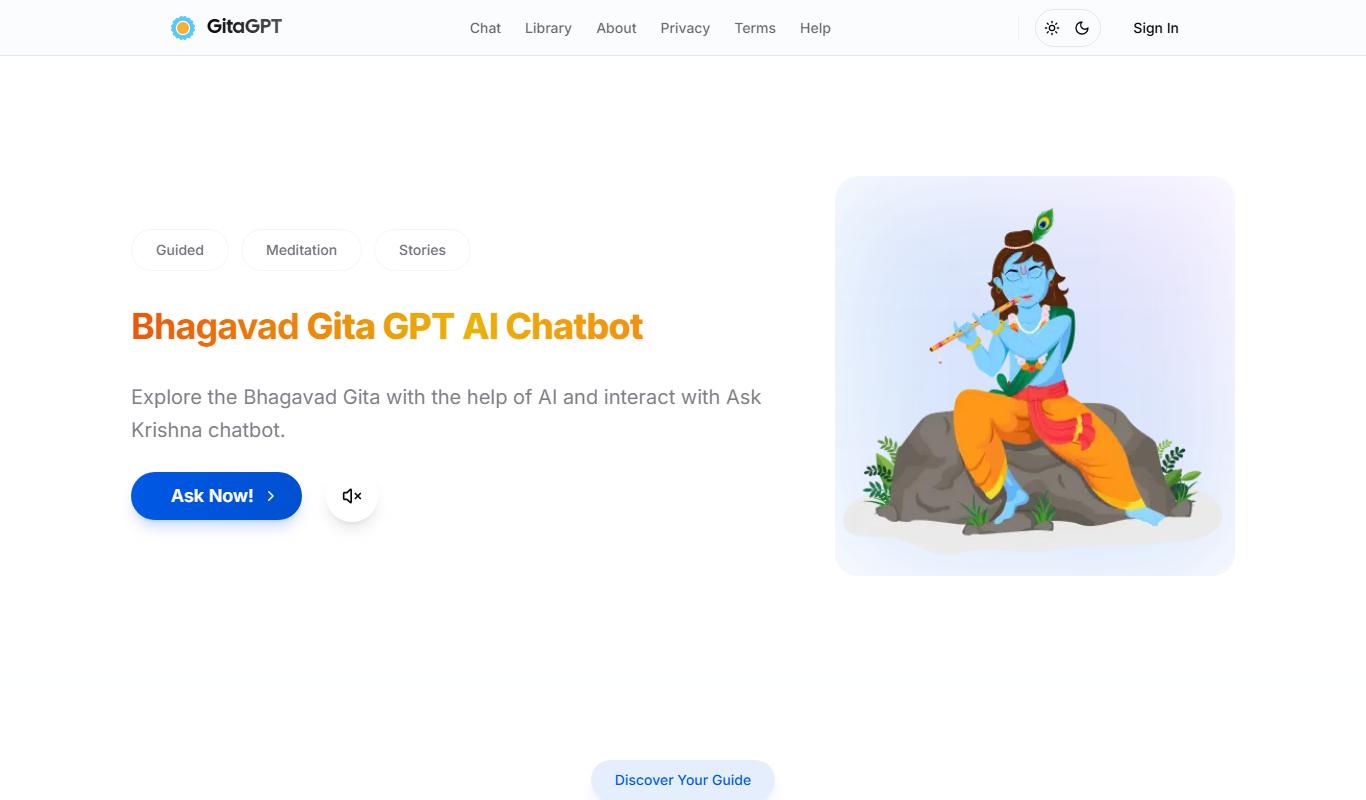
GitaGPT is an AI spiritual companion that answers life questions with Bhagavad Gita shlokas through 10 spiritual guides in 22+ Indian languages, with a free plan and paid upgrades.

Free
Accent Guesser
Accent Guesser is a free online AI tool that identifies English accents from voice recordings by analyzing speech patterns and matching them to known regional accents.