

From my experience with Skyvern, I found it excels at providing comprehensive data annotation services that cover a wide range of data types, including complex sensor data like LiDAR. The platform’s combination of AI-assisted tools and human expertise ensures high-quality labeled datasets, which is critical for training reliable machine learning models. Skyvern is particularly well-suited for enterprises working in autonomous vehicles, healthcare AI, and computer vision applications. However, the lack of publicly available pricing and a focus on larger projects may limit accessibility for smaller teams or startups. Overall, if you need scalable, accurate annotation services tailored to complex AI projects, Skyvern delivers solid results.
Skyvern AI Platform for Automated Data Labeling and Annotation Services
Skyvern is an AI-driven data annotation platform providing high-quality labeled datasets for machine learning projects across various industries.
- Best for
- Computer Vision Training Data
- Key capability
- Multi-Modal Annotation
Your actions
Save Skyvern, follow its updates and vote on it — everything stays in your account.
Sign in or create a free account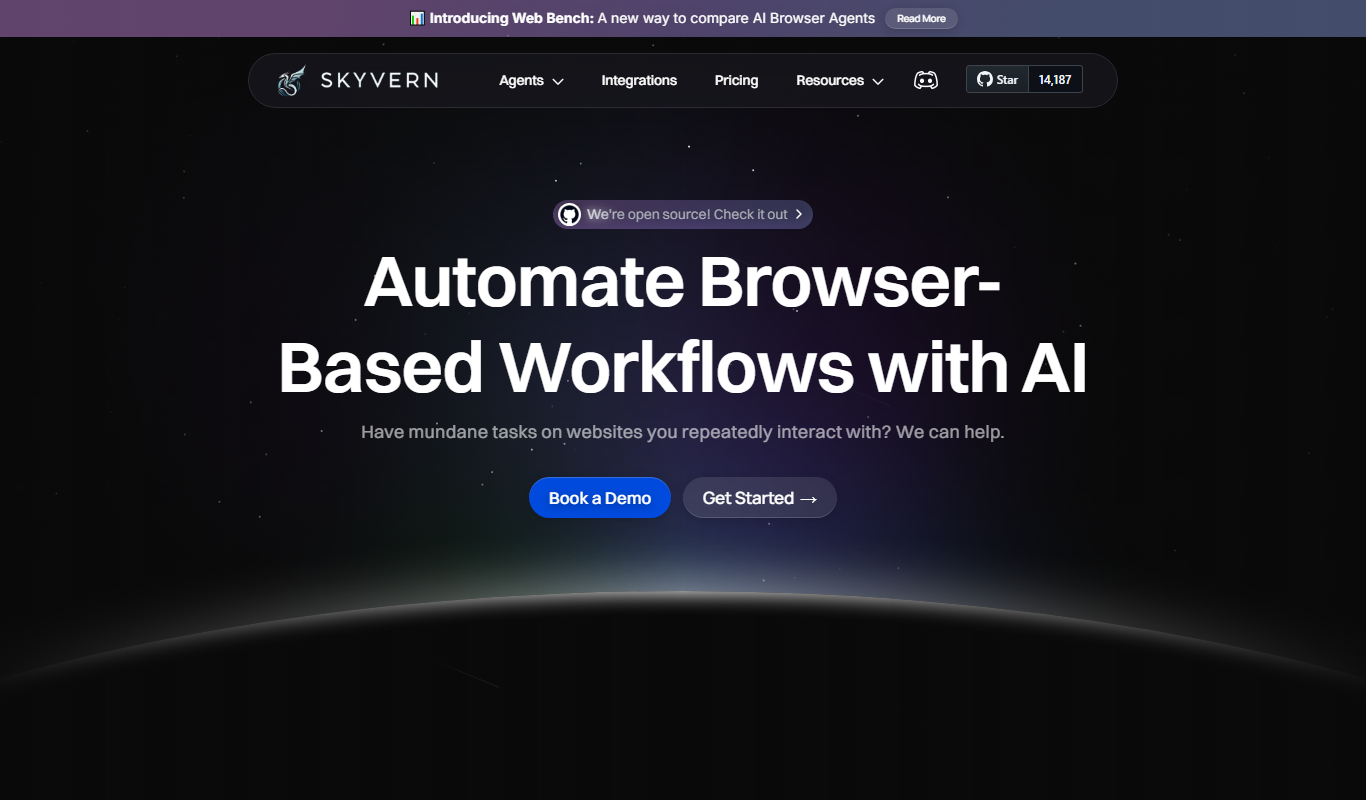
What is Skyvern?
Skyvern is an AI-powered data annotation and labeling platform designed to provide high-quality training data for machine learning and artificial intelligence projects. It offers a wide range of annotation services including image, video, text, and sensor data labeling to accelerate model development across industries.
Key features of Skyvern
Skyvern features scalable annotation workflows, quality assurance processes, and support for diverse data types. It combines human expertise with AI-assisted tools to deliver accurate and efficient labeling services tailored to client needs.
Multi-Modal Annotation
Supports image, video, text, LiDAR, and sensor data annotation.
AI-Assisted Labeling
Utilizes AI tools to speed up annotation while maintaining quality.
Custom Annotation Guidelines
Allows clients to define specific labeling rules and standards.
Quality Assurance
Implements multi-level review processes to ensure data accuracy.
Scalable Workforce
Access to a large pool of trained annotators for handling projects of any size.
Pros and cons of Skyvern
Pros
- Supports diverse data types including sensor data
- Combines AI tools with human expertise for accuracy
- Flexible and scalable annotation workforce
- Customizable annotation guidelines
- Strong quality assurance processes
Cons
- Pricing is custom and not publicly listed
- Primarily focused on enterprise clients
- Limited information on tech stack and integrations
Key use cases for Skyvern
Computer Vision Training Data
Skyvern provides high-quality annotated images and videos to train computer vision models for object detection, segmentation, and classification.
Natural Language Processing
The platform supports text annotation tasks such as entity recognition, sentiment analysis, and intent classification for NLP model training.
Autonomous Vehicles
Skyvern delivers precise labeling of sensor data including LiDAR and camera feeds to support autonomous driving system development.
Healthcare AI
Medical image annotation services help build AI models for diagnostics, radiology, and pathology applications.
Retail and E-commerce
Annotated datasets for product recognition, inventory management, and customer behavior analysis.
How Skyvern works
- 1
Submit Data
Clients upload raw data such as images, videos, or text to the Skyvern platform.
- 2
Define Annotation Requirements
Specify the type of annotation needed, guidelines, and quality standards.
- 3
Annotation Process
Skyvern’s team and AI tools annotate the data according to specifications.
- 4
Quality Review
Completed annotations undergo quality checks to ensure accuracy and consistency.
- 5
Delivery
Annotated datasets are delivered in the required format for model training.
Who is using Skyvern
AI and machine learning teams
Autonomous vehicle developers
Healthcare AI researchers
Retail and e-commerce companies
NLP and computer vision startups
Skyvern pricing
Custom Enterprise Pricing
Varies
Pricing tailored based on project scope, data type, and volume.
Plans and prices are as published by the vendor and can change. Check the official site before you buy. Open the pricing page (opens in a new tab)
Frequently asked questions about Skyvern
Skyvern supports annotation for images, videos, text, LiDAR, and other sensor data.
They use multi-level quality checks combining human review and AI validation.
Skyvern offers flexible project sizes but pricing and timelines depend on volume.
Yes, clients can provide specific instructions to tailor the annotation process.
This tool is designed to help users accomplish its core tasks more efficiently. It is typically used by individuals or teams looking to improve productivity and workflow.
Data handling and security practices vary by provider. Review the official privacy policy to understand how your data is stored and used.
Yes, it can help with that use case depending on how you configure it and what features are available. You’ll get the best results with clear inputs and a defined goal.
It depends on your specific needs and how you plan to use the tool. The official website and documentation are the best sources for the latest details.
Sign in to review this tool.
Sign In to ReviewNo reviews yet
Be the first to share how this tool worked for you.
Ask about pricing, limits, or how it compares — or answer someone else.
Sign In to AskNo questions yet
Have a question about using or paying for this tool? Be the first to ask.
Featured on TiorAI



More Machine Learning tools
Other tools in the same category, for when this one is not quite the fit.
Free
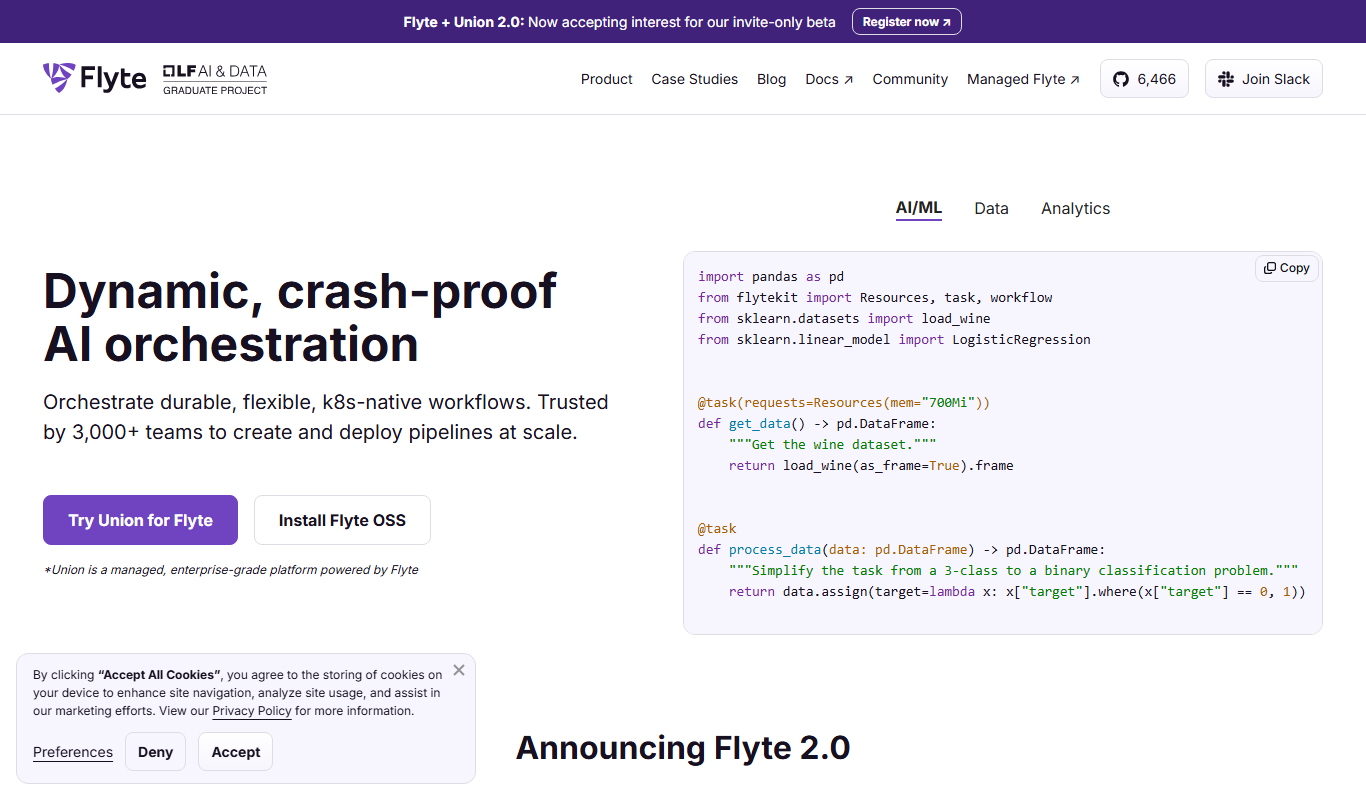
Flyte
Flyte is an open source, Kubernetes-native workflow orchestration platform for data and machine learning workflows. The project now promotes Flyte 2 as a Durable AI Runtime, with a migration path from Flyte 1.
Contact for pricing
Neural Wave
Neural Wave is an AI platform specializing in speech recognition, audio enhancement, and voice biometrics, offering APIs for real-time and custom audio processing.

Free
enaiblr
enaiblr is an open source AI platform that provides tools and frameworks to develop ethical, transparent, and fair machine learning models.

Free
liteLLM
liteLLM is a platform that enables efficient deployment and API-based serving of lightweight large language models, optimized for reduced resource usage and fast inference.