

From my experience with Shape, I found it excels at providing a versatile and AI-assisted annotation environment that supports multiple data types, including images, video, text, and audio. The platform’s collaboration and quality control features make it well-suited for teams working on complex machine learning projects. However, the custom pricing model may be a barrier for smaller teams or projects with limited budgets. Overall, if you need a robust, scalable solution for creating high-quality labeled datasets to train AI models, Shape delivers reliable and efficient tools.
Shape AI Platform for Data Annotation and Machine Learning Model Training
Shape is an AI-powered data annotation platform that enables teams to label images, videos, text, and audio efficiently with AI-assisted tools and collaboration features.
- Best for
- Computer Vision Data Labeling
- Key capability
- Multi-Modal Annotation Tools

Do you recommend this tool?
What is Shape?
Shape is an AI-powered data annotation platform designed to help organizations create high-quality labeled datasets for machine learning and artificial intelligence model training. It offers tools for annotating images, videos, text, and audio data with precision and efficiency, enabling faster and more accurate AI development.
Key features of Shape
Shape provides a comprehensive suite of annotation tools, including bounding boxes, polygons, semantic segmentation, and text labeling, supported by AI-assisted automation to speed up the labeling process. The platform supports collaboration, quality control workflows, and integrates with popular machine learning pipelines.
Multi-Modal Annotation Tools
Supports image, video, text, and audio annotation with specialized tools for each data type.
AI-Assisted Labeling
Leverages machine learning models to provide annotation suggestions and automate repetitive tasks.
Collaboration and Workflow Management
Enables teams to collaborate with role-based access, task assignments, and progress tracking.
Quality Assurance
Includes review and validation features to ensure high-quality labeled data.
Integration and Export
Supports exporting data in multiple formats and integrates with popular ML frameworks and pipelines.
Pros and cons of Shape
Pros
- Supports multiple data types including images, video, text, and audio
- AI-assisted annotation speeds up labeling tasks
- Robust collaboration and workflow features for teams
- Quality control tools ensure high annotation accuracy
Cons
- Pricing is custom and may be expensive for small projects
- Primarily web-based, no dedicated mobile app available
Key use cases for Shape
Computer Vision Data Labeling
Annotate images and videos with bounding boxes, polygons, and segmentation masks to train computer vision models.
Natural Language Processing Annotation
Label text data for tasks such as entity recognition, sentiment analysis, and intent classification.
Audio and Speech Annotation
Transcribe and label audio data to improve speech recognition and audio classification models.
Custom AI Model Training
Use high-quality labeled datasets to train and improve custom machine learning models.
How Shape works
- 1
Upload Data
Users upload raw data such as images, videos, text, or audio files to the Shape platform.
- 2
Annotate Data
Annotators use Shape’s intuitive tools to label data accurately, assisted by AI suggestions to improve speed.
- 3
Quality Control
Reviewers verify annotations for accuracy and consistency using built-in quality assurance workflows.
- 4
Export Labeled Data
Export the annotated datasets in formats compatible with machine learning frameworks for model training.
Who is using Shape
Machine learning engineers
Data scientists
AI development teams
Enterprises building custom AI models
Annotation service providers
Shape pricing
Custom Enterprise
Contact for pricing
Tailored pricing based on data volume, annotation complexity, and support requirements.
Plans and prices are as published by the vendor and can change. Check the official site before you buy. Open the pricing page (opens in a new tab)
Frequently asked questions about Shape
Shape supports annotation of images, videos, text, and audio data for various AI applications.
Yes, Shape includes AI-powered tools that suggest labels and automate parts of the annotation process.
Yes, Shape supports team collaboration with role-based access and workflow management.
Annotated datasets can be exported in formats compatible with common machine learning frameworks.
This tool is designed to help users accomplish its core tasks more efficiently. It is typically used by individuals or teams looking to improve productivity and workflow.
Yes, it can help with that use case depending on how you configure it and what features are available. You’ll get the best results with clear inputs and a defined goal.
It depends on your specific needs and how you plan to use the tool. The official website and documentation are the best sources for the latest details.
Sign in to review this tool.
Sign In to ReviewNo reviews yet
Be the first to share how this tool worked for you.
Ask about pricing, limits, or how it compares — or answer someone else.
Sign In to AskNo questions yet
Have a question about using or paying for this tool? Be the first to ask.
Featured on TiorAI



More AI Charting tools
Other tools in the same category, for when this one is not quite the fit.

Free
Anania AI
Anania AI is a web-based platform that allows users to query databases and spreadsheets using natural language, providing instant answers and visualizations without requiring SQL knowledge.

Free
Gorilla Terminal
Gorilla Terminal is a web platform providing real-time stock market data, customizable stock scanners, and integrated trading capabilities for active traders.

Freemium
DressPlay
DressPlay is an AI-driven virtual try-on platform that creates realistic 3D avatars and uses augmented reality to help users visualize clothing before purchase.

Subscription
TradeUI
TradeUI is a web-based platform that provides customizable stock scanning, real-time trading alerts, and a market dashboard to help investors identify trading opportunities and manage portfolios efficiently.

Custom Pricing
Bodh
Bodh is a web-based data annotation platform that supports multi-modal data labeling including images, videos, text, and audio to help teams create accurate datasets for machine learning models.

Free Trial
Analytics Model
Analytics Model is a web-based AI platform that automates data analysis and predictive modeling, enabling users to generate insights and visualizations without coding expertise.
Free
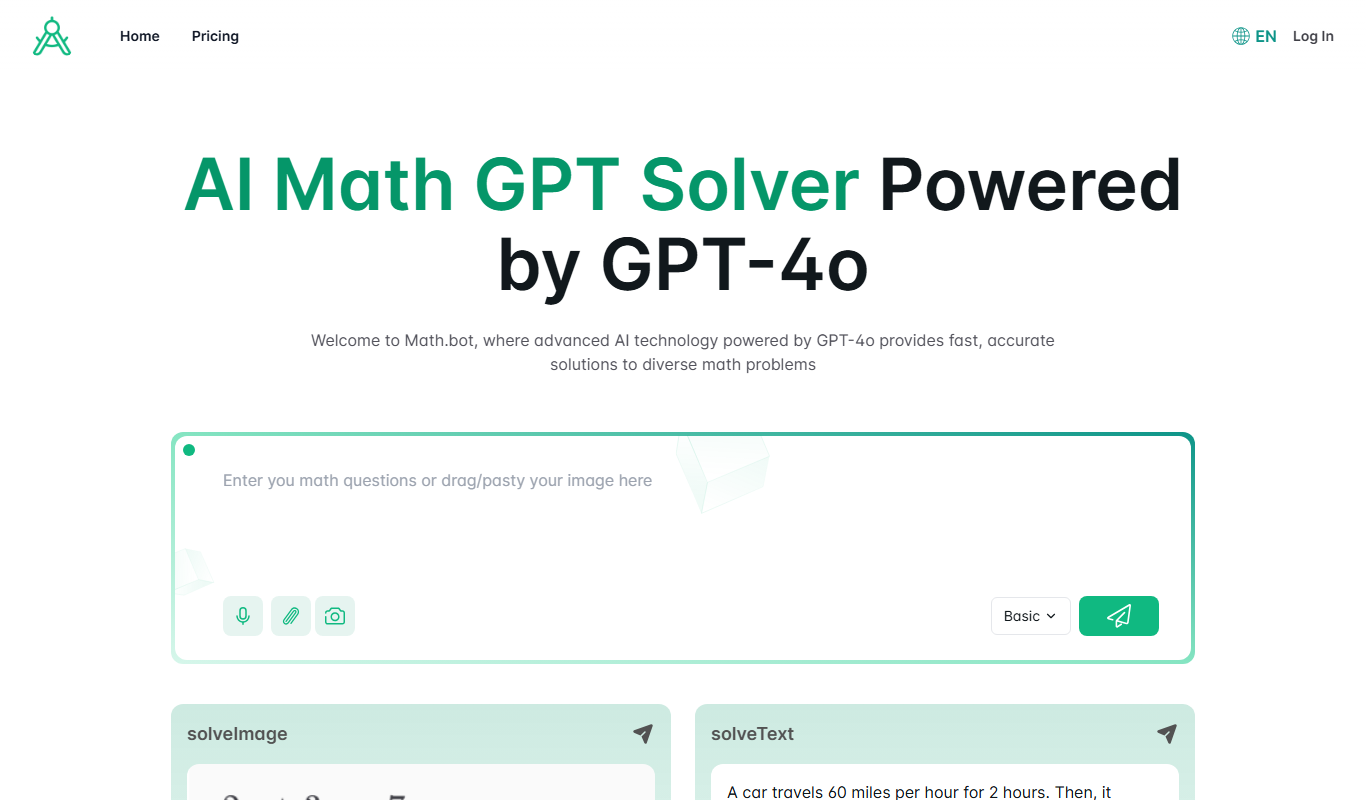
Math.bot: AI Math Solver by GPT-4o
Math.bot is an AI-powered math solver using GPT-4o that provides detailed step-by-step solutions to a wide range of math problems via a web interface.

Freemium
Mest
Mest is an AI writing assistant that helps users generate and edit content efficiently with grammar and style suggestions.