

From my experience with Scout OS, I found it excels at providing an open source, unified platform for managing complex multi-cloud infrastructure. Its automation capabilities and real-time monitoring tools make it a practical choice for DevOps teams seeking transparency and control without vendor lock-in. However, deploying and configuring Scout OS requires a solid technical background, which might be a barrier for less experienced users. Overall, if you are comfortable with open source tools and need to manage diverse cloud environments efficiently, Scout OS delivers a robust and customizable solution.
Scout OS - Open Source Cloud Infrastructure Management Platform
Scout OS is an open source cloud infrastructure management platform that automates deployment, scaling, and monitoring across multiple cloud providers, designed for DevOps teams and multi-cloud environments.
- Best for
- Cloud Infrastructure Automation
- Key capability
- Multi-Cloud Support
Your actions
Save Scout, follow its updates and vote on it — everything stays in your account.
Sign in or create a free account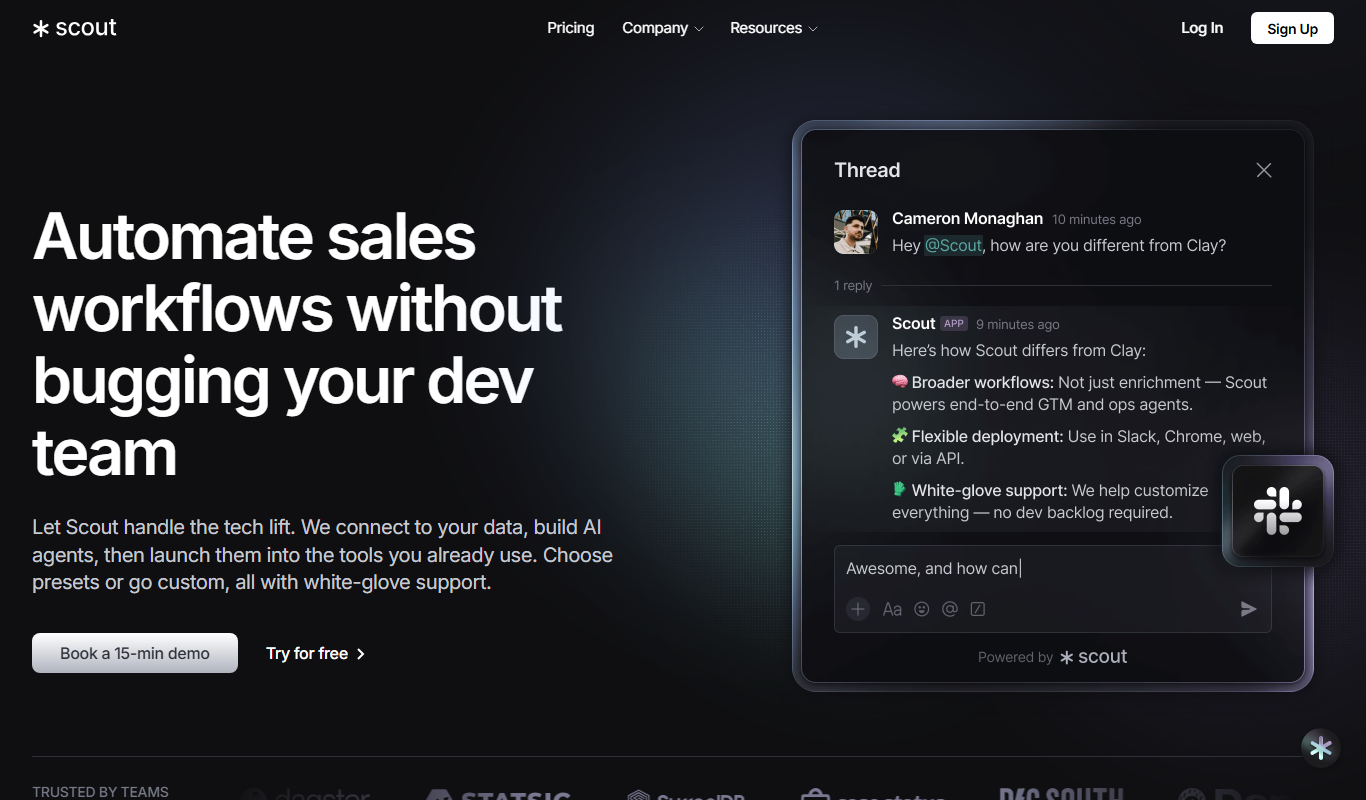
What is Scout?
Scout OS is an open source cloud infrastructure management platform designed to simplify and automate the deployment, scaling, and monitoring of cloud resources. It provides a unified interface and API to manage multi-cloud environments, enabling DevOps teams to streamline their workflows and maintain control over complex infrastructure setups.
Key features of Scout
Scout OS offers features such as multi-cloud resource orchestration, infrastructure automation, real-time monitoring, and seamless integration with DevOps tools. Its open source nature allows customization and community-driven improvements.
Multi-Cloud Support
Manage resources across various cloud providers from a single platform.
Infrastructure Automation
Automate deployment and scaling tasks to reduce manual operations.
Open Source Platform
Benefit from transparency, community contributions, and customization options.
Real-Time Monitoring
Monitor system health and performance metrics with integrated tools.
API Access
Use APIs to integrate Scout OS with existing DevOps pipelines and tools.
Pros and cons of Scout
Pros
- Open source with no licensing fees
- Supports multiple cloud providers
- Automates complex infrastructure tasks
- Provides real-time monitoring capabilities
Cons
- Requires technical expertise to deploy and configure
- Smaller community compared to larger cloud management platforms
Key use cases for Scout
Cloud Infrastructure Automation
Automate deployment, scaling, and management of cloud resources across multiple providers.
Multi-Cloud Management
Manage and monitor infrastructure spanning different cloud providers from a unified interface.
DevOps Workflow Integration
Integrate infrastructure management into DevOps pipelines for continuous delivery and deployment.
Open Source Infrastructure Monitoring
Leverage open source tools to monitor system health and performance metrics.
How Scout works
- 1
Install Scout OS
Deploy Scout OS on your infrastructure or use the hosted version to start managing your cloud resources.
- 2
Connect Cloud Providers
Integrate your cloud accounts (AWS, GCP, Azure, etc.) to centralize management.
- 3
Define Infrastructure
Use Scout OS to configure and automate resource provisioning and scaling.
- 4
Monitor and Manage
Track performance metrics and manage infrastructure health through the dashboard.
Who is using Scout
DevOps engineers
Cloud infrastructure teams
Small to medium enterprises managing multi-cloud environments
Open source enthusiasts
Scout pricing
Free
$0
Full access to open source platform with community support.
Plans and prices are as published by the vendor and can change. Check the official site before you buy. Open the pricing page (opens in a new tab)
Frequently asked questions about Scout
Yes, Scout OS is an open source platform available for free.
Scout OS supports major cloud providers including AWS, Google Cloud Platform, and Microsoft Azure.
Yes, Scout OS provides API access to integrate with various DevOps workflows and tools.
This tool is designed to help users accomplish its core tasks more efficiently. It is typically used by individuals or teams looking to improve productivity and workflow.
Some tools offer a free plan or trial with limited features. Availability can vary, so confirm on the official website.
Sign in to review this tool.
Sign In to ReviewNo reviews yet
Be the first to share how this tool worked for you.
Ask about pricing, limits, or how it compares — or answer someone else.
Sign In to AskNo questions yet
Have a question about using or paying for this tool? Be the first to ask.
Featured on TiorAI



Alternative Tools
Explore similar AI tools that might fit your needs

Free
Terraform
Terraform is an open-source infrastructure as code tool that automates provisioning and managing cloud infrastructure across multiple providers using declarative configuration files.

Enterprise
Pulumi
Pulumi is an infrastructure as code platform that allows developers to define and manage cloud infrastructure using general-purpose programming languages, supporting multi-cloud environments and integrating with DevOps workflows.

Free
Ansible
Ansible is an open-source IT automation tool that uses simple YAML playbooks to automate configuration management, application deployment, and orchestration without requiring agents on managed nodes.