

From my experience with Lens Protocol, I found it excels at providing true ownership of social profiles through NFT technology, which is a game-changer for users tired of centralized social media control. Spending time exploring the platform, it’s clear Lens is well-suited for Web3 developers and content creators who want to build or participate in decentralized social networks with censorship resistance and interoperability. However, the reliance on blockchain means users must be comfortable with crypto wallets and gas fees, which can be a barrier for newcomers. Overall, if you seek a decentralized social experience that puts you in control of your data and connections, Lens Protocol delivers a robust foundation.
Lens Protocol Decentralized Social Graph for Web3 Social Networking
Lens Protocol is a blockchain-based decentralized social graph that allows users to own NFT profiles and engage in censorship-resistant social networking across interoperable Web3 applications.
- Best for
- Decentralized Social Networking
- Key capability
- NFT-Based Profiles

Do you recommend this tool?
What is Lens Protocol?
Lens Protocol is an open-source, decentralized social graph built on blockchain technology, primarily Polygon. It empowers users to own their social profiles and content as NFTs, enabling censorship-resistant social networking and interoperability across Web3 applications. Unlike traditional social media platforms, Lens Protocol gives users control over their data and social connections, fostering a new paradigm of decentralized social interaction.
Key features of Lens Protocol
Lens Protocol features NFT-based user profiles, a composable social graph, content publication, follow and collect modules, and developer APIs. It supports decentralized identity and content monetization, allowing creators and users to engage in a permissionless, blockchain-secured social ecosystem.
NFT-Based Profiles
Profiles are minted as NFTs, giving users true ownership and control.
Composable Social Graph
A shared social graph that multiple apps can read and write to, enabling interoperability.
Decentralized Content Publication
Content is published on-chain or via decentralized storage, ensuring censorship resistance.
Follow and Collect Modules
Modular smart contracts that govern following, collecting, and monetization behaviors.
Developer Friendly APIs
Robust APIs and SDKs for building decentralized social applications.
Pros and cons of Lens Protocol
Pros
- True ownership of social profiles via NFTs
- Interoperable social graph across multiple apps
- Open-source and permissionless platform
- Supports content monetization and creator economy
- Censorship-resistant social networking
Cons
- Requires understanding of blockchain and crypto wallets
- Gas fees can fluctuate and affect user experience
- Still an emerging ecosystem with limited mainstream adoption
Key use cases for Lens Protocol
Decentralized Social Networking
Create and manage social profiles that users fully own on blockchain, enabling censorship-resistant social interactions.
NFT Profile Creation
Generate NFT-based profiles that represent user identity and social connections on Web3 platforms.
Content Monetization
Enable creators to monetize their social content directly through blockchain-enabled mechanisms.
Interoperable Social Graph
Build applications that leverage a shared social graph across multiple decentralized apps, enhancing user experience.
Community Building
Facilitate community engagement and governance through decentralized social protocols.
How Lens Protocol works
- 1
Create NFT Profile
Users create a unique profile represented as an NFT on the Polygon blockchain.
- 2
Build Social Connections
Follow other profiles and build a social graph that is interoperable across apps.
- 3
Publish Content
Post content that is stored decentralized and linked to user profiles.
- 4
Monetize and Collect
Use collect modules to monetize content or grant access via NFTs.
- 5
Integrate via API
Developers use Lens Protocol APIs to build decentralized social apps leveraging the shared social graph.
Who is using Lens Protocol
Web3 developers
Crypto enthusiasts
Content creators seeking decentralized platforms
Community builders in blockchain space
Users interested in data ownership and privacy
Lens Protocol pricing
Free
$0
Open access to create profiles and use Lens Protocol features without fees beyond blockchain gas costs.
Plans and prices are as published by the vendor and can change. Check the official site before you buy. Open the pricing page (opens in a new tab)
Frequently asked questions about Lens Protocol
Lens Protocol is a decentralized social graph that allows users to own their social profiles and content as NFTs on blockchain.
You create an NFT profile by connecting a compatible crypto wallet and minting your profile on the Polygon blockchain.
Yes, Lens Protocol is free to use, but users pay standard blockchain transaction fees (gas) for minting and interactions.
Yes, Lens Protocol provides APIs and SDKs for developers to build decentralized social applications.
It depends on your specific needs and how you plan to use the tool. The official website and documentation are the best sources for the latest details.
It depends on your specific needs and how you plan to use the tool. The official website and documentation are the best sources for the latest details.
Yes, it can help with that use case depending on how you configure it and what features are available. You’ll get the best results with clear inputs and a defined goal.
Sign in to review this tool.
Sign In to ReviewNo reviews yet
Be the first to share how this tool worked for you.
Ask about pricing, limits, or how it compares — or answer someone else.
Sign In to AskNo questions yet
Have a question about using or paying for this tool? Be the first to ask.
Featured on TiorAI



Alternative Tools
Explore similar AI tools that might fit your needs

Donation-based
Mastodon
Mastodon is a decentralized, open-source social network that allows users to join independent servers and communicate across a federated network with enhanced privacy and control.
More AI Workflow tools
Other tools in the same category, for when this one is not quite the fit.

Free
Furkot
Furkot is a web-based trip planner that helps users create multi-stop routes, optimize travel paths, schedule accommodations and activities, and share itineraries for efficient road trip planning.

Free
EcoCart
EcoCart is a plugin that integrates with e-commerce platforms to calculate and offset the carbon footprint of online purchases, allowing customers to contribute to verified climate projects during checkout.

Contact for pricing
Trials.ai
Trials.ai is an AI-driven platform that helps medical researchers design optimized clinical trial protocols, improve patient recruitment, and ensure regulatory compliance to accelerate trial success.

Free
ZipBooks
ZipBooks is a cloud-based accounting software designed for small businesses and freelancers to manage invoicing, expenses, payments, and financial reporting with ease.

Free Trial
Lookeen
Lookeen is a Windows desktop search software that enables fast and comprehensive searching of emails, files, and documents, integrating deeply with Microsoft Outlook and supporting network drives.
Custom Pricing
Ataccama
Ataccama is an AI-driven data management platform that integrates data governance, master data management, and data quality automation to help enterprises manage and improve their data assets efficiently.
Enterprise
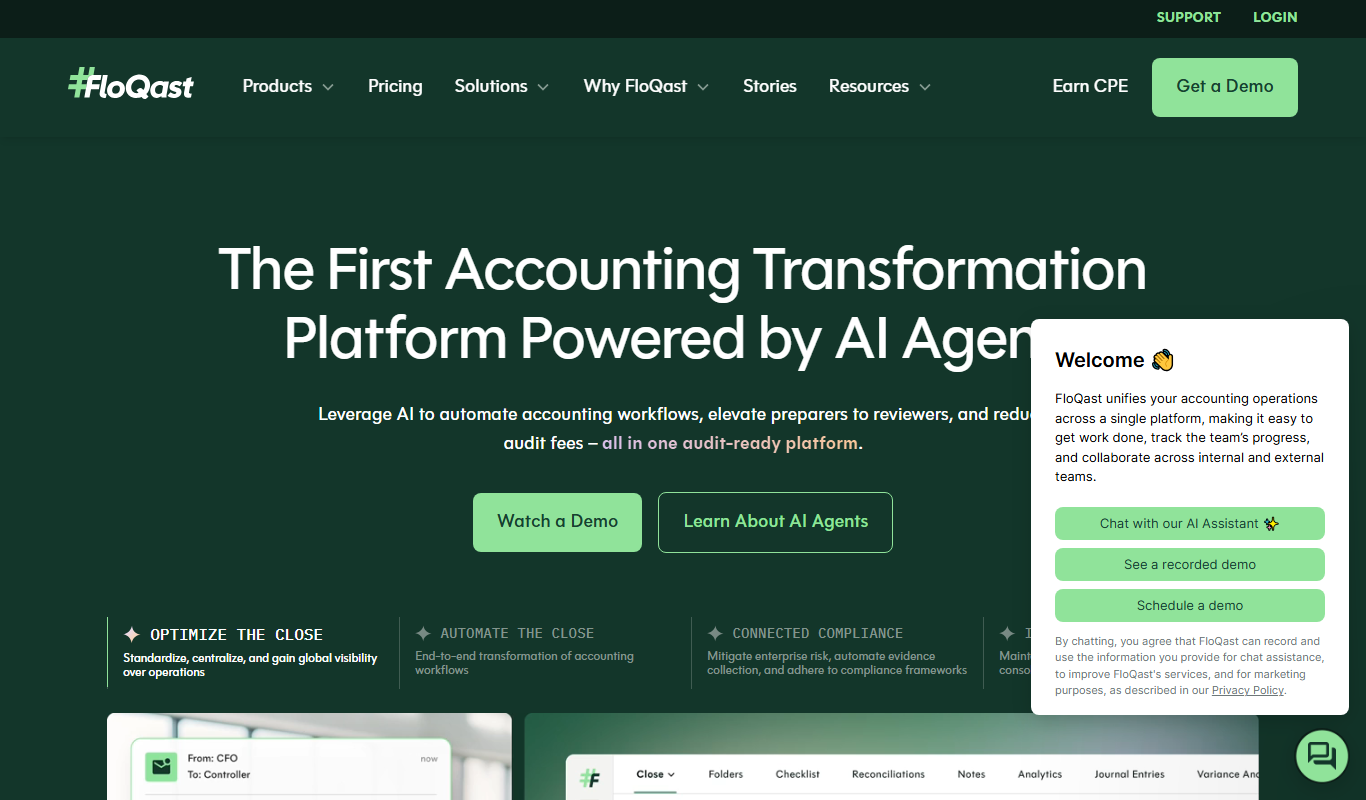
FloQast
FloQast is a cloud software designed to streamline and automate the accounting month-end close process, improving accuracy and collaboration for finance teams.

Custom Pricing
Talentsoft
Talentsoft is a cloud-based talent management software that integrates recruitment, learning, performance management, and succession planning to help organizations manage their workforce effectively.