

From my experience with IBM BPM, I found it excels at providing a robust and scalable platform for modeling and automating complex business processes. Its adherence to BPMN standards and strong integration capabilities make it a reliable choice for large enterprises aiming to improve operational efficiency and compliance. However, the platform has a steep learning curve and pricing that may not suit smaller organizations. Overall, if your business requires comprehensive workflow automation and process optimization at scale, IBM BPM delivers solid, enterprise-grade results.
IBM BPM Business Process Management Software for Workflow Automation
IBM BPM is a business process management platform that helps organizations automate, monitor, and optimize workflows using BPMN standards and integration capabilities.
- Best for
- Workflow Automation
- Key capability
- BPMN 2.0 Process Modeling

Do you recommend this tool?
What is IBM BPM?
IBM BPM (Business Process Manager) is a comprehensive business process management platform that enables organizations to model, execute, monitor, and optimize business processes. It supports both structured workflows and dynamic case management, helping businesses automate operations, improve agility, and ensure compliance.
Key features of IBM BPM
IBM BPM offers process modeling with BPMN 2.0, workflow automation, real-time monitoring dashboards, integration capabilities, and collaboration tools to streamline business operations and enhance decision-making.
BPMN 2.0 Process Modeling
Create detailed and standardized process diagrams for clear communication and execution.
Workflow Automation
Automate repetitive tasks and orchestrate complex business processes.
Real-Time Monitoring and Analytics
Track process performance and gain insights through customizable dashboards.
Integration Framework
Connect with enterprise systems, databases, and APIs for seamless data flow.
Case Management
Manage unstructured processes with flexible case handling capabilities.
Pros and cons of IBM BPM
Pros
- Robust process modeling with BPMN 2.0 support
- Strong integration with enterprise systems
- Comprehensive monitoring and analytics tools
- Supports both structured workflows and case management
Cons
- Pricing can be expensive for small businesses
- Steep learning curve for new users
Key use cases for IBM BPM
Workflow Automation
Automate complex business workflows to improve efficiency and reduce manual errors.
Process Modeling and Optimization
Design, simulate, and optimize business processes using BPMN standards.
Case Management
Manage unstructured processes and case data with dynamic workflows.
Compliance and Governance
Ensure business processes comply with regulatory requirements through audit trails and controls.
Integration with Enterprise Systems
Connect workflows with existing enterprise applications and data sources via APIs.
How IBM BPM works
- 1
Model Processes
Use the visual process designer to create workflows and business rules using BPMN standards.
- 2
Deploy Workflows
Publish and deploy process applications to the IBM BPM runtime environment.
- 3
Execute and Monitor
Run automated workflows and monitor performance with real-time dashboards.
- 4
Optimize Processes
Analyze process data to identify bottlenecks and continuously improve workflows.
Who is using IBM BPM
Large enterprises
Business analysts
IT departments
Process improvement teams
Compliance officers
IBM BPM pricing
Subscription
Custom pricing
Flexible subscription plans tailored to enterprise needs with cloud or on-premises deployment.
Plans and prices are as published by the vendor and can change. Check the official site before you buy. Open the pricing page (opens in a new tab)
Frequently asked questions about IBM BPM
IBM BPM is used to model, automate, monitor, and optimize business processes to improve operational efficiency.
Yes, IBM BPM can be deployed on cloud platforms as well as on-premises.
Yes, IBM BPM supports BPMN 2.0 for process modeling.
Yes, it offers extensive integration capabilities via REST APIs and connectors.
It depends on your specific needs and how you plan to use the tool. The official website and documentation are the best sources for the latest details.
It depends on your specific needs and how you plan to use the tool. The official website and documentation are the best sources for the latest details.
It depends on your specific needs and how you plan to use the tool. The official website and documentation are the best sources for the latest details.
Sign in to review this tool.
Sign In to ReviewNo reviews yet
Be the first to share how this tool worked for you.
Ask about pricing, limits, or how it compares — or answer someone else.
Sign In to AskNo questions yet
Have a question about using or paying for this tool? Be the first to ask.
Featured on TiorAI



Alternative Tools
Explore similar AI tools that might fit your needs

Contact Sales
Appian
Appian is a low-code automation platform that helps organizations rapidly build enterprise applications, automate workflows, and integrate AI and RPA technologies.
More AI Workflow tools
Other tools in the same category, for when this one is not quite the fit.

Free
Furkot
Furkot is a web-based trip planner that helps users create multi-stop routes, optimize travel paths, schedule accommodations and activities, and share itineraries for efficient road trip planning.

Free
EcoCart
EcoCart is a plugin that integrates with e-commerce platforms to calculate and offset the carbon footprint of online purchases, allowing customers to contribute to verified climate projects during checkout.

Contact for pricing
Trials.ai
Trials.ai is an AI-driven platform that helps medical researchers design optimized clinical trial protocols, improve patient recruitment, and ensure regulatory compliance to accelerate trial success.

Free
ZipBooks
ZipBooks is a cloud-based accounting software designed for small businesses and freelancers to manage invoicing, expenses, payments, and financial reporting with ease.

Free Trial
Lookeen
Lookeen is a Windows desktop search software that enables fast and comprehensive searching of emails, files, and documents, integrating deeply with Microsoft Outlook and supporting network drives.
Custom Pricing
Ataccama
Ataccama is an AI-driven data management platform that integrates data governance, master data management, and data quality automation to help enterprises manage and improve their data assets efficiently.
Enterprise
FloQast
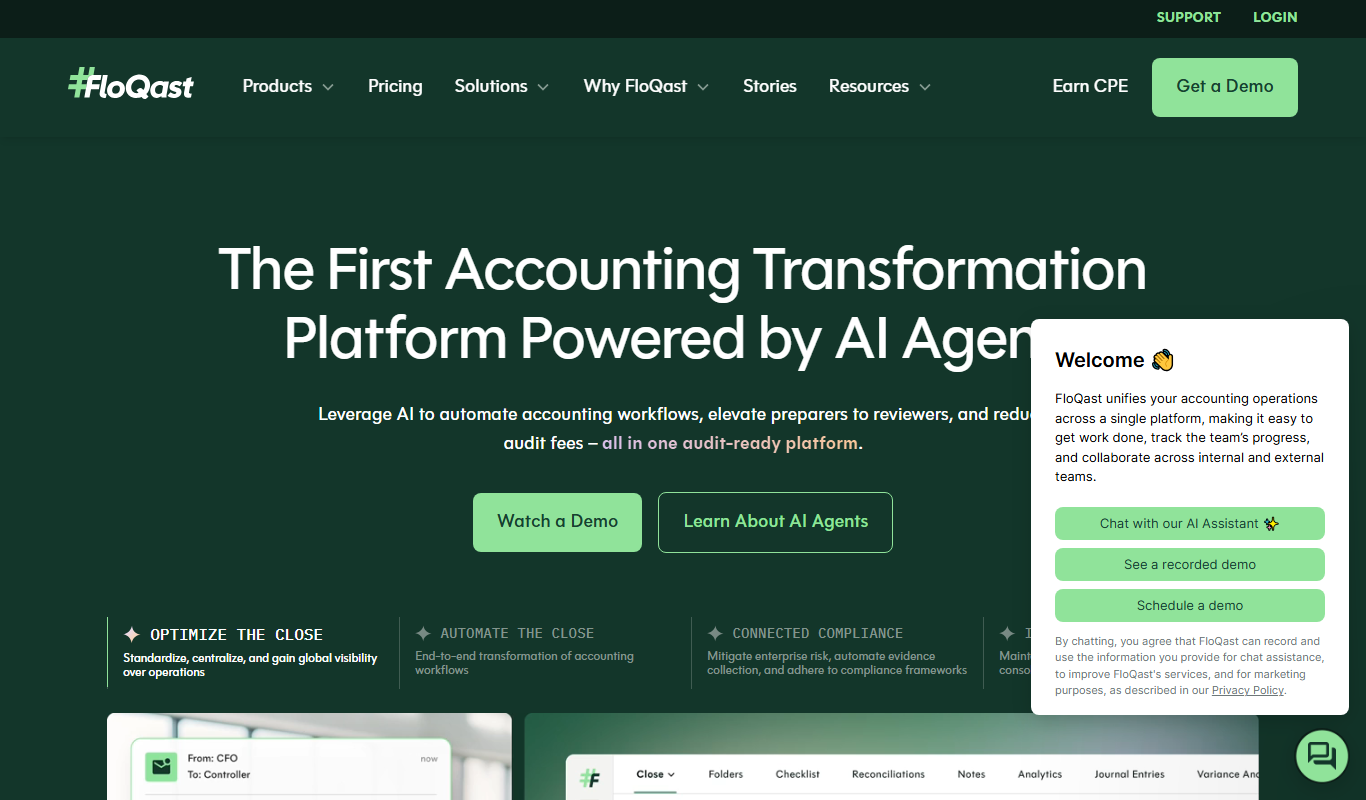
FloQast is a cloud software designed to streamline and automate the accounting month-end close process, improving accuracy and collaboration for finance teams.

Custom Pricing
Talentsoft
Talentsoft is a cloud-based talent management software that integrates recruitment, learning, performance management, and succession planning to help organizations manage their workforce effectively.