

From my experience with Appian, I found it excels at enabling rapid development of complex enterprise applications through its intuitive low-code environment. The platform’s integration of BPM, RPA, and AI capabilities provides a comprehensive toolkit for automating and optimizing business processes. It is particularly well-suited for IT teams and business analysts aiming to accelerate digital transformation without heavy coding. However, the pricing model requires direct consultation, and mastering advanced features can have a learning curve. Overall, if your organization needs scalable, multi-channel business applications with automation, Appian delivers robust and flexible solutions.
Appian Low-Code Platform for Rapid Enterprise Application Development
Appian is a low-code automation platform that helps organizations rapidly build enterprise applications, automate workflows, and integrate AI and RPA technologies.
- Best for
- Enterprise Application Development
- Key capability
- Low-Code Development Environment

What is Appian?
Appian is a leading low-code automation platform that enables organizations to build enterprise-grade applications quickly and efficiently. It combines low-code development, business process management (BPM), robotic process automation (RPA), and AI capabilities into a unified platform. Appian empowers both developers and business users to collaborate on creating apps that digitize workflows, automate processes, and improve operational agility.
Key features of Appian
Appian offers a visual drag-and-drop interface for app development, process modeling tools, AI and RPA integrations, real-time analytics, and multi-channel deployment options. Its platform supports rapid prototyping and iterative development to accelerate digital transformation initiatives.
Low-Code Development Environment
Visual tools that allow rapid application creation with minimal hand-coding.
Business Process Management
Comprehensive BPM capabilities to design, execute, and monitor workflows.
Robotic Process Automation Integration
Seamless integration with RPA bots to automate repetitive manual tasks.
AI and Machine Learning Integration
Embed AI models and services to enhance decision-making and automate complex processes.
Multi-Channel Deployment
Deploy applications on web browsers and mobile devices with responsive design.
Real-Time Analytics and Reporting
Dashboards and reports to monitor process performance and user engagement.
Pros and cons of Appian
Pros
- Accelerates application development with visual low-code tools
- Combines BPM, RPA, and AI in a single platform
- Supports multi-channel deployment including mobile
- Strong integration capabilities with enterprise systems
- Robust analytics for process monitoring and optimization
Cons
- Pricing is not transparent and requires contacting sales
- Steeper learning curve for complex process modeling
- May require technical expertise for advanced customizations
Key use cases for Appian
Enterprise Application Development
Build custom business applications rapidly using visual low-code tools without extensive coding.
Business Process Management (BPM)
Design, automate, and optimize complex workflows and business processes to improve operational efficiency.
Case Management
Manage unstructured work and case-based processes with dynamic workflows and real-time data.
Customer Experience Automation
Create applications that enhance customer engagement through automated workflows and integrated data.
Compliance and Risk Management
Develop applications to monitor, enforce, and report on compliance and risk-related processes.
How Appian works
-
1
Design Applications Visually
Use Appian’s drag-and-drop low-code designer to create user interfaces, data models, and workflows without extensive coding.
-
2
Automate Business Processes
Model and automate complex business processes using BPM tools integrated within the platform.
-
3
Integrate AI and RPA
Enhance applications with AI services and robotic process automation to streamline repetitive tasks.
-
4
Deploy Across Channels
Publish applications to web and mobile platforms for seamless user access.
-
5
Monitor and Optimize
Use built-in analytics and reporting to track application performance and optimize workflows.
Who is using Appian
Enterprise IT teams
Business analysts and process managers
Digital transformation leaders
Operations and compliance officers
Developers building business applications
Appian pricing
Contact Sales
Custom pricing
Pricing tailored based on organization size, usage, and deployment needs.
Plans and prices are as published by the vendor and can change. Check the official site before you buy. Open the pricing page (opens in a new tab)
Frequently asked questions about Appian
Appian is used to build enterprise applications rapidly using low-code development, automate business processes, and integrate AI and RPA capabilities.
While Appian is designed for low-code development, some technical knowledge helps to build complex applications, but business users can also participate.
Yes, Appian supports integration with various enterprise systems, databases, and third-party services via APIs and connectors.
Appian offers cloud, on-premises, and hybrid deployment options to suit different organizational needs.
It depends on your specific needs and how you plan to use the tool. The official website and documentation are the best sources for the latest details.
Yes, it can help with that use case depending on how you configure it and what features are available. You’ll get the best results with clear inputs and a defined goal.
It depends on your specific needs and how you plan to use the tool. The official website and documentation are the best sources for the latest details.
Sign in to review this tool.
Sign In to ReviewNo reviews yet
Be the first to share how this tool worked for you.
Ask about pricing, limits, or how it compares — or answer someone else.
Sign In to AskNo questions yet
Have a question about using or paying for this tool? Be the first to ask.
Featured on TiorAI



Alternative Tools
Explore similar AI tools that might fit your needs

Enterprise
Mendix
Mendix is a low-code development platform that enables rapid creation, deployment, and management of enterprise-grade applications with minimal coding, supporting collaboration between business and IT teams.

Free Trial
OutSystems
OutSystems is a low-code platform that accelerates enterprise application development through visual tools, AI assistance, and seamless integration, enabling rapid deployment across web and mobile.
More AI Workflow tools
Other tools in the same category, for when this one is not quite the fit.

Free
Furkot
Furkot is a web-based trip planner that helps users create multi-stop routes, optimize travel paths, schedule accommodations and activities, and share itineraries for efficient road trip planning.

Free
EcoCart
EcoCart is a plugin that integrates with e-commerce platforms to calculate and offset the carbon footprint of online purchases, allowing customers to contribute to verified climate projects during checkout.

Contact for pricing
Trials.ai
Trials.ai is an AI-driven platform that helps medical researchers design optimized clinical trial protocols, improve patient recruitment, and ensure regulatory compliance to accelerate trial success.

Free
ZipBooks
ZipBooks is a cloud-based accounting software designed for small businesses and freelancers to manage invoicing, expenses, payments, and financial reporting with ease.

Free Trial
Lookeen
Lookeen is a Windows desktop search software that enables fast and comprehensive searching of emails, files, and documents, integrating deeply with Microsoft Outlook and supporting network drives.
Custom Pricing
Ataccama
Ataccama is an AI-driven data management platform that integrates data governance, master data management, and data quality automation to help enterprises manage and improve their data assets efficiently.
Enterprise
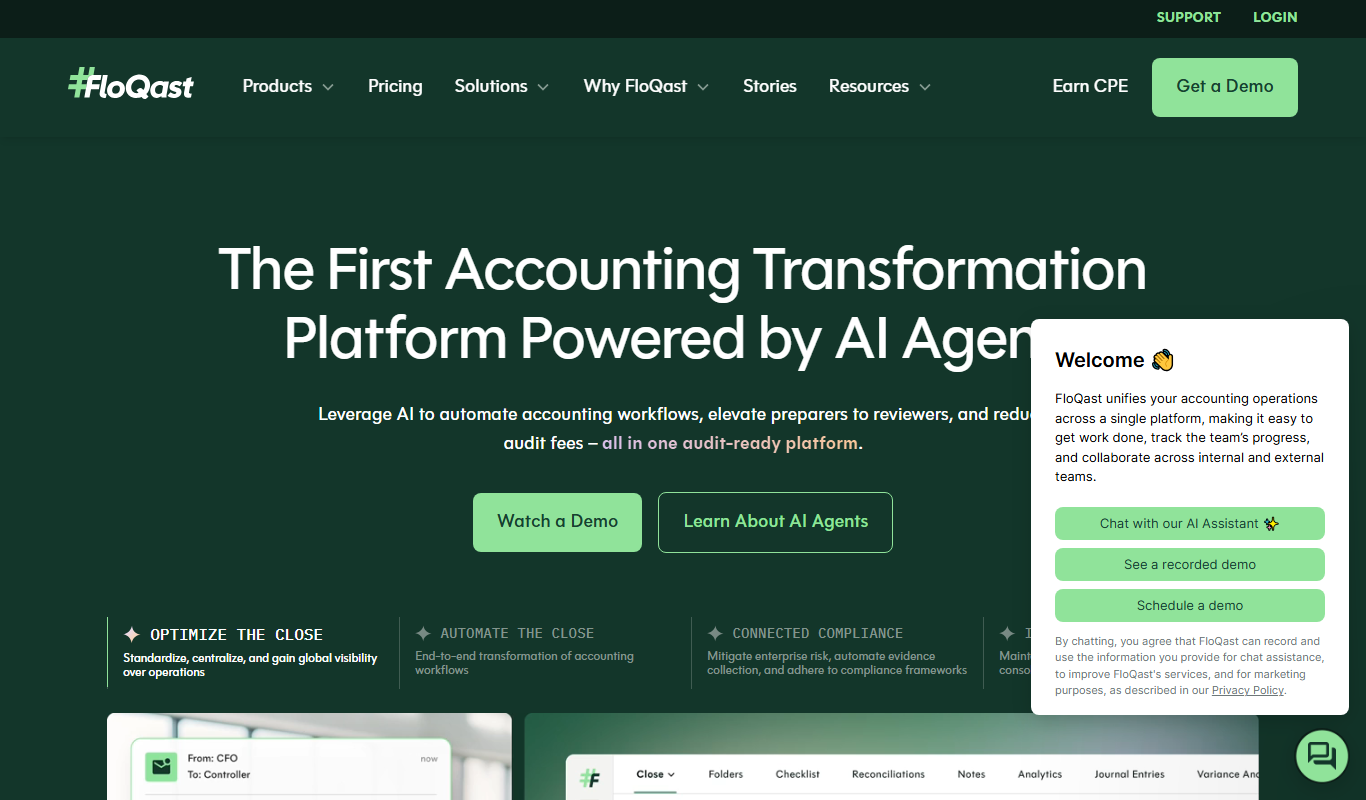
FloQast
FloQast is a cloud software designed to streamline and automate the accounting month-end close process, improving accuracy and collaboration for finance teams.

Custom Pricing
Talentsoft
Talentsoft is a cloud-based talent management software that integrates recruitment, learning, performance management, and succession planning to help organizations manage their workforce effectively.