

From my experience exploring Glass.health, I found it excels at integrating AI into medical imaging workflows to enhance diagnostic accuracy and efficiency. The platform’s ability to analyze multiple imaging modalities and provide actionable insights makes it particularly valuable for radiologists and healthcare providers aiming to reduce diagnostic errors and improve patient outcomes. However, the lack of publicly available pricing and the need for integration with existing hospital systems may require additional planning and investment. Overall, Glass.health is a promising AI tool for medical imaging analysis that supports clinical decision-making in a practical, scalable way.
Glass.health AI Platform for Medical Imaging Analysis and Diagnostics
Glass.health is an AI-driven platform that analyzes medical images to assist radiologists with diagnostics and workflow optimization.
- Best for
- Medical Imaging Analysis
- Key capability
- Automated Image Interpretation
Your actions
Save Glass.health, follow its updates and vote on it — everything stays in your account.
Sign in or create a free account
What is Glass.health?
Glass.health is an AI-powered platform designed to enhance medical imaging analysis and diagnostics. It leverages advanced machine learning algorithms to assist healthcare professionals in interpreting radiological images more accurately and efficiently. The platform integrates seamlessly into clinical workflows, providing actionable insights that support faster and more reliable diagnoses.
Key features of Glass.health
The platform offers automated image analysis, diagnostic suggestions, case prioritization, and integration capabilities with existing healthcare systems. It aims to reduce diagnostic errors and improve patient care by augmenting radiologists’ expertise with AI technology.
Automated Image Interpretation
Uses AI to identify patterns and anomalies in medical images with high accuracy.
Clinical Decision Support
Provides diagnostic recommendations to assist healthcare professionals.
Seamless Integration
Compatible with existing hospital information systems and PACS.
Case Prioritization
Helps prioritize urgent cases to improve response times.
Pros and cons of Glass.health
Pros
- Enhances diagnostic accuracy with AI assistance
- Improves radiology workflow efficiency
- Supports multiple imaging modalities
Cons
- Pricing details not publicly available
- Requires integration effort with existing systems
Key use cases for Glass.health
Medical Imaging Analysis
Automated interpretation and analysis of medical images such as X-rays, CT scans, and MRIs to assist radiologists.
Diagnostic Support
Provides AI-driven diagnostic insights to support clinical decision-making and improve accuracy.
Workflow Optimization
Streamlines radiology workflows by prioritizing cases and highlighting critical findings for faster review.
Research and Development
Enables healthcare researchers to leverage AI models for developing new diagnostic tools and improving patient outcomes.
How Glass.health works
- 1
Image Upload
Healthcare providers upload medical images to the Glass.health platform via web or API.
- 2
AI Analysis
The platform applies AI algorithms to analyze images and detect abnormalities.
- 3
Diagnostic Insights
Glass.health generates diagnostic suggestions and highlights critical findings.
- 4
Review and Action
Radiologists review AI-generated insights to confirm diagnoses and prioritize patient care.
Who is using Glass.health
Radiologists
Healthcare providers
Medical imaging centers
Healthcare researchers
Hospital IT departments
Glass.health pricing
Contact for Pricing
Custom pricing
Pricing tailored to healthcare provider needs and scale.
Plans and prices are as published by the vendor and can change. Check the official site before you buy. Open the pricing page (opens in a new tab)
Frequently asked questions about Glass.health
Yes, Glass.health adheres to relevant healthcare data privacy and security standards.
Yes, the platform supports integration with common hospital information systems and PACS.
It supports various imaging modalities including X-rays, CT scans, and MRIs.
This tool is designed to help users accomplish its core tasks more efficiently. It is typically used by individuals or teams looking to improve productivity and workflow.
It depends on your specific needs and how you plan to use the tool. The official website and documentation are the best sources for the latest details.
Sign in to review this tool.
Sign In to ReviewNo reviews yet
Be the first to share how this tool worked for you.
Ask about pricing, limits, or how it compares — or answer someone else.
Sign In to AskNo questions yet
Have a question about using or paying for this tool? Be the first to ask.
Featured on TiorAI



Alternative Tools
Explore similar AI tools that might fit your needs
Custom Pricing
Aidoc
Aidoc is an AI-driven medical imaging software that helps radiologists detect abnormalities in CT and MRI scans, prioritize urgent cases, and improve diagnostic workflows.

Custom Pricing
Qure.ai
Qure.ai is an AI-driven medical imaging software that automates the detection of abnormalities in chest X-rays and head CT scans, helping radiologists diagnose faster and more accurately.
More AI Healthcare & Wellness Tools tools
Other tools in the same category, for when this one is not quite the fit.

Enterprise
Skinive AI
Skinive AI is a CE-certified artificial intelligence platform that analyzes skin images to detect and assess various dermatological conditions, supporting telemedicine and clinical workflows.
Enterprise
Livongo
Livongo is a digital health platform that uses connected devices and AI-driven coaching to help individuals manage chronic conditions such as diabetes and hypertension effectively.

Custom Pricing
artivatic.ai
Artivatic.ai is an AI platform specializing in automating insurance and healthcare processes like underwriting and fraud detection through machine learning.

Free
Miiskin
Miiskin is a mobile app that helps users monitor their skin for changes, especially moles, to aid early detection of skin cancer by tracking photos over time.
Free
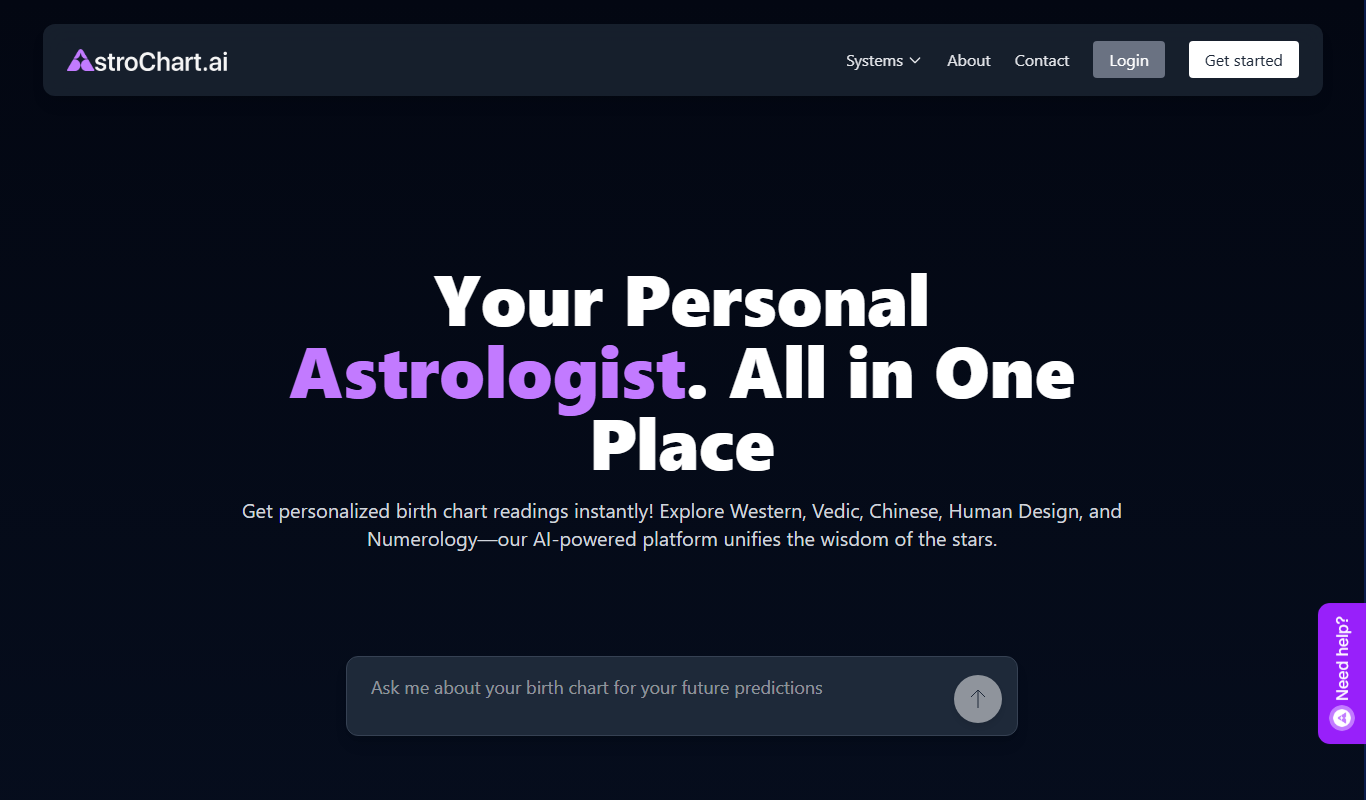
AstroChart.ai
AstroChart.ai is an AI-driven platform that creates personalized astrology birth charts and detailed interpretations based on your birth data, helping users understand their astrological profile easily online.

Free
Dream Advisor
Dream Advisor is an app that helps users record and interpret their dreams using personalized insights to promote mental wellness and self-awareness.

Free
Mind Tracker
Mind Tracker is an app on the App Store and Google Play.

Free
Alya
Alya is an AI therapist app. The site lists 22 languages and more than 100 AI models, with downloads on the App Store and Google Play.