
From my experience with Cardano, I found it excels at providing a research-driven, secure blockchain platform that prioritizes energy efficiency and formal verification. After spending time exploring its architecture and staking mechanisms, I can say it’s particularly well-suited for developers and enterprises seeking a scalable and sustainable blockchain environment. However, there’s a trade-off: the platform’s rigorous development approach means its smart contract ecosystem is smaller and adoption slower compared to some competitors. Overall, if you need a robust, scientifically grounded blockchain for decentralized applications and governance, Cardano delivers solid results.
Cardano Blockchain Platform for Secure Decentralized Applications and Smart Contracts
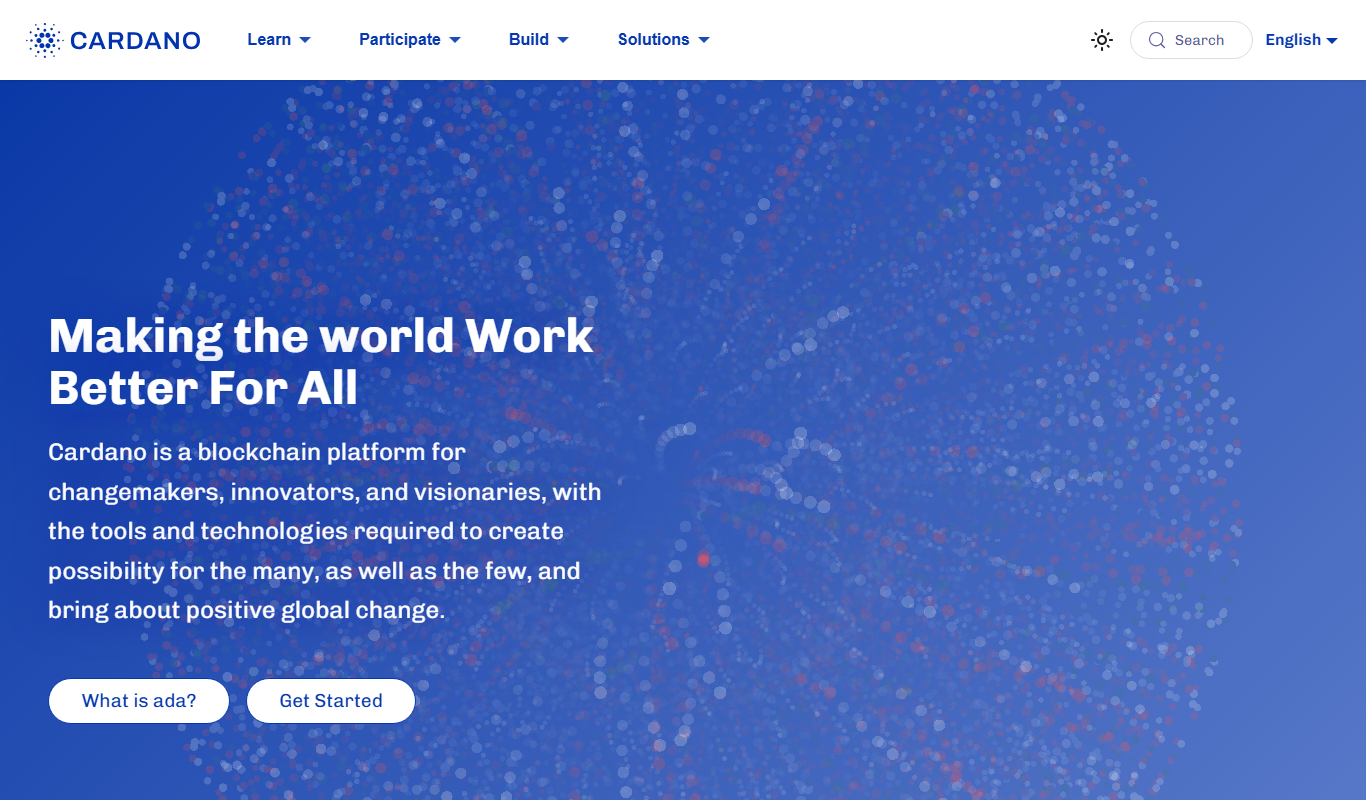
Cardano is a proof-of-stake blockchain platform designed for secure and scalable decentralized applications and smart contracts, featuring energy-efficient consensus and formal verification.
Tech Stack:
Haskell
What is Cardano?
Cardano is an open-source blockchain platform designed for secure and scalable decentralized applications and smart contracts. It uses a proof-of-stake consensus mechanism called Ouroboros to achieve energy-efficient and secure transaction validation. The platform emphasizes formal methods and peer-reviewed research to ensure high assurance in its technology.
Key Features of Cardano
Ouroboros Proof of Stake
A provably secure and energy-efficient consensus algorithm that secures the Cardano blockchain.
Layered Architecture
Separates transaction settlement from smart contract computation for enhanced scalability.
Formal Verification
Supports mathematically proven correctness of smart contracts to reduce bugs and vulnerabilities.
Native Cryptocurrency ADA
Used for transactions, staking, and governance within the Cardano ecosystem.
Decentralized Governance
Enables community-driven decision-making for protocol evolution and treasury management.
Pros and Cons of Cardano
Pros
- Energy-efficient and secure proof-of-stake consensus
- Strong emphasis on formal methods and peer-reviewed research
- Supports scalable and flexible smart contract development
- Active community governance and treasury system
- Open-source and transparent development process
Cons
- Smart contract ecosystem is smaller compared to some competitors
- Development and adoption can be slower due to rigorous research approach
- Transaction fees vary and can increase during network congestion
Key Use Cases for Cardano
Decentralized Application Development
Developers can build scalable and secure decentralized applications (dApps) using Cardano's smart contract platform.
Smart Contract Execution
Cardano supports formal verification of smart contracts to ensure correctness and security.
Cryptocurrency Transactions
Users can send, receive, and stake ADA, Cardano's native cryptocurrency, for secure and efficient transactions.
Enterprise Blockchain Solutions
Businesses can leverage Cardano's blockchain for supply chain management, identity verification, and more.
Governance and Voting
Cardano enables decentralized governance through on-chain voting mechanisms for protocol upgrades.
How Cardano Works
-
1
Blockchain Layering
Cardano separates the ledger of account values from the reason why values are moved, enabling flexibility and scalability.
-
2
Proof of Stake Consensus
The Ouroboros protocol secures the network by selecting validators proportionally to their stake in ADA.
-
3
Smart Contract Development
Developers write smart contracts using Plutus and Marlowe languages, which support formal verification.
-
4
Staking and Delegation
ADA holders can stake their tokens or delegate to stake pools to participate in network consensus and earn rewards.
-
5
Governance Participation
Community members vote on protocol updates and funding proposals through on-chain governance.
Who's Using Cardano
Blockchain developers
Cryptocurrency investors
Enterprise businesses seeking blockchain solutions
Decentralized application creators
Governance and voting system designers
Cardano Pricing
Free
$0
Open-source platform with no fees to access the blockchain network; transaction fees apply for network usage.
Frequently Asked Questions About Cardano
Cardano is a blockchain platform for building decentralized applications and smart contracts using a proof-of-stake consensus.
Cardano uses Ouroboros, which selects validators based on their ADA stake to secure the network efficiently.
Cardano supports Plutus and Marlowe for smart contract development, with Haskell used for core development.
Yes, ADA holders can stake or delegate their tokens to earn rewards and participate in network consensus.
It depends on your specific needs and how you plan to use the tool. The official website and documentation are the best sources for the latest details.
It depends on your specific needs and how you plan to use the tool. The official website and documentation are the best sources for the latest details.
It depends on your specific needs and how you plan to use the tool. The official website and documentation are the best sources for the latest details.
It depends on your specific needs and how you plan to use the tool. The official website and documentation are the best sources for the latest details.
Share your review
Reviews are limited to one per logged-in user and are published after moderation.
You need an account to review this tool.
0.0
★
★
★
★
★
0 reviews
5 star
0
4 star
0
3 star
0
2 star
0
1 star
0
No reviews yet
Be the first to share how this tool worked for you.
Questions from the community
Read questions and answers about this tool, or ask your own.
No questions yet
Start the conversation by asking the first question about this tool.
Is this tool helpful?
Alternative Tools
Explore similar AI tools that might fit your needs

Free
Polkadot
Polkadot is a blockchain platform that connects multiple specialized blockchains into one unified network, enabling scalability, interoperability, and shared security for decentralized applications.

Freemium
Nansen
Nansen is a blockchain analytics platform that provides real-time on-chain data, wallet labeling, NFT and DeFi analytics to help crypto traders and investors make informed decisions.

Contact Sales
Showpad
Showpad is a sales enablement platform that helps sales teams manage content, train effectively, and track customer engagement to improve sales performance.

Freemium
Connected Papers
Connected Papers is a web-based tool that creates visual graphs of academic papers based on citation relationships, helping researchers explore and understand scientific literature efficiently.

Custom Pricing
RFP360
RFP360 is a cloud-based proposal management platform that automates and streamlines the RFP response process by centralizing content, enabling collaboration, and ensuring compliance.
Free
Disqus
Disqus is a web-based commenting platform that integrates with websites to enable user comments, community engagement, moderation, and analytics.

Pay As You Go
Lob
Lob is a cloud-based API platform that automates direct mail sending and address verification, allowing businesses to programmatically send postcards, letters, and checks while ensuring address accuracy.

Freemium
Voisi AI
Voisi AI is an AI-driven voice assistant platform that automates business voice interactions such as customer support and lead qualification, supporting English and Hindi languages with CRM integration and customizable conversation flows.

Free
doctranslate.io
Doctranslate.io is an AI-driven online platform that translates documents across many languages while preserving formatting, supporting various file types like PDF and DOCX.