

Token Generator
A token generator is a tool that produces unique, random strings called tokens. These tokens are used in software systems to securely identify users, sessions, or permissions without exposing sensitive information like passwords. By generating unpredictable tokens, applications can safely manage authentication and authorization. When…
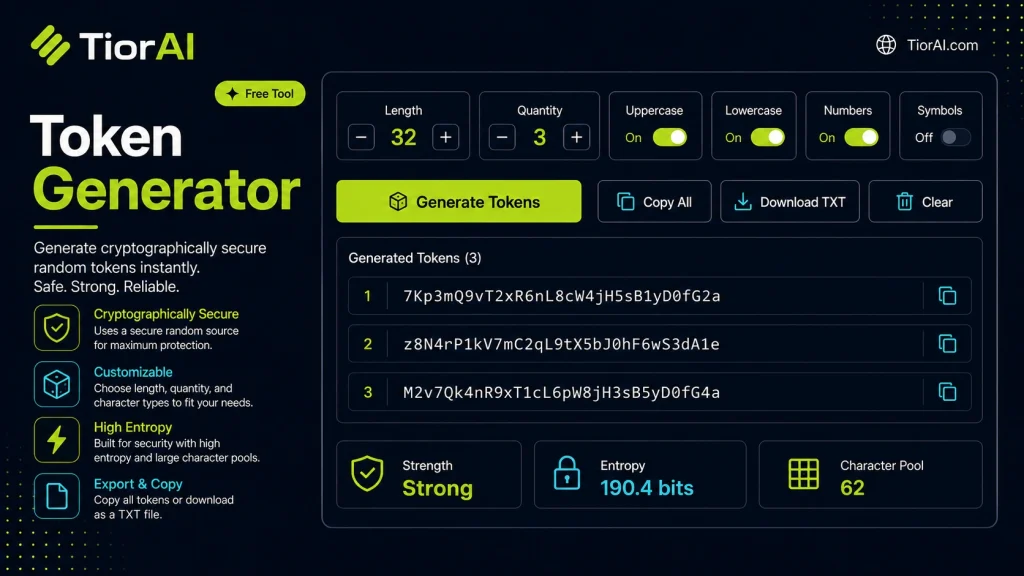
Entropy: -
How to use it
- Configure Settings Set your preferences and parameters in the Token Generator. Customize the output to match your specific requirements.
- Generate Output Click generate to create your result. The tool processes your settings and produces output instantly.
- Copy or Download Review the generated output, then copy it to your clipboard or download it for immediate use.
Tip Use the Token Generator to quickly prototype ideas before investing time in manual creation.
Understanding Token Generation
A token generator is a utility that creates unique strings of characters, often used as identifiers or keys in software systems. Tokens serve as secure, random values that represent authentication credentials, session identifiers, or access permissions without exposing sensitive information like passwords.
Tokens are essential in modern web applications and APIs to maintain security and manage user sessions. Instead of transmitting actual user credentials repeatedly, systems issue tokens that validate user identity or grant access to resources temporarily.
Commonly, tokens are generated using algorithms that produce random or pseudo-random sequences, ensuring uniqueness and unpredictability. This prevents unauthorized access and reduces the risk of replay attacks.
Use cases for token generation include:
- Authentication tokens for login sessions (e.g., JWTs)
- API keys to control access to services
- CSRF tokens to protect against cross-site request forgery
- Temporary access tokens for password resets or email verification
By generating tokens, developers can implement secure, stateless authentication and authorization mechanisms that improve both security and user experience.
What is a Token Generator?
A token generator is a tool that produces unique, random strings called tokens. These tokens are used in software systems to securely identify users, sessions, or permissions without exposing sensitive information like passwords. By generating unpredictable tokens, applications can safely manage authentication and authorization.
When to Use a Token Generator
- Implementing secure login sessions where tokens replace passwords after authentication
- Creating API keys to control access to web services
- Generating temporary tokens for password resets or email verification links
- Embedding CSRF tokens in forms to prevent cross-site request forgery attacks
Common Mistakes to Avoid
- Using weak or predictable token generation methods that can be guessed by attackers
- Reusing tokens across sessions or users instead of generating new ones each time
- Not setting expiration times or invalidation policies, which can lead to security risks if tokens remain valid indefinitely
Understanding how token generators work and when to use them is crucial for building secure web applications. Tokens provide a way to authenticate and authorize users without repeatedly exposing sensitive credentials, improving both security and user experience.
Frequently asked questions
Reviews and questions
Whether this tool gave people the answer they needed, and what they asked about it.
Sign in to review this tool.
Sign In to ReviewNo reviews yet
Be the first to say whether this tool gave you what you needed.
Ask how to read the result, or what the tool does with an edge case — or answer someone else.
Sign In to AskNo questions yet
Not sure how to read a result? Be the first to ask.
AI tools related to this topic
Tools from the TiorAI directory that work on the same kind of job.

Basic Attention Token
Basic Attention Token (BAT) is a cryptocurrency integrated with the Brave browser that rewards users for viewing privacy-respecting ads, protects user privacy by blocking trackers, and enables advertisers and content creators to transact transparently on the Ethereum blockchain.

Prompt Token Counter
Prompt Token Counter is a free online tool that counts tokens in AI prompts to help users optimize input size and manage API costs for models like GPT-3 and GPT-4.

Token Security
Token Security is a platform that provides automated audits and security analysis for blockchain tokens and smart contracts, helping users identify vulnerabilities and risks.

Token Terminal
Token Terminal is a financial analytics platform that provides standardized metrics and dashboards for evaluating blockchain and cryptocurrency projects, including DeFi and NFTs.