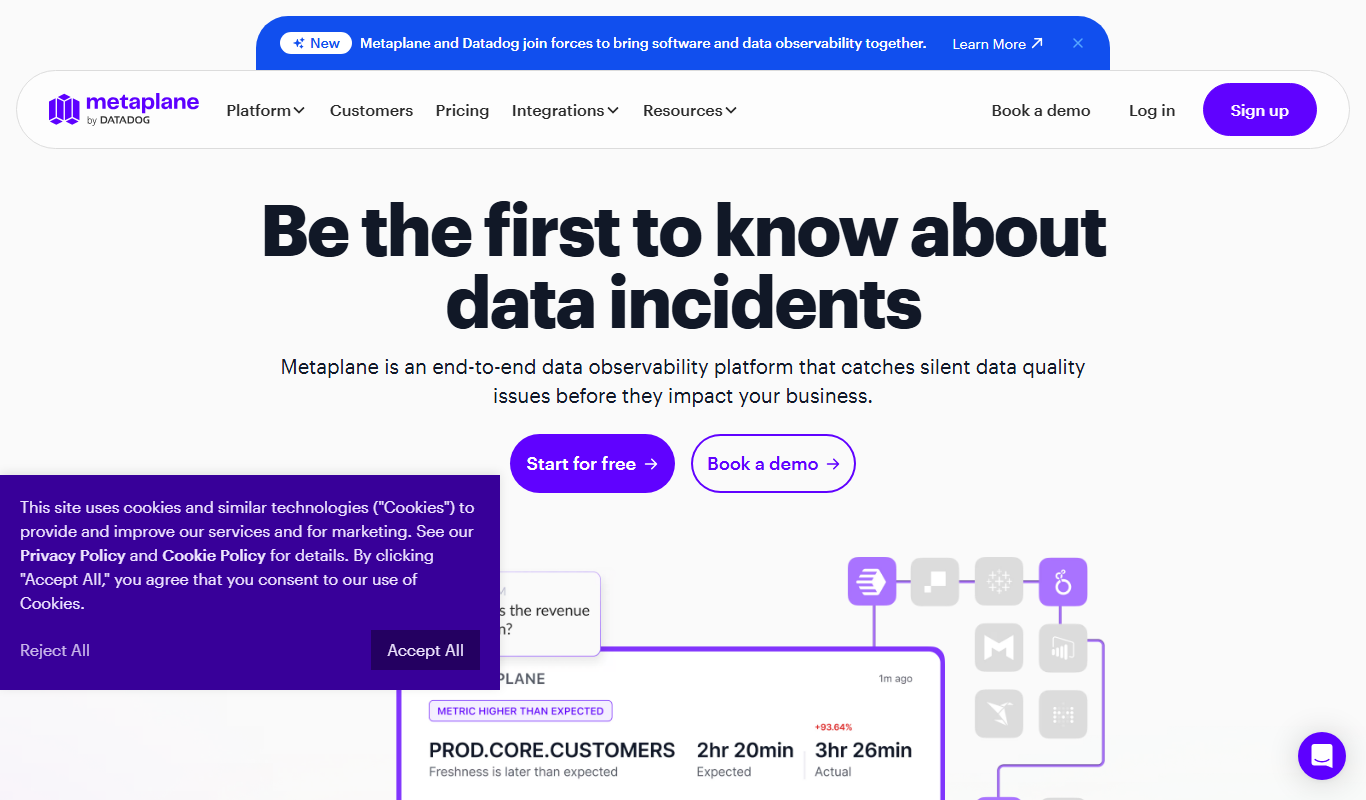
What Is Data Observability?
Data Observability refers to the comprehensive process of continuously monitoring data pipelines, datasets, and data infrastructure to detect anomalies, errors, and inconsistencies. It involves collecting and analyzing metrics, logs, and metadata to gain visibility into the state of data throughout its lifecycle. Think of it as a way to keep a constant eye on data flow and quality, much like how software observability monitors application performance, but focused specifically on data assets.
Why Is Data Observability Important?
In today’s data-driven world, businesses rely on accurate and timely data for decision-making, analytics, and automation. Data Observability helps prevent costly errors caused by corrupted or incomplete data, reduces downtime in data operations, and boosts trust in data outputs by ensuring data quality. It allows teams to proactively identify and resolve issues before they impact business outcomes.
- Ensures data reliability and accuracy for business intelligence.
- Reduces time and effort spent troubleshooting data issues.
- Supports compliance by maintaining transparent data lineage and health.
Key Characteristics of Data Observability
- Continuous Monitoring: Constant tracking of data flows and quality metrics to detect deviations early.
- Automated Alerting: Intelligent notifications when anomalies or failures occur in data pipelines.
- Comprehensive Visibility: Access to logs, metadata, and data quality indicators across all stages of data processing.
How Data Observability Works (Step-by-Step)
- Collect key data metrics such as freshness, volume, distribution, and schema changes.
- Analyze these metrics to identify anomalies, inconsistencies, or failures in data pipelines.
- Alert data engineers and stakeholders to investigate and resolve identified issues promptly.
Real-World Examples of Data Observability
- E-commerce Platform: Monitoring transaction data to detect missing or duplicated orders that could affect revenue reporting.
- Financial Services: Tracking data pipeline freshness to ensure compliance reports are generated with up-to-date information.
Data Observability in SEO, Marketing, or Business Context
For SEO and marketing teams, data observability ensures that analytics data, campaign tracking, and customer behavior metrics are accurate and reliable. This reduces the risk of misguided strategies based on faulty data. Businesses benefit by maintaining trust in their data-driven decisions, optimizing marketing spend, and improving customer targeting through consistent data quality.
Common Mistakes or Misunderstandings About Data Observability
- Confusing data observability with basic data monitoring; observability is more comprehensive and proactive.
- Assuming observability tools replace good data governance; they complement but do not substitute data management policies.
Related Terms
- Data Quality Management
- Data Governance
- Data Monitoring
FAQs About Data Observability
Data observability provides a deeper, more holistic view into data health and root causes, while monitoring typically tracks predefined metrics.
By ensuring data accuracy and reliability, it helps decision-makers trust insights and avoid errors caused by bad data.
Summary
Data Observability is essential for maintaining the integrity and reliability of data systems. By providing continuous insight into data health and proactively identifying issues, it empowers organizations to trust their data and make informed decisions confidently. In a world where data drives strategy, observability is a foundational practice for sustainable business success.